Maurice Sendak 1928-2012


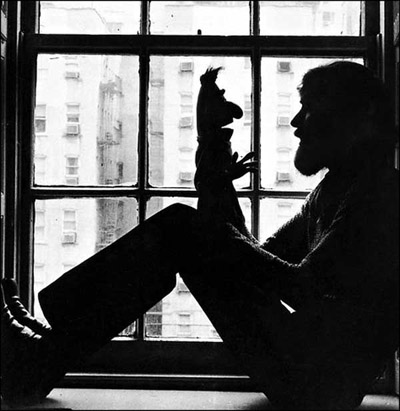
Maurice Sendak Via]

“I said anything I wanted because I don’t believe in children, I don’t believe in childhood. I don’t believe that there’s a demarcation. ‘Oh you mustn’t tell them that. You mustn’t tell them that.’ You tell them anything you want. Just tell them if it’s true. If it’s true you tell them.”

~ Maurice Sendak

With this post I run the risk of turning the top of Coilhouse into a memorial to my youth, but there’s really no helping it, I suppose. More sad news then, as it has been reported that author and illustrator Maurice Sendak died today, at the age of 83 due to complications from a recent stroke. Sendak was perhaps best known for his 1963 book Where the Wild Things Are. The book not only made his career but earned him the prestigious Caldecott Medal in 1964.

Mr. Sendak’s work was a staple of my childhood. I learned to read with the help of the Little Bear Books (written by Else Holmelund Minarik). My first exposure to Grimm’s fairy tales was through my mother’s copy of the collection he illustrated and I had a copy of E.T.A. Hoffmann’s Nutcracker which featured his artwork. His Mouse King terrified me.

And that is, above all, what I remember and respected most about his work, his willingness to scare the crap out of kids. There is a darkness and danger in his books, the same kind found in the stories of greats like Carroll and Baum, which seems mostly lacking from children’s literature now, something that Mr. Sendak seemed keenly aware of. Sendak wrote books that treated children like adults, like equals. Speaking to The Guardian last October, he said “I refuse to lie to children. I refuse to cater to the bullshit of innocence.” This refusal to sugarcoat his work was, undoubtedly, his greatest asset. It will be missed.

Cornelius Boots Keeps On Rockin’ in the Weird World


Edmund Welles, 2010 press photo. Aaron Novik, Jeff Anderle, Jon Russell, and creative mastermind Cornelius Boots in the foreground.

Confession: I’ve been meaning to write a feverish and swooning rave-up of Oakland-based musician Cornelius Boots‘ absurdly beautiful and strange and intelligent and mischievous and sincere and meditative and heavy-as-fuck bass clarinet chamber music group, Edmund Welles*, for years now.

It certainly isn’t for lack of reverence for Boots or his compositions that I’ve lagged.  When suffering from blogger’s block, my editorial purview tends to be “when in doubt, crap it out.” But occasionally, there are those subjects that you can’t just casually hork up. You want so badly to do them every justice– to elevate and praise them to the highest and most lofty of misty, Middle Earth-worthy mountaintops. Boots’ ouvre definitely lives in that non-horkable category. Well, then! Having unburdened my guilty conscience…


Edmund Welles. 

Yes, Cornelius Boots and friends make music that I want throw a parade for. Or, alternately, throw my frilly undergarments at. While his group Edmund Welles definitely is not everyone’s cup of tea, it’s 100% my cuppa, and hopefully, it’ll resonate with Coilhouse readers who also love waaaay-off-the-beaten-path-no-srsly-bring-your-machete-cos-we-be-bushwhackin’ music.

Via their CD Baby page:

Edmund Welles [...] has the distinction of being the world’s only original, composing band of four bass clarinetists, they invent and perform heavy chamber music. The bass clarinet has a five octave range and a huge span of tonal, melodic, and rhythmic capabilities.

Drawing virtuosic precision from the classical realm; innovation and texture from jazz; and power, rhythm and overall perspective from rock and metal, the quartet’s sound is characterized by a thickness of tone, a density of texture, absolute rhythmic precision, and the extreme use of dynamic contrasts: a dense, pulsing sound capable of expressing and reflecting the full range of human emotions.

They ain’t foolin’. It’s a massive, meticulously structured bass reed sound like nothing else you’ve heard. (Parallels have been drawn between John Zorn’s more recent works and Edmund Welles, for sure, but Boots’ steez feels simultaneously more West Coast and Far East-steeped.) Weirdest Band in the World‘s assessment is pretty spot-on as well: “The bass clarinet is an inherently weird instrument. Put four of them together in one group, and it sounds like a chorus of demon cats in heat fighting over a chicken bone. A demon chorus whose eerie caterwaulings just happen to occasionally assemble themselves into passages from Pixies and Nirvana songs.”

In 2005, they put out Agrippa’s 3 Books, which offers up original compositions by Boots that reflect his abiding interest in the occult and his talent for interpreting uber heavy spine-crunching metal. (Hilariously, Boots calls this stuff an attempt to create “Muzak for conspiracy theorists.” ACHIEVEMENT UNLOCKED!) Additionally, there are Sepultura and Spinal Tap covers. Not to mention the most bewilderingly esoteric and brilliant liner notes you’ll find north of a Trey Spruance solo project. (Buy the goddamn CD. Seriously. No, seriously. Totally worth it.)

Edmund Welles’ second album is called Tooth & Claw, and it’s comprised predominantly of original composition that are as bizarre and heavy as anything Boots has ever written, but with more nuanced elements of avant jazz and modern classical woven into the dense sonority.

Wrap Party / Sneak Peek of “The Narrative of Victor Karloch” (With Music by Mer!)

For the past two years, Kevin McTurk –a world-renowned cinematic effects artist– has been hard at work on a breathtaking personal project called The Narrative of Victor Karloch. McTurk describes it as a ”Victorian ghost story puppet film”.

Featuring the voices of Christopher Lloyd, Elijah Wood, and Maurice LaMarche, Karloch combines bunraku style rod puppets, shadow puppetry, and an array of traditional in-camera effects to present a tale from from the journal pages of one Victor Karloch: weatherbeaten alchemist, scholar, and ghost hunter. This film, very much a labor of love for McTurk and his crew, was made possible by grants from Heather Henson’s Handmade Puppet Dreams Film Series and from The Jim Henson Foundation.


Photo provided by Kevin KcTurk.

As you can see from the above preview, it’s a stunning piece of workAnd did I mention that the film’s score was provided by Zoe Keating, Lustmord, and… our very own Meredith Yayanos? Yes!

This Thursday, April 19, at Meltdown Comics/NerdMelt Theater in Los Angeles, McTurk will be holding a sneak peek/wrap party reception. There will be a live marionette performance by Eli Presser (one of the film’s key puppeteers) and limited edition Narrative of Victor Karloch t-shirts (designed by comics legend Mike Mignola!) available for sale.

Congrats to all involved! Attendees of the wrap party are enthusiastically encouraged to report back in comments.


Karloch illustration and design by Mike Mignola.

Adventures in Spreepark: Photos by Matthew Borgatti


“Soon…” Photo by Matthew Borgatti.

A frozen rainbow carousel, headless dinosaurs and lonely swan-shaped boats: this can only be Spreepark, an abandoned amusement park in Southeast Berlin. Conceived as a Socialist project to celebrate 20 years of GDR, Spreepark opened its doors in 1969, and shut down in 2001.  If you saw the film Hanna, images of a girl assassin running through this decaying fairyland park may spring to mind. Recently, Matthew Borgatti (previously on Coilhouse here and here) grabbed his camera and went exploring: he’s just published a beautiful set of photos showing both Spreepark’s ruins and signs of life, in tandem with a witty, comprehensive guide to urban spelunking. Spreepark’s story, writes Matthew, is one of “broken dreams, drug smuggling, and illegal things done with kiddie park rides in the dead of night.” You can’t tell the story of Spreepark without mentioning the story of Norbert Witte, as told by journalist Julia Jüttner.

An affluent funfair operator known as the “King of Carousels” to his friends, Witte walked into trouble when he decided to invest in Spreepark after the reunification of Germany. The son of a carnival performer and grandson of Otto Witte, an acrobat/swindler who once managed to be crowned as the King of Albania, Norbert Witte built his own carnival empire from humble beginnings. Together with his young bride Pia, the daughter of a bumper-car operator, he purchased one roller coaster (“The Catapult”) and began to tour with it, amassing eight rides over the course of two decades.


Photo by Matthew Borgatti.

At first, Spreepark seemed like a lucrative investment for Witte. But after the government eliminated 3,000 parking spaces near the park, people stopped coming and the park went out of business. Witte relocated his family to Lima, Peru, with the hope of bringing over Spreepark’s rides and establishing a new park called Lunapark. However, Peruvian customs officials refused to release all the parts of the rides, and the family quickly slid into poverty. Ultimately, Witte was caught smuggling 76 pounds of cocaine (worth $14 million) back to Germany in the mast of the “Flying Carpet” carousel. Norbert Witte received a lenient 6-year sentence in Germany, but his 21-year-old son, stuck back in Peru, received a jail term of 20 years. In a heartbreaking interview with Spiegel Online, Pia Witte elaborates further.

Unlike the story of Spreepark’s ruin, Matthew’s photos aren’t all that tragic. In fact, unlike most typical, ruin porn-tastic shots of abandoned theme parks around the world, his photos reveal the park’s vibrant, frenetic second life. Vinyl stickers depicting the step-by-step construction of an origami swan adorn a swan boat’s plastic neck. One of the dinosaurs still standing dons glam-rock makeup crafted from neon adhesive tape. A layer of graffiti art slowly encroaches upon the abandoned rides, often giving them a strangely modern look. Perhaps it’s because the German authorities seem pretty lenient, occasionally allowing fashion shoots, filming, and festivities such as “concerts, art installations, performances and a burning man” to take place in the park.

As hinted in Matthew’s photos, the future is bright for Spreepark: this summer, a new project called Kulturpark will set up a three-week artist residency camp producing public art inside Spreepark’s walls. Artworks will include “ecological grafitti, sustainable bicycles, a ping pong competition, learning events, radio station, [and] storytelling projects.” The public opening will be June 28 – July 1st.


Photo by Matthew Borgatti.

Astronauts & Amazons: Lado Alexi’s Fashion Photography

While most of Lado Alexi’s photography falls squarely in the realm of traditional, commercial fashion photography, a few of his photos are too magical not to share here. The character in the image above looks like an spellbound Russian princess, while the fetish gladiatrix below resembles a rendering or a sculpture more than a real person.

After the jump, a couple more of Alexi’s stranger photos from the series Fin de Siecle, Amazones, and Astronaut, including a priestess wearing a decrepit doll head, a blue-faced woman wearing Saran wrap, a colorful circus girl, and an astronaut resting in a mysterious room with red lanterns. Overall, the photos might be more compelling if the agency models didn’t all employ the same thousand-yard stare (and, in fact, if some of them weren’t agency models), but the colors are beautiful, the fashion is astonishing, and the makeup is very inspired.

[via Wicked Halo]

To the Center Within: Photographs by The Silent Infinite + Asha Beta

Last summer, photographer Abigail Amalton, who publishes moody, meditative images under the name The Silent Infinite, met artist Asha Beta (previously on Coilhouse) at the Coilhouse Black and White And Red All Over Ball in Brooklyn. The result was a series of photos titled “Immanence” and “To the Center Within“: a collaboration that explores personal mythology and self-transformation. With piercing assistance from Venus Pain, Asha and Abigail created a three-part sequence taking place outdoors, and a second shoot in the studio.

“We can use art for deep change – when we undertake the journey of individuation, we can move beyond survival needs and encounter truly beautiful territory,” writes Abigail in a description of this series. “These images remind me that I can always hold myself to my greatest possibilities, that I no longer need to pretend that the conventional is something I want in any form at all … what I want is real, deep, never-ending change. A feeling of the power of choice in creating reality. The second we free ourselves of the half-truth that we are bound to the organizational templates of society and culture is the precious moment we start to self-define and steer our own ship … Who knows where we will arrive?”

More images after the jump, and even more on Flickr and on Abigail’s site.

Russian Illustrated “Bluebeard” – Y’Know, For Kids!

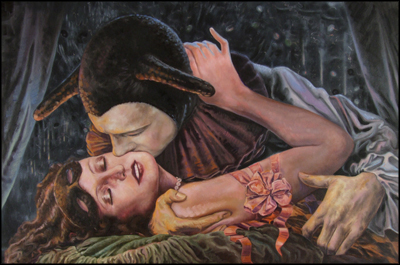
And just so that you don’t think Russian children’s books are all sunshine and rainbows, here’s an illustrated version of the French tale Bluebeard from the Soviet era. For all the full images, click here.

We often talk of how Disney films teach children outmoded lessons about gender – both boys and girls receive terrible lessons about how to construct their identity. Cinderella, for instance, teaches us that “if you’re beautiful enough, you may be able to escape your terrible living conditions by getting a wealthy man to fall for you.” The Little Mermaid says, “it’s okay to abandon your family, drastically change your body, and give up your strongest talent in order to get your man. Once he sees your pretty face, only a witch’s spell could draw his eyes away from you.”

Perhaps it’s good to have a children’s book that tells the story of misogyny straight-up, without wrapping it up with singing animal sidekicks and happy marriages. Beautiful illustrations, creepy tale.

Cvetik-Semicvetik (The Flower With Seven Colours)

Cvetik-Semicvetik, or “the flower with seven colors,” is a beloved tale from the USSR. There are many different illustrated versions out there, but perhaps the most trippy one comes from the mind of Russian artist Benjamin Losin. Losin apparently illustrated two different versions of this book, both of which are included here.

The story, lots more lush illustrations, plus a 1948 cartoon version of the tale, after the cut!

New Larkin Grimm Album Imminent, Free Village Voice Download


Photo by Dese’Rae L. Stage

The powerfully enchanting Larkin Grimm, previously interviewed by Angeliska on the Coilhouse blog and featured in Issue Four of our print issue, has a new album coming out next month! You can read about what she’s been up to recently, and preview/download her song “Paradise And So Many Colors” at the Village Voice website.

Last year, the sartorial site StyleLikeU (oh good gracious, LOVE these ladies) posted a wonderful “Closet Feature” on Grimm. It’s as endearing a portrait of the woman as you’ll find anywhere:

“Athena’s Curse, Medusa’s Fate” — Created by Jessica Rowell, Nina Pak, and Elizabeth Maiden

Sometimes, when creative and inspired people get together to collaborate on making imagery in a specific vein that no one’s attempted before, a special kind of magic happens. Case in point, this elaborate photo series independently produced by Jessica Rowell of J-Chan Designs and photographer Nina Pak in cahoots with model Elizabeth Maiden:

Κατάρα της Αθηνάς, η μοίρα της Μέδουσας
Αθηνάς: Elizabeth Maiden
Μέδουσας: Jessica Rowell of J-Chan’s Designs
Photography: Nina Pak
Costume Design & Styling: J-Chan’s Designs
Location: Vancouver, British Columbia, Canada

Ancient Greek lore and steampunk culture clash, titan style, in a sumptuous mythos-meets-modernity photo series depicting the Goddess Athena (Elizabeth Maiden) and the Gorgon Medusa (Jessica Rowell).

According to legend, the once ravishing Medusa was cursed with a monstrous appearance after “seducing” Poseidon, Lord of the Sea, under the roof of Athena’s sacred temple. Hence, this series title (which, translated into English, means) “Athena’s curse, Medusa’s fate.”

Rowell pulled “inspiration from Desmond Davis’ 1981 film Clash of the Titans, then put an atemporal spin on things by incorporating several contemporary ingredients that “also felt industrial and familiar to alternative culture.”