Franchised Goodies for the Children of Dune

In light of the charming Goodnight Dune children’s book that’s making the rounds online right now, today seems like a great time to share some treasures from my personal stash of weird, random, off-color, No-Seriously-WTF-Were-They-Thinking movie franchise ephemera.

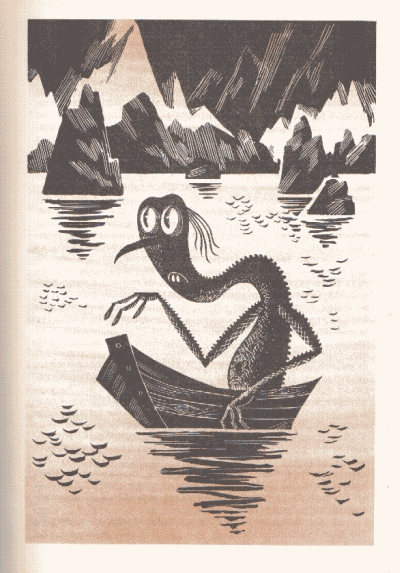
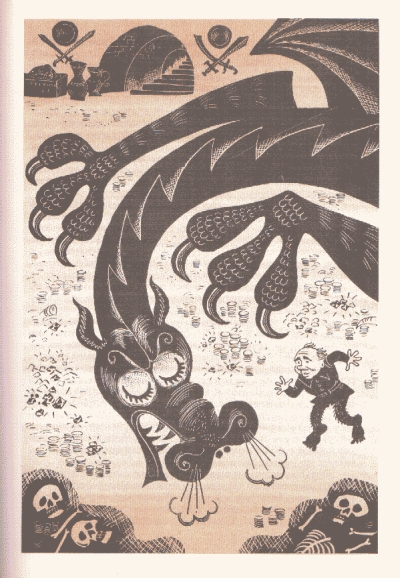
These, for your delectation, are scans and photos of various pages from the astoundingly age-inappropriate Dune activity book series, published in 1984 to promote David Lynch’s movie adaptation of the classic Frank Herbert novel, produced by Universal Studios.

You know, FOR KIDS:

Yes, that’s a coloring page of Dr. Yueh preparing to assassinate Duke Leto with a dartgun. And up at the top there, that’s a floppy, diseased sex organ-reminiscent Guild Navigator, presented a-la la la “Connect the Dots”.

And here’s another cheerful coloring page of the fresh corpses of Duke Leto and Piter:

Heeeeee! Who the frak was in charge of marketing? More to the point, what kind of Melange were they smokin’ during the merch meeting, when it was decided that producing this series of vengeful activity books for a K-through-8 demographic made good business sense?

Well, whoever they were, Coilhouse salutes them.

Explore the childlike wonderment murder, intrigue, suppurating boils, phallic symbolism and knifeplay after the jump.

The Friday Afternoon Movie: The Secret Of NIMH

I’m not sure how Hulu works in countries outside the US at this point. My apologies if you cannot watch this, it’s one of the reasons I try to avoid sites like Hulu.

It’s Friday, people, which means that there’s only a few more hours until you can stick a fork in another soul-crushing work week. Allow the FAM to help that time pass a little more quickly with this week’s presentation of Don Bluth’s 1982 classic The Secret of NIMH, starring, among others, Mary Elizabeth Hartman (in her last role before her suspected suicide), John Carradine, Dom DeLuise, Aldo Ray, and Wil Wheaton.

An adaptation of Robert C. O’Brien’s 1971 children’s novel Mrs. Frisby and the Rats of NIMH, the movie tells the story of Mrs. Brisby, a widowed field mouse, whose son falls ill with pneumonia and cannot leave the house for three weeks. At this time, Spring plowing is set to begin on the farm the Brisbys live on and Mrs. Brisby, knowing she cannot stay where she is, visits the Great Owl who directs her to a group of mysterious rats who live in a rose bush and are led by a wizened old rat named Nicodemus. Brisby learns that the rats, along with her late husband Jonathan, were part of an experiment performed at the National Institute of Mental Health which boosted their intelligence to human levels at which point they made their escape.

The Secret of NIMH was a favorite of mine as a child and recent viewings have done little to dampen my enthusiasm for it. Bluth and his partners, most of who had defected from Disney with him, were fixated on what they perceived to be the decline of animation as an art form. The Secret of NIMH, then, was a collection of expensive and, even at the time, outdated animation techniques. The glowing eyes of Nicodemus, for example, were created by back-lighting colored gels. Characters had different color palettes for individual lighting situations (Mrs. Brisby alone had 46). It’s a veritable showcase of animation and it all makes for a beautiful film. Still, it came at a price, and the film came in so over the original budget that Bluth and his co-producers had to collectively mortgage their homes to finance some of it. There was even a problem with their diminutive protagonist’s name:

During the film’s production, Aurora contacted Wham-O, the manufacturers of Frisbee flying discs, with concerns about possible trademark infringements if the “Mrs. Frisby” name in O’Brien’s original book was used in the movie. Wham-O rejected Aurora’s request for waiver to use the same-sounding name to their “Frisbee”, in the movie. Aurora informed Bluth & company that Mrs. Frisby’s name would have to be altered. By then, the voice work had already been recorded for the film, so the name change to “Mrs. Brisby” necessitated a combination of re-recording some lines and, because John Carradine was unavailable for further recordings, careful sound editing had to be performed, taking the “B” sound of another word from Carradine’s recorded lines, and replace the “F” sound with the “B” sound, altering the name from “Frisby” to “Brisby”.

In the end, there are really two things that make NIMH stick out: its tone and its protagonist. The mood of the film is exceedingly foreboding, especially for a G-rated feature intended for children, without crossing into the historical seriousness of, say, Grave of the Fireflies or the political allegory of Watership Down. When I think of it, the images that come to my mind are bleak, eerie, and filled with fire. Likewise, its heroine is unlike anything one would have seen from Disney. Mrs. Brisby is no princess. She is a middle-aged mother and widow. Her quest is not an epic struggle between good and evil, it is to save her family. She doesn’t fall in love with a dashing male lead, she is not even looking for it, the love she had for another is in her past, before we are even introduced to her. Is she one of the great feminist characters in film? No. But she is a refreshing change from the typical Barbie doll pap most peddle.

Watching The Secret of NIMH it is perhaps most evident that it is a labor of love, both for its story and for the medium it is presented in. It is not a stretch to say that they don’t make them like this anymore. After all, who would be crazy enough to try?

The Friday Afternoon Movie: Let The Right One In

My apologies but I’m unable to embed today’s film. Above is the trailer. The playlist with the film is here.

The FAM is ever ephemeral, dear readers. It is the nature of finding films posted on the internet. Sooner or later they shall be found and, no doubt, taken down. That said this movie’s time may be shorter than some, so get it while it’s hot. Today the FAM presents 2008′s Let the Right One In (Låt den rätte komma in) the Swedish vampire masterpiece directed by Tomas Alfredson, based on the book by John Ajvide Lindqvist who also wrote the screenplay.

I’m posting this today mostly because I finally got around to reading the original novel so the details are still fresh in my mind and, thus, this will be more of an examination of some differences between the film and its source material (though by no means a thorough one.) For those who haven’t seen it, Let the Right One In takes place in 1982 and tells the story of 12 year old Oskar who lives with his mother Yvonne in Blackeberg, a suburb of Stockholm. He is a shy, meek boy who is tormented at school by bullies. One night he meets a young girl on the playground by his building. Her name is Eli and she has moved into the apartment next to his with an older man, Håkan, who Oskar assumes is her father. Oskar will soon learn, as you no doubt guessed, that Eli is not who she seems.

Spoiler Warning: I usually don’t do these as I assume that most people realize that these posts are bite-sized analyses and expect spoilers. However, I will also being discussing the book in some detail, and the thought of ruining two forms of media for the unsuspecting reader makes me feel that a warning is necessary.

Patton Oswalt: “Wake Up, Geek Culture. Time to Die.”


The last supper… before Oswalt’s “a-pop-calyplse.” Image from The Last Supper Collection. Painting by Misha.

Yesterday, Wired published an essay by writer/comedian Patton Oswalt titled Wake Up, Geek Culture. Time to Die. It’s about the demise of geekdom, the rise of otaku culture in America, and what it means to be living in a world where Boba Fett’s helmet appears “emblazoned on sleeveless T-shirts worn by gym douches hefting dumbbells.” All this discussion is very near and dear to our hearts, and was eloquently explored by Joshua Ellis in an essay called Children by the Million Wait for Alex Chilton, which appeared in Coilhouse Issue 04.

Both essays make the point that “we’re on the brink of Etewaf: Everything That Ever Was—Available Forever.” But where Joshua Ellis suggests that we’ve won the culture war by essentially remaking the world in our image, Patton Oswalt argues that  ”with everyone more or less otaku and everything immediately awesome… the old inner longing for more or better that made our present pop culture so amazing is dwindling.” This, he warns, produces “weak otakus” – not a generation of artists, but one of noncommittal pop-culture consumers. “Why create anything new,” he asks, “when there’s a mountain of freshly excavated pop culture to recut, repurpose, and manipulate on your iMovie?” The proposed solution to this problem steers the essay into a weird, fantastical place. In order to rebuild geek culture, Oswalt argues, we must first bring about the “Etewaf Singularity.” He goes on to explain:

It has already started. It’s all around us. VH1 list shows. Freddy vs. Jason. Websites that list the 10 biggest sports meltdowns, the 50 weirdest plastic surgeries, the 200 harshest nut shots. Alien vs. Predator. Lists of fails, lists of boobs, lists of deleted movie scenes. Entire TV seasons on iTunes. An entire studio’s film vault, downloadable with a click. Easter egg scenes of wild sex in Grand Theft Auto. Hell, Grand Theft Auto, period. And yes, I know that a lot of what I’m listing here seems like it’s outside of the “nerd world” and part of the wider pop culture. Well, I’ve got news for you—pop culture is nerd culture. The fans of Real Housewives of Hoboken watch, discuss, and absorb their show the same way a geek watched Dark Shadows or obsessed over his eighth-level half-elf ranger character in Dungeons & Dragons. It’s the method of consumption, not what’s on the plate.

Since there’s no going back—no reverse on the out-of-control locomotive we’ve created—we’ve got to dump nitro into the engines. We need to get serious, and I’m here to outline my own personal fantasy: We start with lists of the best lists of boobs. Every Beatles song, along with every alternate take, along with every cover version of every one of their songs and every alternate take of every cover version, all on your chewing-gum-sized iPod nano. Goonies vs. Saw. Every book on your Kindle. Every book on Kindle on every Kindle. The Human Centipede done with the cast of The Hills and directed by the Coen brothers.

That’s when we’ll reach Etewaf singularity. Pop culture will become self-aware. It will happen in the A.V. Club first: A brilliant Nathan Rabin column about the worst Turkish rip-offs of American comic book characters will suddenly begin writing its own comments, each a single sentence from the sequel to A Confederacy of Dunces. Then a fourth and fifth season of Arrested Development, directed by David Milch of Deadwood, will appear suddenly in the TV Shows section of iTunes. Someone BitTorrenting a Crass bootleg will suddenly find their hard drive crammed with Elvis Presley’s “lost” grunge album from 1994. And everyone’s TiVo will record Ghostbusters III, starring Peter Sellers, Lee Marvin, and John Candy.

This will last only a moment. We’ll have one minute before pop culture swells and blackens like a rotten peach and then explodes, sending every movie, album, book, and TV show flying away into space. Maybe tendrils and fragments of them will attach to asteroids or plop down on ice planets light-years away. A billion years after our sun burns out, a race of intelligent ice crystals will build a culture based on dialog from The Princess Bride. On another planet, intelligent gas clouds will wait for the yearly passing of the “Lebowski” comet. One of the rings of Saturn will be made from blurbs for the softcover release of Infinite Jest, twirled forever into a ribbon of effusive praise.

The essay continues on to describe “year zero for pop culture,” in which we’ll be stuck with nothing but “a VHS copy of Zapped!, the soundtrack to The Road Warrior, and Steve Ditko’s eight-issue run on Shade: The Changing Man” to work with for creating new culture. Oswalt goes on to describe the society that emerges: it includes entire musical genres spawned by Road Warrior (“waste-rock” and its counterpoint, “flute-driven folk”), the creation of the Iranian Beatles, and the ubiquitousness of Shade as “the new Catcher in the Rye.”

A great read, right down to the comment thread. For the full essay, click here. [Via William Gibson, whose name, incidentally, appears in both essays, both times in the passages describing the authors' personal golden age of otaku/alternative culture].


One possible visualization for how Patton Oswalt’s “Etewaf Singularity” may play out – with the world being destroyed by 8-bit characters from old video games. Amazing video by Patrick Jean.

The Racist Undertones Of Marmaduke

WHITEPRIDETV.COM has a varied lineup of video content for the modern white supremacist to educate themselves and keep up on the latest in good old American racism. From This Is The Klan to The White Woman’s Perspective Thomas Robb and his group of camera wielding bigots cover the entire gamut of life as an ignorant douchebag. They also, thankfully, have some children’s programing to help Confederate flag waving parents educate their offspring in the proper manner.

The programming in question is The Andrew Show which is, in case you had not already figured it out, “A Show for White Kids” (Finally!). Plopping the blond-haired youth in front of a green-screened bookcase, WHITEPRIDETV.COM lets the little tyke go at it, tackling the issues that face white kids today. This particular episode deals with the film Marmaduke, an unremarkable film in nearly every way except for the fact that it is a metaphor for racial tension; specifically the denial of land to white people by people of other various and sundry races. So goes Andrew’s thesis, a thesis he does not expound upon his, presumably because his point is so self-evident even a child can see it.

It is an unfortunate reality that even the worst among the human race can procreate, taking an otherwise unfettered mind and twist it with their own, poisonous worldview. It is, perhaps, worse when they give them their own television show to parrot that moronic bile.

Via Videogum : The Daily What

The Books: Cold Freezin’ Night

Experimental musical duo The Books are highly thoughtful and empathic scavengers and re-interpreters who’ve been surprising and delighting audiences for over a decade now. Paul de Jong and Nick Zammuto’s songs –a strange melange of acoustic melodies (cello, guitar, banjo, etc.) spliced together with an ever-expanding library of “found sounds”– are dense with samples lifted from home recording cassettes plundered from thrift stores, as well as bootlegged video tapes. They also cut and paste sounds recorded from children’s toys and random non-musical objects to create looping percussive beds. The resulting music is off-kilter yet tightly controlled, and often unexpectedly danceable.

This chaos-wrangling, ephemera-pillaging style is well-represented visually by the music video for “Cold Freezin’ Night”, a weird 80s schoolyard disco taunt off their latest album, The Way Out:


via Dustykins once again. (Girl, you really gotta start blogging for us!)

History Of The USSR For Children

Coming from such an educationally backwards country I appreciate this brief history of the USSR told with the aide of LEGO mini-figs which explains that much of the Soviet Union’s establishment was the product of a strong desire for kisses. Likewise, “Everybody was afraid of him because of his moustaches that were tickling.” really helps put the brutal regime of Joseph Stalin into perspective.

The FAM: In The Realms Of The Unreal

Halloween is over and, having finally awoken from a glucose induced stupor, the FAM returns with a new offering, devoid of the supernatural thrills that occupied this space for the past two weeks. Today we present In the Realms of the Unreal, the 2004 documentary directed by Jessica Yu about famed outsider artist and reclusive crazy-person Henry Darger. Darger, born on April 12, 1892 was a janitor in Chicago who occupied a second-floor room on Chicago’s North Side, at 851 W. Webster Avenue, for forty years, beginning in 1930 until his death on April 13, 1973. It was only then that his landlords discovered what he had been up to all those years.

It turns out that Darger spent most of his free time writing and drawing. His magnum opus, and the work that would gain him the majority of his posthumous fame, is entitled The Story of the Vivian Girls, in What is known as the Realms of the Unreal, of the Glandeco-Angelinnian War Storm, Caused by the Child Slave Rebellion, a mammoth work comprised of 15,145 single-spaced, typed pages, several hundred illustrations, and a number of scroll-like paintings, all of which employ extensive use of images taken or traced from magazines and children’s books and an obvious transgender streak — the children found therein not only largely unclothed but also many in possession of male genitalia. This work was in addition to a 5,084 page autobiography entitled The History of My Life (which, incidentally, spends 4,672 pages on the fictional account of a tornado named “Sweetie Pie”), 10,000 handwritten pages of a second fictional work called Crazy House: Further Adventures in Chicago (featuring the same Vivian sisters from Realms and placing them in Chicago during the same time period occupied by Realms), and a number of journals including a daily record of the weather over a span of ten years.

Realms itself is not easily summed up, though Wikipedia does a fairly good job:

In the Realms of the Unreal postulates a large planet around which Earth orbits as a moon and where most people are Christian (mostly Catholic). The majority of the story concerns the adventures of the daughters of Robert Vivian, seven sisters who are princesses of the Christian nation of Abbieannia and who assist a daring rebellion against the evil John Manley’s regime of child slavery imposed by the Glandelinians. Children take up arms in their own defense and are often slain in battle or viciously tortured by the Glandelinian overlords. The elaborate mythology also includes a species called the “Blengigomeneans” (or Blengins for short), gigantic winged beings with curved horns who occasionally take human or part-human form, even disguising themselves as children. They are usually benevolent, but some Blengins are extremely suspicious of all humans, due to Glandelinian atrocities.

The impetus for Realms, according to his autobiography, was the loss of a photograph of all things. Darger was a lifelong hoarder of magazine and newspaper clippings and one of the most important it seems was a portrait from the Chicago Daily News from May 9, 1911 of five-year-old girl named Elsie Paroubek who disappeared on April 8th and was found a month later, murdered. When it went missing, Darger believed it was among a number of clippings he suspected were stolen from his work locker. The loss of the photograph upset him so much that he used it as inspiration for the assassination of child labor leader Annie Aronburg, which would spark the main conflict of Realms.

This, finally, brings us to the feature. Yu’s film does an admirable job of covering Darger, especially considering the roadblocks involved in trying to document the life of a recluse. Considering there are only three known photographs of the man, she gets the most mileage by animating scenes from Realms with voiceover. There are a few interviews with neighbors, but the majority of the film are found in these segments and they are endlessly fascinating. In fact, considering the number of sources we have, Yu’s effort is likely to be the best anyone is going to be able to produce about the man. Depending on one’s viewpoint this may be a best or worst case scenario. At best all that is left is one’s art, there is no personality to explain or influence opinion; the viewer is given only the product of the artist’s creativity. On the other hand, the subject matter is so strange that the viewer may spend an inordinate amount of time attempting to discern the mindset of the creator. In the case of Darger, I would say that for most (and I would probably include myself in this) it is the latter and for that reason In the Realms of the Unreal can be as frustrating in its limitations as it is compelling.

Savage’s “It Gets Better” Movement Gains Momentum

As many of you already know, it’s been a heartbreaking month in the US for the LGBTQIA community. The tragic story of 18-year old Rutgers student, Tyler Clementi, who jumped off the George Washington Bridge to his death, is the most high profile in a series of suicides in recent weeks of young people believed to have victims of anti-gay bullying and outright hate crimes. There was Billy Lucas, 15 years old, who hanged himself in a barn in Greensburg, Ind. Asher Brown, 13, who died of a self-inflicted gunshot wound to the head in Houston, TX. Seth Walsh in Tehachapi, CA, also 13, hanged himself from a tree in his backyard. Of course, those are only recent deaths we’ve heard about.

Writer, educator and activist Dan Savage wrote this for his Savage Love column late last month:

Nine out of 10 gay teenagers experience bullying and harassment at school, and gay teens are four times likelier to attempt suicide. Many LGBT kids who do kill themselves live in rural areas, exurbs, and suburban areas, places with no gay organizations or services for queer kids.

“My heart breaks for the pain and torment you went through, Billy Lucas,” a reader wrote after I posted about Billy Lucas to my blog. “I wish I could have told you that things get better.”

I had the same reaction: I wish I could have talked to this kid for five minutes. I wish I could have told Billy that it gets better. I wish I could have told him that, however bad things were, however isolated and alone he was, it gets better.

But gay adults aren’t allowed to talk to these kids. Schools and churches don’t bring us in to talk to teenagers who are being bullied. Many of these kids have homophobic parents who believe that they can prevent their gay children from growing up to be gay—or from ever coming out—by depriving them of information, resources, and positive role models.

Why are we waiting for permission to talk to these kids? We have the ability to talk directly to them right now. We don’t have to wait for permission to let them know that it gets better. We can reach these kids.

So here’s what you can do, GBVWS: Make a video. Tell them it gets better.

Since September 23rd, when Savage posted that initial video of himself and his husband Terry telling their stories and urging kids to hang in there, the “It Gets Better” video outreach project has been growing in leaps and bounds, gaining coverage, support and involvement from all over the place, including NPR, the ACLU, and hundreds of vloggers on YouTube. On Thursday, Ellen Degeneres aired her own “It Gets Better” segment and updated an End Bullying page on her website.

This wonderful project was launched specifically to help LGBTQI youth get through the hard times, but as many participants have noted, it’s a sentiment that can be applied more broadly to freaks, geeks, weirdos, outcasts and oddballs of all stripes. Hang in there, kittens. It really does get better. Meantime, there are tons of resources to tap into: The Trevor Project, Scarleteen, We Give a Damn, We Are The Youth, I’m From Driftwood, PFLAG, We’ve Got Your Back, and a wide assortment of National Crisis Hotlines, for starters. You are not alone.

To share your story of how you got through the rough shit and how life really, truly did get better, create your video, post it to YouTube, and send the URL to mail (at) savagelove.net. They’ll review it and post it to their FAVES section. Bless you, Dan Savage. You’re a mensch.

BTC: Freaky-Ass Singing Orange from Sesame Street

Let’s kick off the week with a little extra vitamin C:


(Thanks for reminding me, Dusty!)

All hail the caterwauling Carmen Orange. Venerated demigod of public broadcasting, mesmeric and disturbing in equal measure, she haunts the collective memory of multiple generations of Sesame Street-watching children. According to a couple of unconfirmed reports online, she was animated by Jim Henson himself.

Really, would anyone be surprised if that were true?