BTC: Happy Birthday, Björk!

Good morning! On this day in 1965, in Reykjavík, Iceland, a strange and delightful being called Björk Guðmundsdóttir was born. Or hatched out of a pod. Or was ejected from a volcano. Or something. Whatever.

Anyhoo… 46 years later, she’s still brimming with vim, vigor, and weirdness. Coilhouse has compiled a massive YouTube playlist of her music videos to honor the occasion of her whelping, and hopefully help you to wake your ass up on this glacially chilly November morn.

Click here to watch the rest of Coilhouse’s EPIC BJORK BIRTHDAY PLAYLIST ON TEH YOOTOOBZ.

Breathing New Life into Dead Men’s Patterns: An Interview with Artist Hormazd Narielwalla


From the “Fairy-God, Fashion Mother” series by Hormazd Narielwalla.

Born in India of Persian-Zoroastrian ancestry and now living London, artist Hormazd Narielwalla forages for patterns in historic tailoring archives to use in conjunction with his own photography, sketches and digital compositions, giving their forms new life as whimsical narrative works of art.

You can see some lovely examples of Homi’s unique work in our Issue Six feature devoted to Klaus Nomi. The puppet-like pattern collages are taken from Narielwalla (nickame Homi)’s series A little bit of Klaus…a little bit of Homi. Each Nomi figure contains elements extracted from the vintage bespoke pattern blocks of Savile Row tailors, made for customers now long-deceased. We could not have found a more deeply fitting serenade to the operatic, avant-garde style icon than Narielwalla’s work, with its deft mixture of affection, craft, and thoughtfulness. (Thank you again, Homi.)

In the following interview, Narielwalla tells Coilhouse a bit more about his work and his life. His current show, Fairy-God, Fashion-Mother, which features a series of paper collages inspired by cult curator Diane Pernet, will be viewable at The Modern Pantry in London until January 7th.


From Hormazd Narielwalla’s “A Little Bit of Klaus, a Little Bit of Homi” series.

How did you get started making art, and what eventually drew you to this very specific and personal form of creative expression?
I was pursuing a Masters degree at the University of Westminster, aiming to become a menswear designer specializing in alternate ways of communicating fashion. During one of many research meeting with William Skinner (the Managing Director of Savile Row tailors Dege & Skinner), I acquired a single set of bespoke patterns belonging to a customer, now-deceased.


From the “Dead Man’s Patterns” series by Hormazd Narielwalla.

The tailors no longer needed the patterns, as they were made for a shape that no longer exists. With the support of my mentors British designers Shelley Fox and Zowie Broach (from Boudicca), I followed my instinct to divorce the patterns from their original context, viewing them as abstract shapes of the human body instead. That is when and where my first publication, Dead Man’s Patterns, was conceived.

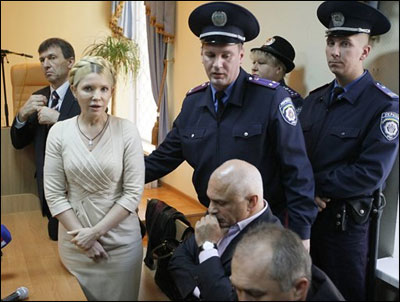
Yulia Tymoshenko Sentenced to 7 Years Behind Bars
NO!!!

After losing the presidential election last year, Ukranian prime Yulia Tymoshenko was ousted from the government when her long-time opponent Viktor Yanukovich came to power. Today, she was sentenced to seven years in prison over a gas deal that she signed with Russia in 2009. Tymoshenko is accused of abusing power while serving as prime minister by authorizing imports of Russian gas at elevated prices without government approval. The Guardian reports:

Ukraine shut the book on its flirtation with democracy and European integration on Tuesday when it sentenced former prime minister Yulia Tymoshenko to seven years in prison in a trial widely seen as a political witch-hunt.

Yulia Tymoshenko is many things to many people. A brief rundown of Coilhouse’s Tymoshenko-stalking over the years:

  • Is Ukraine prime minister secretly a goth? (An exhaustive analysis of Tymoshenko’s dramatic, neo-Victorian sense of fashion)
  • Exquisite Tymoshenko Doll Helps Orphans (In which I beg the Coilhouse community to buy me a $53K Tymoshenko porcelain fashion doll and further dissect her penchant for black lace and leg-o-mutton sleeves)
  • Asgarda – The legend of a mountain-dwelling tribe of paramilitary Amazons who have built a up a cult around Yulia Tymoshenko

Tiger-owning, motorcycling-stradding Yulia Tymoshenko is also an anime and manga character in Japan, the subject of bizarre fan art and a beloved cosplay character. Her sentencing has been the subject of a topless protest by self-described “bitches of democracy” activist group FEMEN (in typical self-contradictory FEMEN fashion, Lady Yu was also the subject of a mocking striptease/protest some months before).

I don’t pretend to know enough about Ukraine’s politics to say whether she’s corrupt or not. If FEMEN is to be believed, the entire trial is “a squabble between two criminal gangs [being presented] as a battle between good and evil.” That’s usually the way these things go.

Even if that’s the truth, I don’t want Lady Yu to go to jail. I want her to continue being one of the most powerful and fabulous women in the world, to wear crinolines with jet-black diamonds and a matching lace-embroidered jet pack, for her to make Ukraine the first nation to colonize Mars, to deploy android copies of herself, and to conduct international diplomacy while riding a dinosaur. Because I believe in this:

FREE YULIA!

[via Daniel]

Finnish Door Opening

Watching this video I cannot exactly be sure if this isn’t in jest. Surely, one would think, there is no need to explain the proper way to open a door. Surely, one would think, if those Scandinavians figured out the mechanics of leaving a room, the Finns would have as well. This video seems to illustrate otherwise, indicating that, at least until 1979, the Finnish people were constantly running, full-tilt, into entryways, oblivious to how these infernal blockades functioned, perhaps flailing wildly at the door knobs (provided they had not knocked themselves unconscious) their spastic flapping eventually resulting in the door opening after, what must have seemed, an eternity; the sad, exhausted individual collapsing through the doorway, already dreading the next encounter. One could theorize that, with so much of their faculties taken up by trying to master their sadistically difficult language, they have little capacity for much else inside their brain-meats. (Editor’s Note: This is just the theory of one man. It does not represent the opinions of Coilhouse or the Editors and does, in fact, come from the diseased mind of a crazy person. The Finnish people have a wonderful language and are also in possession of exemplary brains.)

Whatever the reason, there still exists this clip of a dapper, mustachioed gentleman, wearing, one might say, an obscenely wide tie, demonstrating how to open a door in a manner that would most likely result in the practitioner immediately being ejected from the space they had just entered on suspicion of being some sort of trespasser; especially in conjunction with the aforementioned moustache. Perform at your own risk.

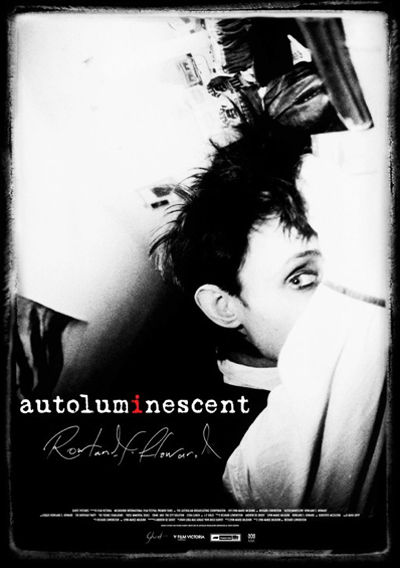
Official Trailer for “Autoluminescent” (Rowland S. Howard Documentary)

The lovely people at Ghost Pictures just sent us the link to their new official trailer for the upcoming Rowland S. Howard documentary Autoluminescent, which is slated for an Australian theatrical release of Oct 27, 2011.

“Autoluminescent traces the life of guitarist, songwriter and artist Rowland S. Howard. Rowland S. Howard was an influential figure in contemporary music, particularly renowned for his role in seminal post-punk bands The Birthday Party, Crime & City Solution, and These Immortal Souls. In a career spanning 30 years Howard worked with the best artists of his generation, including Nikki Sudden, Henry Rollins & Lydia Lunch. His was a singular talent, cut short by an untimely death in 2009.”

No word on further screenings yet, but if there’s any creative justice in this world, Autoluminescent will eventually be shown internationally and run the festival circuit. Fingers crossed, anyway.

Previously on Coilhouse:

“Why You’re Wearing Feathers Right Now” by Jenka Gurfinkel


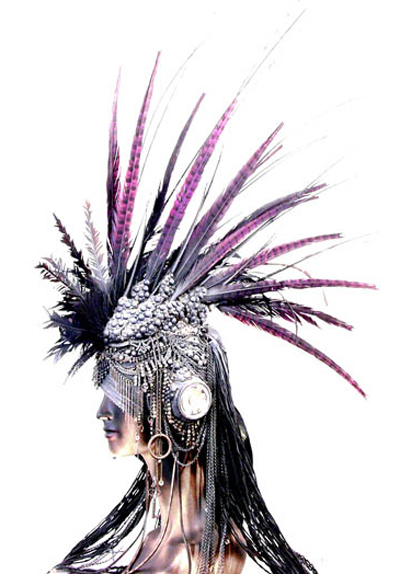
Jocelyn Marsh wearing a headdress by Tiffa Novoa. Photo by Brion Topolski. 2005.

Recently, Jenka Gurfinkel –a longtime mover/shaker in the California indie cirque scene– wrote “Why You’re Wearing Feathers Right Now”, a fantastic personal essay that happens to dovetail nicely (pun intended) with the extensive Tiffa Novoa love fest we ran in Coilhouse Magazine last year. Gurfinkel’s unique take on the current exploding trend of plumage in both indie and mainstream fashion is a deft mix of memoir and cultural nodal point-mapping:

“In the summer of 2011, feathers have become a staple of every sartorial and tonsorial aspect imaginable. The other day I was asked my opinion as to where this current ubiquity of feathers has come from. But as it turns out, I happen to have something better than an opinion: I have an explanation.”


El Circo performer at Burning Man, 2005. Photo by Siouxzen Kang.

“Just two years out of college, I stumbled into the role of production manager for a newly-formed, L.A.-based vaudeville cirque troupe called, Lucent Dossier. Through that initial involvement with Lucent I would meet many other circus groups, including El Circo, who were by then based in San Francisco along with The Yard Dogs Road Show and Vau De Vire Society. There was also March Fourth Marching Band in Portland, Clan Destino in Santa Barbara, and Cirque Berzerk, and Mutaytor in L.A. As these acts grew, the I-5 Freeway became a central artery of culture, pumping a distinct combination of art, music, fashion, and performance up and down the west coast. A social scene evolved around these circus troupes the same way the punk subculture sprang up around the bands that defined it.”


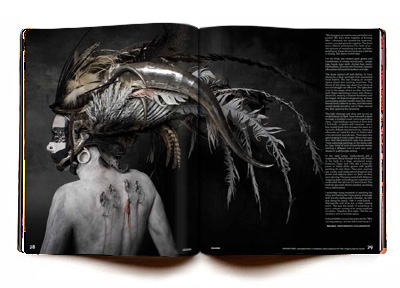
Full page Issue 05 Coilhouse spread of performer Joshua David wearing a Ernte feather headdress by Tiffa Novoa. Photo by Spencer Hansen.

“In the early to mid-aughts (when the photos above were taken) the feather was as de rigueur a cultural signifier within the circus scene as the safety pin was for punks in the late 1970s and early 80s. In fact, back before it was so commonplace as to lose meaning (or induce a national feather shortage), condescending terms for those sporting the look sprang up within the subculture: “Feather mafia,” was one I heard thrown around; ‘Trustafarian peacock‘ even made it into UrbanDictionary.com. And then, something else began to happen…”

View the full essay at Social Creature dot com.

As far as this ubiquitous trend of wearing feathers goes– if you adorn with birdie bits, please consider researching where they come from! Buying ethically and responsibly is beautiful. Here are some great resources:

Farewell, Peter Falk

“Peter has a great range from comedy to drama. He could break your heart or he could make you laugh.” ~Director William Friedkin

To honor a handsomely disheveled, gruff-voiced and lovable actor who has passed away, here’s a beautiful scene from Wim Wender’s Wings of Desire:

Read more about how Falk came to play an ex-angel in the classic German romantic fantasy film here. (Via moonandserpent.)

Revisiting The House of Collection


Photo by Trevor Tondro for The New York Times

Two urban faery friends of ours in Williamsburg, ladies who have cultivated one of the most unique and enchanting domiciles you’ll ever see, are attracting a lot of attention, lately! Coilhouse first posted about Paige Stevenson and her Brooklyn loft, now called The House of Collection, in Feb of 2008. Since that time, the ever-inspiring Paige and her consummately luminous domestic partner, Ms. Ahnika Meyer-Delirium, have been working (and playing) toward making their wondrous 2000 square-foot loft more vibrant than ever.

Paige’s interview with All That We’ve Met last month is sure to inspire. Even more recently, the New York Times’ in-depth coverage of the House of Collection, –which features both Paige and Ahnika discussing their kindhearted philosophies of life and decor–  offers a gorgeous tour of their abode. An excerpt from that article, titled “In Williamsburg, a Live-In Cabinet of Curiosities“:

It’s the way objects are deployed — all over the place, in large quantities and with a sense of play — that makes for something unexpected. A mounted deer’s head is one thing. A deer’s head with a pink brocade eye patch, false eyelashes and a glittery nose is another.

Likewise, grouping all the plants in the living room, even when it’s a room as large as theirs, makes an impact. “People sort of melt open,” Ms. Meyer said. “They feel as though they’re in a magical fairyland. But they also feel at home.”

The House of Collection is rich in such contrasts, a place cozy and vast, one that is urban but, thanks to the greenery, the farm tools and animal forms, has a country feel. It’s fitting for a couple who are both very domestic and deeply unconventional.


Photo by Trevor Tondro for The New York Times

New York City can sometimes feel like an especially cold and aloof realm… yet the HoC is as warm, welcoming and accepting a place as you are ever likely to observe.

Ah, you beauties! Well done.

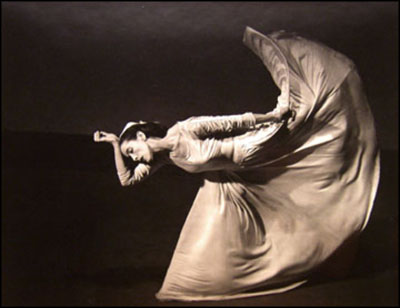
Happy Birthday, Martha Graham


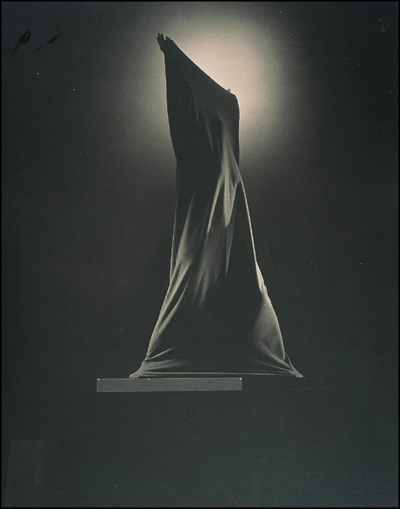
Photo by Yousuf Karsh.

Martha Graham, Mother of Contemporary Dance, speaking to friend and colleague, Agnes de Mille:

“There is a vitality, a life force, an energy, a quickening that is translated through you into action, and because there is only one of you in all of time, this expression is unique. And if you block it, it will never exist through any other medium and it will be lost. The world will not have it.”

“It is not your business to determine how good it is, nor how valuable, nor how it compares with other expressions. It is your business to keep it yours clearly and directly, to keep the channel open. You do not even have to believe in yourself or your work. You have to keep yourself open and aware to the urges that motivate you. Keep the channel open. … No artist is pleased. [There is] no satisfaction whatever at any time. There is only a queer divine dissatisfaction, a blessed unrest that keeps us marching and makes us more alive than the others.”

As quoted in The Life and Work of Martha Graham (1991) by Agnes de Mille, p. 264.


Martha Graham, photographed by Edward Steichen for Vanity Fair, 1931. (via)

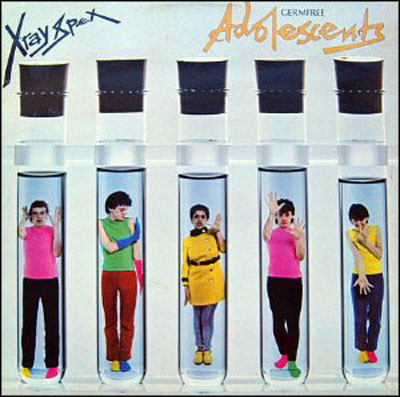
Poly Styrene (3 July 1957 – 25 April 2011)

“You remember that old song ‘Que Sera Sera, Whatever will be, will be, the future’s not ours to see’? I’ve always felt that. It’s been a rollercoaster ride, but I wouldn’t change a thing.” –Poly Styrene

Marianne Joan Elliott-Said, best known as Poly Styrene, legendary singer for the short-lived, seminal punk band, X-Ray Spex, has died at the age of 53.

This sad news comes to us mere weeks after Styrene officially released her final solo album, Generation Indigo, shortly after revealing to the press that she was fighting for her life. (Oh, cancer, up yours.)

Young Poly Styrene wore braces and bright Technicolor dream coats. She looked and sounded nothing like Crystal Gayle or Karen Carpenter. Instead, she hollered jagged lyrics from the bottom of her heart with all of the raw strength and fire of her male contemporaries in the ’77 UK punk school, plus a bit of something extra: full on, straight-up, unapologetic female outsider outrage, and a ferocious personal philosophy of anti-consumer culture environmentalism the likes of which punk would not see again until the Dead Kennedys.

In fact, Billboard would one day call her the “archetype for the modern-day feminist punk”. She certainly was, to put a point on it, “one of the least conventional front-persons in rock history, male or female”. [via]

NME writer James McMahon:

We live in an age where Jarvis Cocker and Beth Ditto are long established alternative icons, where Lady Gaga dressing head to toe in offal barely raises a shrug. Within the reign of Olivia Newton-John, like all the best popstars of their time, Poly Styrene must have seemed like she’d fallen to earth from another – most likely day glo daubed – world. She was to the spirit of individuality what Christopher Columbus was to having a wander.

Rest in Peace, badass woman. You broke the mold.


Press release photo for Generation Indigo.