Alt Culture Antibodies


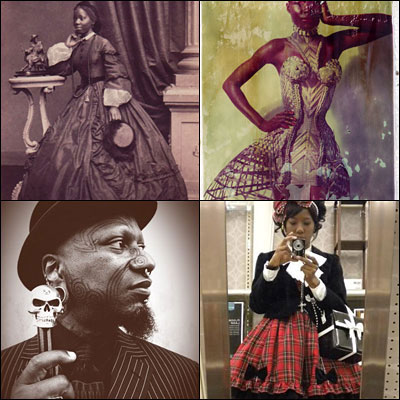
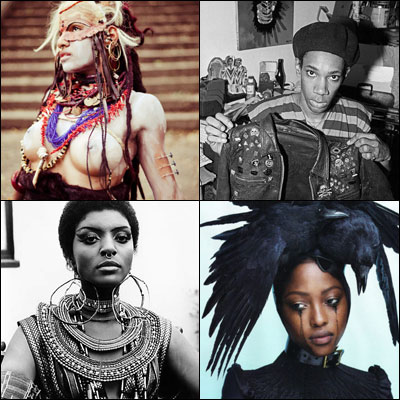
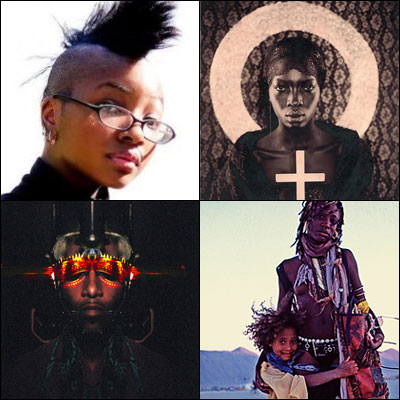
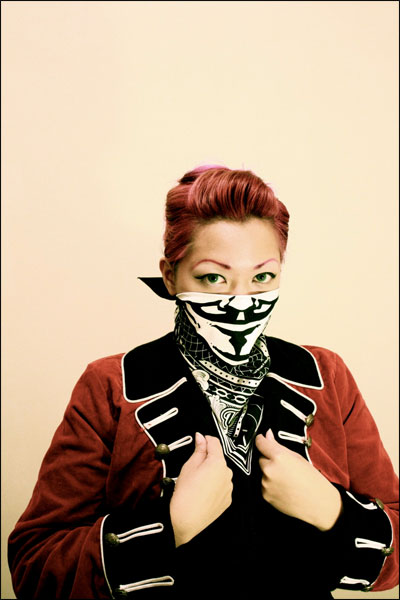
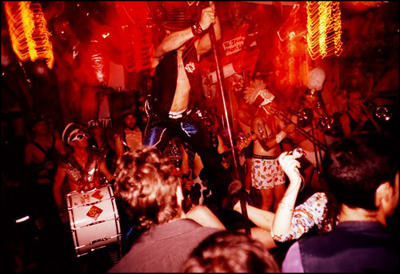
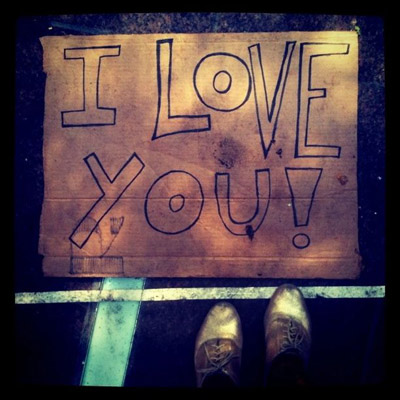
Photo by Hunter Freeman.

I’ll try to keep this short; it’s late and there’s not much time left. Please forgive me if you’ve heard parts of this story before.

For me, it started with an old box of science fiction. I tore through Samuel R. Delany, Joanna Russ, Gene Wolfe, and others, reliving stories old by the time I cracked the pages. I didn’t care.

To my mind, the New Wave had it: the future was something to play in. This status quo was the most transient of things, its passing viewed with a sense of infinite possibility. If there were other cultures out in space, forward in time, why not here? Why not now?


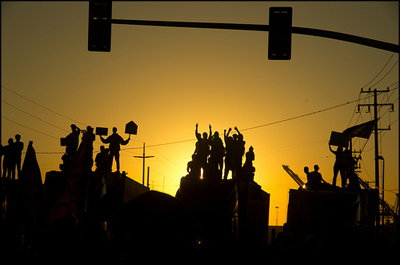
Photo by Mike Brodie.

I lived in one of those amazing, barely-clinging corners of the country too many ignore when they talk about culture of any variety. No metropoli there, just a scattering of people trying their desperate best. By the time I busted open the box full of old books, I had already faced a fair amount of poverty, hardship, and even death.


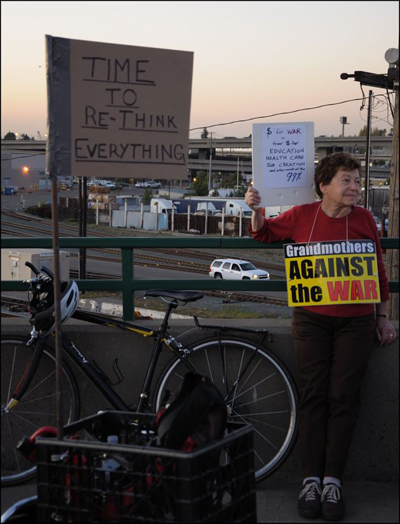
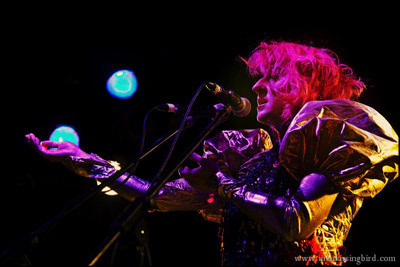
90s Cyberpunk portraiture by Steve Pyke.

But here, as the years wore on and I read my way through an uneasy adolescence, was something else: here was hope, in the most dangerous fashion. Somewhere out there, people changed their personalities, moved in unison, turned boundaries into blurs transitory as old blood on a highway.

By that point I did not care about ridicule, and laughed when someone threatened me, but this I was terrified of, sure that the half-described scenes — goths, ravers, activists, and more —  faced possibility with a courage I felt I’d never know.

Aja Lathan, Queen of Diamonds

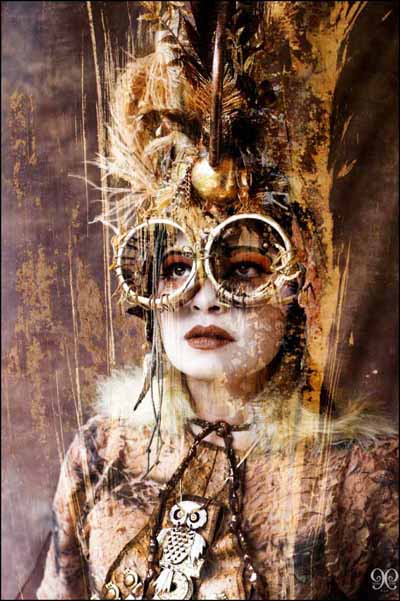
WHOAH. Check out this sneak preview photograph of Aja Lathan as The Queen of Diamonds from a shoot for the San Francisco-based Five & Diamond collective by Allan Amato. Lathan is adorned with a breathtaking array of pieces crafted by various indie and alternative designers associated with the 5&D store/gallery:

Aja Lathan as The Queen of Diamonds for Five & Diamond / Photography by Allan Amato / Art Direction by Jessica Atreides / Styling by Ricardo Felix / Makeup by Medina Maitreya / “Pharoah” Headdress by Monica Wallway / Gold Neck Coil by Tawapa / Crystal Necklace by DUST / “Ruff” Ruched Scarf by Radio Cloth / Studded Bra / Axis Waist Cincher by Steam Trunk / Burlesque Skirt by Miss Be / Leather Gloves by Sparrow / Rings by Jungle Tribe / Shot at Purebred Pro Studios

“The Five and Diamond Design collective is a collaborative project created to promote local artists and designers while providing a resource to San Franciscans and beyond for unique, artistically designed apparel, jewelry and accessories.”

This shoot was obviously a massive group effort. (Bravo!) Keep an eye on 5&D’s twitter for more information about this shoot and other lovely stuff.

A chat with Justin Simien & Lena Waithe of “Dear White People” (via Geekquality)

As mentioned previously, for the next wee bit, we’re going to be cross-posting some choice Geekquality blog pieces that we think may be of interest to the Coilhouse readership. First up, this interview with writer/director/producer Justin Simien and producer Lena Waithe about their indie film Dear White People, conducted by Geekquality contributing editor Moxie Munroe earlier this summer. (Thanks again to everybody over there. We <3 you.) ~Mer


MOXIE: I’m completely in love with your project, having seen the trailer on Shadow And Act. What sparked the idea for the project?
JUSTIN SIMIEN: The original idea for the film happened during my senior year at Chapman University. After growing up in Houston, attending the rather diverse High School for the Performing and Visual Arts, college life at a small private college in Orange County was a four year long culture shock. I wanted to comment on my experience and started collecting personal episodes like mitigating the sheer disillusionment in certain White students when I couldn’t teach them how to crypt walk, or when I decided to finally cut my substantial fro, or just in general when I acted differently then the Black people they saw on 106 and Park.
LENA WAITHE: I was first introduced to [the project] in a writers group (which is how Justin and I met). He was writing it as a TV show, but all the themes and the characters were the same, and it had a huge impact on me. I loved his voice and I loved him. Of course we quickly became close friends and I finally read the feature length version of “2%” which is what it was originally called (because the black students at Manchester only made up two percent of the population). And once I read the feature, I was just sold on helping him bring this story to light.

M: As a Black woman and a creative I know I’ve had conversations with folks time and time again, especially in college, that are reminiscent of a lot of moments in the trailer. What was the moment when you all said, “We need to make a movie about this”?
JS: I had been working on the material for a few years, trying it as a TV pilot or an overwritten 265 page feature, which didn’t garner much interest for some strange reason, when I realized that my professional life was mirroring my experiences in college. I was still one of VERY few black faces in most of the places I found myself professionally. Requests to teach friends how to crypt walk were replaced with requests for “Dougie lessons.” I was being confused for the one other Black guy in the office, and the requests to see me with an afro continued unabated, despite my insistence that it was a pain for me to manage and I didn’t really want one.

Also (and more importantly) in the culture there seemed to be a real need for a fresh dialogue about race. The birther movement was gaining momentum, the ugly incidents over a “Black” themed party thrown at UCSD mirrored scenes from the script, and debate over the lack of Black voices in film and tv was happening all around me. That’s when I started the twitter account @DearWhitePeople and working in earnest to get the script to a place where it could be shot as a feature.

LW: I dug [his Twitter] so much that every now and then I would pitch him jokes for it and he would throw them up there. But myself, and one of the other producers Ann Le (who’s been there from the beginning) have been passionate about the film for years. And Justin’s been working on the project for about 7 years. So it’s always been around, I think we just all came to the point where we said it’s either now or never. And thank God, because the timing could not have been better.

M: How has the use of social networking aided in the development of this project? (Big congratulations on meeting and exceeding your IndieGoGo goal, by the way.)
JS: Starting the Twitter account was great because it allowed me to really work out the voice of one of the film’s leads. In the film Samantha White starts a radio show on campus called “Dear White People,” the controversy over which is a driving force for a lot of the plot. Through Twitter I was able to test out material, refine her voice, and gain some insight on the people that were so offended by what they perceived as an accusation of racism they responded to the account with genuinely racist comments.

LW: We’re a generation that lives on the internet. I actually credit Facebook the most because we can send the link to people we aren’t even friends with in a Facebook message, and the people we are friends with have no problem with us posting the link on their wall. When something is shared and posted on Facebook a million times, that’s when you know you’ve struck a nerve. And all the producers started to get all these random friend requests soon after the trailer launched. That’s when we knew folks were sharing it, emailing it, tweeting about, and blogging about it. When the producers would sit down and discuss the strategy to push the trailer we always knew that we would use Facebook and Twitter. That’s the best way to reach OUR audience.

M: There have been conversations about Blackness and the “Black Monolith” and what that means since the dawn of the Huxtable Dynasty (a name I’ve just decided to give the period of time between when The Cosby Show hit it big and Girlfriends went off the air). I know the project is called Dear White People but what do you think of the idea of a cultural Black monolith and “authentic Blackness”, and what sorts of conversations about it are you trying to raise with this project?
JS: To me the film is ultimately about identity and how race identity in particular can be both a gateway to and a huge obstacle for reaching one’s potential. This is compounded by the fact that Black folks and non-Black folks all have very different opinions about what being “authentically Black” actually means.

Each of the main characters are going through an identity crisis with regards to their “blackness” whether its not feeling Black enough for the Black kids, not feeling Black enough for the white kids, or feeling too Black for anyone.

Minorities, along with systemic socio economic disadvantage, have the added pleasure of going through life being pre-defined by everyone according to their race, gender, or sexual orientation. Based on how we define ourselves, some of us find solace in our “ethnic cultures” and some of us feel alienated by it.

Ultimately the role of culture (black or otherwise) as I see it is to help us find our voice and footing in the world. But there also comes a time when to really reach our true potential we have to transcend the cultural and identity cues we’ve come to be defined by. Yes I’ve been watching a lot of OWN.

M: All of your characters seem to be very original, and quite different from each other, yet all of them are also really relatable, both to people of color and universally, which is really refreshing to see. Do you think, with independently produced content on the rise and this age of the webseries, we will see more projects by minorities and see a much needed shift toward more diversity in the mainstream media?
JSThe Misadventures of Awkward Black GirlSh*t Black Girls Say, and Sh*T White Girls Say To Black Girls is proof that the internet has made it easier for minority voices to circumvent the usual obstacles of creating and distributing content and connect directly with an audience. Here’s hoping that traditional media, be it films or television, pays attention. Diverse stories in the mainstream seem to be shrinking, creating an even bigger disparity between the demographic make-up of the country and the stories dominating our culture.
LW: I think folks have always wondered when there is one Black success others will follow, and I’ve come to the realization that the work just has to be brilliant. The only way a Black writer/director/actor/producer will be recognized is if the work is amazing and inspired. Not everything out there is great. Justin is extremely gifted. That’s why he has 3 producers behind him (me, Ann Le, and Angel Lopez) because his vision is so amazing. So if Black artists continue to hold themselves to a higher standard then, yes we’ll see a surge.

Felix’s Machines


(Thanks for the heads up, Bricey!)

Artist, musician, and grand master tinkerer Felix Thorn builds machines –wondrous, whimsical, beautiful machines–  by taking apart old, obsolete contraptions and breathing new life, motion, song and light into them. His pieces have been featured in galleries and shop window displays and art installations and commercials, used in various live performances, or as theatrical accompaniment, or as stand-alone film fodder.

He states: ”Although my medium focuses on the development of acoustic sounds, I am continually inspired by electronic music – the countless abstractions act as blueprints for the construction of its acoustic counterparts. I aim to build a space where artificial and dream-like environments can become a reality.”

Felix’s Machines EP available here. The stunning film above was recorded and shot at Gasworks in the UK in the winter 2008, and here’s another one (more of an overview) by Tom Mansell:

Eijiro Miyama, Japan’s Kawaii-est Older Gentleman


Photo by Geoffrey Gray

Eijiro Miyama, also known as Bōshi Ojisan (“Hat Man”) or Harajuku Ojisan, is an outsider artist living in Kanagawa Prefecture, Japan. He’s known for crafting strange hats adorned with dolls, live goldfish, candy wrappers and other adornments.

From l’Art Brut, Lausanne:

Eijiro Miyama was born in Mie Prefecture, Japan. A loner, he never married and has always led a wandering sort of existence. He has had various jobs, notably as a day labourer in the construction industry and as a lorry driver. When he was around fifty-five, he settled in one of the boarding houses for impoverished working men in Yokohama’s Kotobuki district, where the unemployed and the socially excluded, homeless, tend to congregate. Today, aged seventy-four, he divides his time between free karaoke and his parades in town : every Saturday and Sunday, Eijiro Miyama goes to the Chinese district in Yokohama, a very lively place. There he meanders through the crowd on his bike, decked out in his brightly coloured hats and clothing, with messages of peace and fraternity written on cardboard packaging attached to his back.

One day, about ten years ago, Eijiro Miyama walked around with a cup of instant noodles on his head. People turned to stare as he went by. This act, provocative and liberating, gave him a huge feeling of exaltation. He gradually created eccentric headgear that he adorned with toys and sundry objects found discarded at flea markets. But this creator also applies his ingenuity to the clothes bought at jumble sales that he dons for his weekly appearances, turning his body into a support for expression.

Here he is being photographed by the Gothic Lolitas of Japan. Awww! More images and information herehereherehere, here, here, and here.


Photographer unknown.

More images, after the cut!

Help Build a Hackerspace in Baghdad!


GEMSI’s 3D printing workshop in Baghdad with TEDxBaghdad

A Kickstarter project (currently in its last 7 hours!) hopes to foster innovation, learning and creativity in ravaged post-war Iraq. Bay Area-based maker Bilal Ghalib, the creator of GEMSI (the Global Entrepreneurship and Maker Space Initiative), is raising funds on Kickstarter to create a popup hackerspace in Baghdad.

As part of the initiative, GEMSI is collecting stories from “everyday superheroes” living in Baghdad who have used DIY hacks to solve problems in their neighborhoods. One such story, Murtadha Fills In, has already been published in comic form on GEMSI’s site. During the two-day hackerspace event, GEMSI will host skillshares, talks, and workshops structured around the collected stories. The stories will be also be published in a graphic novel available in both Arabic and English.


GEMSI workshop in Cairo during Maker Faire Africa 2011. Photo by Mitch Altman

“The challenges that Iraq faces are vast, but the solutions to those challenges are already inside the country,” says Ghalib in the Kickstarter video. Ultimately, Ghalib hopes that collaborative community spaces become more prevalent in Africa and the Middle East. In the Kickstarter project description, he describes his vision for Baghdad:

Imagine you are a young Iraqi student, just graduating college. Opportunities to work in the country are few, and working outside Iraq is difficult due to strict visa requirements. Your country still experiences violence weekly, while also facing many technical challenges characteristic of a developing country. You want to build the country, you want to share – but you feel isolated. You hear about a group of people who have an open space near the center of town where you can build almost anything. One day you decide to see what it’s about. There, you find others like you: looking at the world around them and thinking about how they can start creating solutions. They are creating open source medical devices, filling potholes in city roads, creating clean street initiatives, or making alternative energy products to fix the intermittent power issues of Baghdad. These are people taking initiative. They are looking to take ownership of their cities and build the change they want to see – serving their communities on the most direct level. At this open space, you have finally found a home to put your talents and energy to work. You’ve found a group you can trust, they are courageous, curious, and want to help you create a better future. You feel happy, you feel capable, you’ve found your people.

GEMSI’s Kickstarter campaign deadline coincides with YouTube disaster “The Innocence of Muslims” (a diametrically opposite example of American-made grassroots activism aimed at the Muslim world) and Newsweek’s incendiary “Muslim Rage” magazine cover (which has been deconstructed beautifully by Twitter).

It’s at times like this – when governments and news media fail on both sides fail to repair the damage – that we need to step up, use crowdfunding, set up our own workshops, and help one another. So – hackers of the world unite. Donate here.

Fe Maidens are the Champions

[Editors' note: We first met the delightful Numidas Prasarn last year at the Coilhouse Ball in NYC. Numi is a Brooklyn-based artist and producer who has cut her teeth on a multitude of mediums and roles in the fashion and photography worlds. She's obsessed with fashion theory, and with creating avenues for people to gain aesthetic control of their lives/find their voices. You can find her on Twitter @OhThatNumi, and at her portfolio site, numiempire.com.]


Fe Maidens, setting up for competition. (via)

There has been a fair amount of rage surrounding sexism and the science/engineering/tech/VG industries in recent months, and for good reason. Controversies such as the harassment connected to Anita Sarkeesian’s Kickstarter campaign, the Boston API Jam , the Dell Moderator debacle, and even this NY Times Article with its baffling “Men invented the Internet” opener (read Xeni Jardin’s great reply on the subject), coincidentally about a sexual harassment suit in a Silicon Valley firm, make it hard to ignore. And while the backlash that follows these controversies brings out scores of positive support and appropriate outrage, the stories of othering and exclusion remain. The truth is, finding a positive female role model in these industries is difficult for outsiders (and sadly, some insiders), largely because their contributions are downplayed, or even silenced.

So how do we make sure the next generation gets fair play? This film is aiming to give some people hope:


Click image to be taken to full-screen player at the official DLG website.

Drive Like a Girl is a short documentary following the Fe Maidens (sometimes called the Fe26 Iron Maidens)– an all-girl robotics team from the Bronx High School of Science. Regional champions in the robotics competition held by FIRST (For Inspiration and Recognition of Science and Technology), the Iron Maidens had six weeks to build and program two robots and compete in a male-dominated tournament.

On one hand it’s refreshing to see these young girls unabashedly go for it, suppored by an organization that encourages them to explore. Their excitement is infectious. On the other hand, it’s heartbreaking watching these high-schoolers confront the same issues they are bound face as they continue down their paths. It starts early, and it starts small.

Or… perhaps it’s a little more sad knowing that the professional world is sometimes exactly like high school.

A Radical Gabfest With Laurie Penny


Author and independent journalist Laurie Penny, aka Penny Red. Photo © Montalbetti + Campbell.

Sharp, exuberant, funny, passionate, and radically progressive, Laurie Penny (aka Penny Red) has a lot to say, and she isn’t afraid to say it… no matter what. In early 2011, at the age of twenty-three, this English writer skyrocketed into the press with her on-the-ground, heart-in-mouth coverage of the UK student protests. Later that same year, her shrewd reportage of the NYC-based Occupy protests garnered her an even larger readership around the blogosphere, on Twitter, and via various mainstream media outlets.

Since then, Penny’s been a columnist for The New Statesman and has written several articles for The Guardian and The Evening Standard. Her first two books, Meat Market: Female Flesh Under Capitalism, and Penny Red: Notes from the New Age of Dissent, were both published in 2011 by Zero Press. Currently, she and our good chum Molly Crabapple are collaborating on an ebook project called Discordia for Random House. Penny’s also spearheading a super secret video series that will “aim to challenge contemporary debate culture” by implementing a time-honored salon format. More information on that coming soon.

I’ve been keen to interview Laurie Penny for ages. Earlier this weekend, we finally got around to talking, and talking… AND TALKING, via Gchat (she at her mum’s house in the woods somewhere in England, me at my folks’ place in the chaparral somewhere in California). In fact, we didn’t shut up for several hours. What follows is the lion’s share of that conversation, minus our occasional indecipherable segues into bat country. (Well, most of them, anyway.)

Good readers, let it be known that this transcript is quite long, so we’ve broken it up into sub-headed sections in the hopes of keeping your eyeballs from bleeding. Laurie, thanks again! Always happy to put a kettle on for you here at Coilhouse. Can’t wait to see what you and your “savage red pen of justice” get up to next!

AD HOMINEM

Mer: You’re not afraid to lead with deeply personal experiences. It’s fair to say that your approach often triggers some very polarizing reactions, both positive/appreciative, and negative/dismissive.  I’ve been wanting to ask you for a long time: how do you balance your openness and vulnerability with the inevitable need for thick skin and tough armor. How do you stay balanced? What’s your “safe space”, figuratively speaking?

Laurie:  Well, I do get a lot of attacks – people tell me I get more and more frightening trolling even than the usual barrage of hate and intimidation and slut-shaming that any woman raising her voice above a whisper on the internet has come to expect. It’s hard, sometimes. I’ve had very dark moments with it, and I don’t know how I would have coped without my friends. I’ve always been a sensitive person. I’ve had to develop a thicker skin, but at the same time I don’t want a tough hide. I think that’s a dangerous thing for a writer, particularly now. You can get to the stage where all criticism, even the legitimate, useful kind, just bounces off you, and you ossify into a little cocoon of your own prejudices. I’ve been very close to kicking it all in several times, particularly last spring, when I had some personal threats against my family on top of the rest of it, and I was also burned out from overwork. I started wondering if the toll it was all taking was worth it, the stress and exhaustion and panic attacks. When I get very low, which happens sometimes, I often think that I’d give up and shut up like these scumbags want if I didn’t hate the idea of letting them win. But spite alone is no way to work or write if you believe in doing your own small bit to change the world.

Mer: No, it’s not.

Laurie: Part of all this is particular to the British press, too. The culture of political debate in this country is toxic right now. Has been for years. And geographically as well as figuratively, it’s a very small island. Also, it’s just that some people really hate it when young women talk about things that aren’t shoes. Not that shoes aren’t important, too! In their own way.

The Collective Tarot: Queer-centric, Radically-Politicked Mysticism

Have you ever wanted Tarot card explanations that rejected the gender binary, referenced political movements, and quoted riot grrl music? If so, this deck is for you.

In The Collective Tarot, wands, coins, cups and swords are replaced with magical found objects:  keys, bones, bottles and feathers. The court cards (page, knight, king and queen) are replaced with the Seeker, Apprentice, Artist and Mentor.  While most card names in the Major Arcana remain unchanged, all have inspired new interpretations. Certain cards that contain outdated tropes (for example, “The Hierophant” – when is the last time that metaphor was relevant to your life?) have been replaced with more relevant symbols, such as “The Code” (referencing the hanky code) and “Intermission.”

The deck is designed by 5 core collective members and 25 contributing artists/co-collaborators. Artist Annie Murphy, one of the deck’s creators, said she felt inspired make a new Tarot deck when she found that she and her friends were unable to relate to the Christian, Euro- and hetero-centric symbolism found in many modern decks. In crafting the Collective Tarot, Murphy and other artists wanted to represent “beings and bodies of size and of color … as well as differently-abled, multi-gendered and multi-generational characters.” The card interpretations speak to the problems of modern people – the struggle to complete an art project, negotiate a polyamory agreement, or organize a volunteer group – while remaining rich with magical lore.

The deck has been out of print for two years. Now, the artists are putting out a limited third edition. A Kickstarter (with only 5 days left to contribute!) is going on for the third print run of the Collective Tarot. Those who contribute $30 or more will get a copy of the deck. In addition to a deck, one of the prizes is a T-shirt featuring the Ace of Bones by Annie Murphy, as seen below:

“Superstar: The Karen Carpenter Story”

The following embed of a notorious 1987 indie film called Superstar: The Karen Carpenter Story comes to us courtesy of New Zealand-based comic book writer and artist Dylan Horrocks, who says “I remember seeing it at the Auckland Film Festival and being disconcerted, impressed, and powerfully moved. [...] The audience laughed a lot at the beginning. But by the end, we watched in stunned silence. I’ve never forgotten it.”

Two years after graduating with an MFA from Bard College, Superstar director Todd Haynes (Velvet Goldmine, Far from Heaven, Safe) shocked and moved unprepared audiences with the now-infamous and nigh-impossible-to-track down 43 minute film. “Seizing upon the inspired gimmick of using Barbie and Ken dolls to sympathetically recount the story of the pop star’s death from anorexia, he spent months making miniature dishes, chairs, costumes, Kleenex and Ex-Lax boxes, and Carpenters’ records to create the film’s intricate, doll-size mise-en-scene. The result was both audacious and accomplished as the dolls seemingly ceased to be dolls leaving the audience weeping for the tragic singer.” (via)

Richard Carpenter, upon viewing the film, was apparently enraged at its depiction of his family– especially by Haynes’ insinuations that Richard was gay. In 1989, after confirming with A&M Records that Haynes had never obtained proper music licensing for numerous Carpenters songs used in the film, Richard Carpenter served Haynes with a cease-and-desist order and sued him for failing to obtain proper clearance.  Haynes offered “to only show the film in clinics and schools, with all money going to the Karen Carpenter Memorial Fund for anorexia research”, but Carpenter was unrelenting, and eventually won his lawsuit against Haynes. All copies of Superstar were recalled and destroyed.  (According to Wiki, the Museum of Modern Art retains a print of the film, but has consented to never screen or exhibit it at the Carpenter estate’s request.)

More than two full decades after it was made, copies of Superstar still remain very difficult to track down. Except, of course (somewhat dubiously), on YouTube.