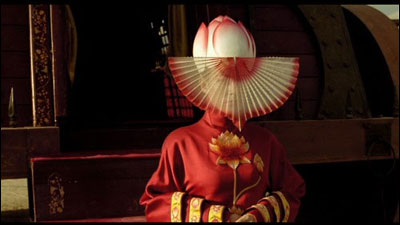
In memory of Satoshi Kon, The FAM presents Katsuhiro Otomo’s Memories (1995), specifically the first episode of three entitled Metallic Rose, directed by Koji Morimoto and written by the late Mr. Kon. Metallic Rose tells the story of a space-faring salvage team who respond to a distress signal (in the form of a recording of Puccinni’s opera Madame Butterfly) emanating from a giant space station in a particularly dangerous area of the galaxy known as Area RZ-3005 or Sargasso. The ship’s two engineers, Heintz and Miguel, are deployed to investigate. Inside they find an opulent, rococo interior and a woman claiming to be an opera singer named Eva Friedal.

The true nature of Eva is something I won’t spoil, but it is safe to say that she is not exactly who she appears to be. Magnetic Rose then, in sci-fi shorthand, is a mash-up of the used, dingy, space-trucker aesthetics of Alien and the psychological mindfuckery of Solaris; and it succeeds admirably. And while it was based on a story by Otomo, it contains many of the themes that would define Kon’s work: the interest in the protagonist’s mental state and subjective reality. Two years later he would go on to write and direct his first feature film, Perfect Blue, and a brilliant career; but the seeds were sown here in the span of 40 minutes. If only that career could have lasted a little longer.

Very sad news out of Japan yesterday as it was confirmed that visionary director Satoshi Kon had indeed passed away, after a long battle with pancreatic cancer. He was 46.

Kon began his career as a manga artist, working with Akira creator Katsuhiro Otomo. He wrote a section of Otomo’s anthology film Memories entitled “Magnetic Rose” and in 1997 he made his directorial debut with Perfect Blue. This was followed by Millennium Actress in 2001, Tokyo Godfathers in 2003, the television show Paranoia Agent in 2004 (featured previously on Coilhouse), and finally Paprika in 2006. At the time of his death he was working on the film The Dream Machine which may be released posthumously.


[photo via AP]

Jack Horkheimer, beloved TV personality and executive director of the Miami Space Transit Planetarium, has died, age 72. Countless legions of us grew up watching the gruff-voiced, wide-eyed astronomer hosting Star Gazer and Star Hustler on public television. Week after week, decade after decade, he’d walk in front of that green screen and excitedly tell us what we could expect to see in the evening sky. His enthusiasm was deeply infectious. He taught us all sorts of things about the universe, and he made us smile.

Farewell, farewell fellow star gazer. We’ll keep looking up.

One of Cleveland’s great contributions to the world passed away yesterday. Harvey Pekar, curmudgeon and cartoonist, was found dead of unknown causes by his wife Joyce Brabner. He was 70 years old. Pekar was, of course, best known for his award-winning comic American Splendor, an autobiographical work that detailed both his daily life and the city he lived in.

Pekar’s start in comics came via Robert Crumb, the two having become friends in the 60′s after meeting at a swap-meet. Crumb encouraged Pekar’s interest in comics and his first story, “Crazy Ed”, appeared in Crumb’s The People’s Comics. Crumb would also go on to illustrate the early issues of American Splendor.

It’s an intriguing aspect of Pekar’s work. Most autobiographical comics are both written and illustrated by the same person, if for no other reason than than the personal nature of the subject matter. American Splendor, on the other hand, was illustrated by a rotating lineup of artists, including Spain Rodriguez, Joe Sacco, Chester Brown, Jim Woodring, Alison Bechdel, Gilbert Hernandez, Eddie Campbell, and a host of others, including many Cleveland-based cartoonists, his wife Joyce, and writer Alan Moore.

Despite all this contributing talent, American Splendor was Pekar’s in every way – and not only because he happened to star in it. Pekar was unflinching in its depiction of his life. Whether he was detailing his work as a file clerk at the VA hospital or the harrowing year of undergoing treatment for lymphoma, Pekar’s writing managed to be both plain and poetic. It also benefited from at least seeming to be completely unfiltered. It’s honesty sprang from the distinct impression that every neurotic thought, all those feelings of self-doubt, loathing, and anger, all the things most people filter out when relating their stories was there on the page.

In remembrance of Dennis Hopper, who passed away on May 29th, The FAM presents David Lynch’s 1986 masterpiece Blue Velvet, a film that did perhaps just as much for Hopper’s career as it did for Lynch’s. I would imagine that most, if not all, Coilhouse readers have seen this film at least once. Starring the aforementioned Mr. Hopper as the psychotic Frank Booth as well as Kyle McLachlan, Laura Dern, and Isabella Rossellini, Blue Velvet is the story of a small town that hides dark and terrible secrets. It’s a classic Lynchian theme by now, but coming after the disaster that was 1984′s Dune — a film that I must admit, I like very much and a book, I must admit, I dislike as equally — it was a revelation.

Much of the film’s success must be placed at the feet of Mr. Hopper who, after accepting the role of Frank Booth (he was Lynch’s third choice for the part) was said to have exclaimed “I’ve got to play Frank! I am Frank!” His portrayal of Booth: impulsive, unpredictable, and terrifically violent, makes for one of the scariest characters in all of film. His constantly shifting moods and disturbing, recursive, Oedipal-tinged sexual proclivities, combined with his iconic nitrous oxide kit, are the perfect foil for McLauchlan’s naive, amateur detective. It’s a truly masterful performance.

In many ways Blue Velvet may be Lynch’s crowning achievement, and part of reason for that, I would maintain, is due to its relative simplicity. The imagery he uses here is powerful, but it is also far less obtuse than he has a tendency to be. In other words the signal to noise ratio of meaningful symbols and Stuff David Lynch Thought Looked Pretty is fairly low, making for what I feel is a much more complete and perhaps enjoyable experience.

At the very least, it’s a chance to see Dennis Hopper at his crazed, drug-addled best, every line spewed wild-eyed, frothing, and peppered with profanity. He shall be missed.


photo by Mark Bult

Dio has rocked for a very long time. But today, after a battle with stomach cancer, the fierce, elfin, deeply intelligent lead singer and driving creative force of legendary bands like Black Sabbath, Rainbow, and Heaven and Hell has left us, aged 67.

At a time like this, it would be all-to-easy to start spouting lyrics from any number of his epic songs: “Rainbow in the Dark” or “Man From the Silver Mountain” or “Lord of the Last Day” or “Holy Diver”. The man’s narrative scope was outright otherworldly. And yet, Dio was as beloved by family, friends and fans for his down-to-earth openness as for those mythic anthems. So instead of keening and wailing, let’s share a moment of grateful silence, accompanied by a ritualistic throwing of the horns (the ubiquitous headbangin’ hand gesture Dio himself popularized), and send our brave warrior on his way.

Rest In Peace, Ronnie James Dio. July 10, 1942 – May 16, 2010.

Sad news today as word filters down that artist and illustrator Frank Frazetta passed away at the age of 82, from a stroke. In the years leading up to his death, Frazetta had already suffered one stroke and the death of his wife, Ellie. What will happen to his extensive, and valuable, collection of work — housed at the Frazetta Museum in East Stroudsburg, PA — remains to be seen. A feud between his children had erupted over it in December of last year but has since ended.

Frazetta’s career spanned roughly four decades. He began in comics in the late 40s, doing work for EC and National before landing a job as an assistant to Al Capp in 1952. He worked for Capp for nine years, and worked on Capp’s seminal strip, Lil Abner for seven of those.

It was his work doing book covers, beginning in the 60s, that would cement him as one of the foremost illustrators of the modern era. His covers for Robert E. Howard’s Conan and Edgar Rice Burroughs’s Tarzan and John Carter of Mars books are some of the most iconic pulp images in science fiction and fantasy and defined the characters for generations of readers. It didn’t even matter that they rarely, if ever, depicted imagery found in their pages. In reference to Conan in particular Frazetta had this to say (on the occasion of the sale of his painting Conan the Conqueror which went for the princely sum of one million dollars):

I didn’t read any of it. It was too opposite of what I do. I told them that. So, I drew him my way. It was really rugged. And it caught on. I didn’t care about what people thought. People who bought the books never complained about it. They probably didn’t read them.


Les gardiennes du temple : “La tordue “

Like a menagerie of majestic, menacing mythological creatures from savage campfire fables, or ancestral memories translated through the fantastical filter of dreams, Svene’s dark sculptures possess a primitive grace, a fierce  splendor, and a shadowy awareness of faith, and fear and love,   inextricably linked.

As a dance teacher, art director and choreographer for a collective, the enigmatic Svene’s  artistic path seemed to be mapped out;  during those years she had explored music, choreography and scenography….but felt that a part of her “remained asleep”

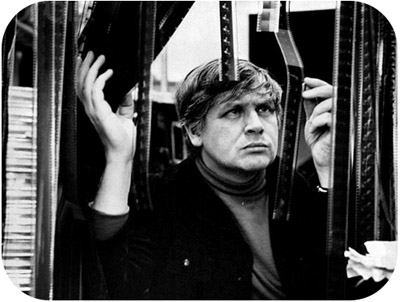
For the past few hours I’d been hoping it was just some erroneous internet rumor, but a close and trusted source just confirmed the news: Sean Stewart, the bassist for HTRK, passed away earlier this week. Further details remain unverified. I’ll update when they’re available.

It feels like someone just punched me in the chest. Which makes sense, in a way. Sean’s basslines were the thudding, grinding, pounding heart of the Hate Rock Trio.

Goodbye, comrade.


Photo by Emma Pop.

In honor of Alex Chilton’s passing, we’d like to publish this article written by Joshua Ellis. This article appeared in Coilhouse Issue 04. You can also view a PDF of this article, by a strange twist of fate, over at the official Pixies website. It’s not an article about him, or The Pixies, per se. However, we’ve been wanting to publish this article on our blog for a while now, and this feels like the right moment to do so. This article speaks to the heart of why we’re all here together. What’s that song? / I’m in love / With that song…

I have this memory, and I’m not sure if it’s even real–or if it’s real, if it’s cobbled together from a half-dozen memories, fragments of things that happened over the course of a year or two that began the summer before I started high school, in 1991.

In this memory, I’m sitting in the basement of a girl named Sara, who pronounced her name “Saah-rah” and had purple hair and smoked clove cigarettes. I didn’t know Sara very well, but she was part of a small collective of freaks and weirdos that I had congregated to when I moved that summer from my ancestral home of north Texas to the small mountain town of Hamilton, Montana.

I’m sitting in Sara’s basement with my friends: Jeremy, the pretty guy who wears big black woolen overcoats and Jamaican tam o’ shanters in bright yellow and red and green, and seems to have unlimited access to the panties of every single girl in the Bitterroot Valley; Wade, who perpetually sports Birkenstock loafers that look like inflated bladders and drives a white Volkswagen Beetle covered in Grateful Dead stickers; Nate, who is one of the best guitarists I’ve ever met and is a huge aficionado of what will later come to be known as “extreme” sports, like bouncing down jagged rock faces on a beat-up skateboard deck; Sarah and her sister, Jenny, who are both fond of dropping random giggly non sequiturs into the conversation when stoned.

They’re all here, or some of them, or none of them. We’re sitting in the dark, talking bohemian bullshit, maybe smoking pot. It’s the kind of night that gets put on endless repeat when you’re young and strange and condemned to spend your adolescence in some far-flung desolate shithole like Hamilton, Montana, where you can’t lose yourself in the noise or happily become part of it, the way you can in New York or Seattle or Los Angeles or Chicago.

I’m not as cool as they are. I don’t know about cool shit. I’m just this uptight kid from J. R. Ewing Land who talks too much, still wears Bugle Boy button-downs and M. C. Hammer pants, and has only the dimmest idea that there’s some entire world out there of cool shit that I know nothing about. I own a Jane’s Addiction album and I’ve vaguely heard of the Sex Pistols.

And in this memory, Sara gets up and puts a cassette tape into her boom box. It’s a time traveler from 1984, beaten and scuffed, with the inevitable broken-off cassette door, so you just slap the tape in and hope that the tape head keeps it from falling out, which will cause the relentless motors to chew the tape and unspool it like the entrails of a slaughtered pig. Sara slaps the tape in and hits play.

This song comes out–a slow beat, big and echoing, then a bass playing eighth notes, and then a guitar, dreamy and vibrating. It sounds like what I imagine sunrise on a beach would be like, like what I imagine doing heroin would be like, like what I imagine sex in a dark room with that awesome girl you lie awake and dream of meeting would be like. I haven’t experienced any of these things–yet.

And then a voice, a high husky man’s voice, gentle over the music.

Cease to resist, given my good-byes
Drive my car into the o-o-sha-hah-hahn

You think I’m dead, but I sail away
On a wave of mutilation, wave of mutilation
Wave of mutilation

Way-hey-hey-hey-have

“What is this?” I ask. Sara shrugs.

“It’s the Pixies,” she says in this memory that may not even be real, or maybe didn’t happen this way at all. “The song’s called ‘Wave of Mutilation.’ This is the U.K. Surf Mix. The real version is faster and louder.”

“I’ve never heard of them,” I said. “I’ve never heard this.”

“They’re pretty cool,” Sara says. “I think they’re from, like, Boston.”

I nod. Pretty cool.