John John Jesse’s Punk Rock, New York Narrative

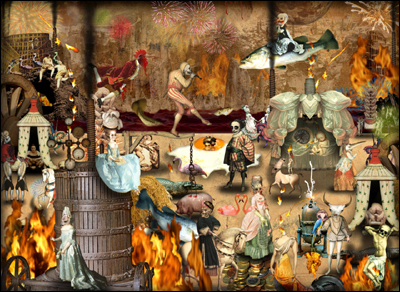
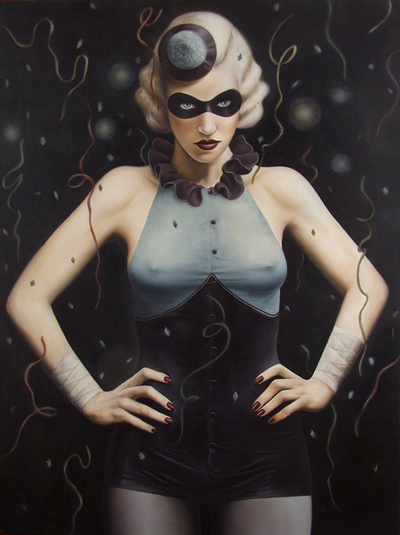
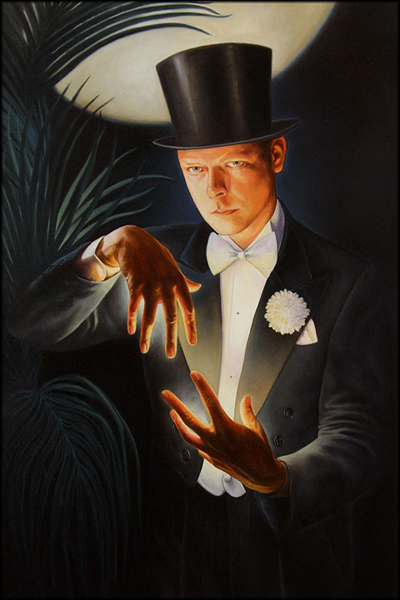
John John Jesse is a celebrated, controversial Catholic schoolboy-cum-punk rocker-cum-gonzo pop artist who came up in the dirty streets of NYC’s Lower East Side in the 80s and 90s. Luscious, filthy, fantastical, Jesse’s illustrative paintings are imbued with a lifelong appreciation for the fierce and rebellious girls he grew up with, and convey a deep understanding of the psychosexual underpinnings to work by a wide variety of fellow artists– from Gustav Klimt and Béla Iványi-Grünwald to Jamie Reid and Caravaggio. Most of the people featured in Jesse’s work are friends of his; many others are recognizable figures from sub/pop/countercultural spheres. A couple years back, Jesse moved from the big city into more pastoral climes, but his passionate love affair with the imagery and narrative of Punk Rawk New Yawk continues. Today on Coilhouse: a recent interview with JJJ conducted by Coilhouse contributor Sarah Hassan. ~Mer


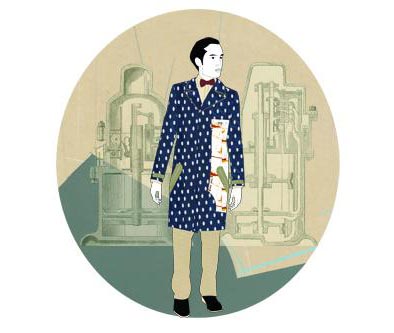
L.I.E. ’88 by John John Jesse

As the quintessential ‘punk rock painter’ from the Lower East Side, a neighborhood now known more for it’s expensive rent and boutiques than heroin addicts and street gangs, how did your move from the city affect your work, if all? Is New York City still what inspires you, or is there something to be said for the quiet of small-town living?
I left New York City because it no longer is what it was. It has turned into an extremely over-crowded college dorm. I mean, now you actually have to wait in line to cross the street and some intersections. That’s fucked! But moving didn’t affect my work at all, it just removed the distractions. You can take the boy out of the city, but you can’t take the city out of the boy, as they say. My life story is what inspires me and most of that took place in New York City, so being here – the country – just gave me the clarity to get my point across in my works.

New York can be rather distracting for an artist, there is a simplicity to living outside it that seems to enhance ones creative output. Your work appears and is often credited to be extremely autobiographical; the music, the drugs, the girls, the heartache. As you’ve developed as an artist, have your inspirations changed in anyway, or do the same themes resonate with you even more than ever?
It’s a lot of the same; I am just discovering new ways to tell my story. After time, your craft always becomes more refined and that gets me pretty eager to keep painting. And as it – my work – is autobiographical, my life continues, so therefore my story does too.


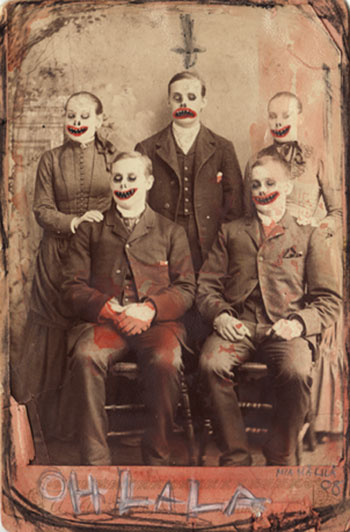
The 3-Headed, Tattooed Waif by John John Jesse

The ever-evolving body of work; it’s inspiring. The exuberance and anxiety of youth is a major theme with your paintings, which music has always been successful in addressing. How has your experience as a musician affected your fine art?
I’m now retired from touring and playing in punk bands, I don’t have the time they need to commit. Better to give a one-hundred percent to one thing than spread myself thin and do both crappy. I had been on tour or recording most of my life, so it had a huge impact on my art. I mean, we weren’t the Jonas Brothers, but you can imagine what we were like on tour. It’s pretty much a free pass to do whatever the fuck you want.

A chat with Justin Simien & Lena Waithe of “Dear White People” (via Geekquality)

As mentioned previously, for the next wee bit, we’re going to be cross-posting some choice Geekquality blog pieces that we think may be of interest to the Coilhouse readership. First up, this interview with writer/director/producer Justin Simien and producer Lena Waithe about their indie film Dear White People, conducted by Geekquality contributing editor Moxie Munroe earlier this summer. (Thanks again to everybody over there. We <3 you.) ~Mer


MOXIE: I’m completely in love with your project, having seen the trailer on Shadow And Act. What sparked the idea for the project?
JUSTIN SIMIEN: The original idea for the film happened during my senior year at Chapman University. After growing up in Houston, attending the rather diverse High School for the Performing and Visual Arts, college life at a small private college in Orange County was a four year long culture shock. I wanted to comment on my experience and started collecting personal episodes like mitigating the sheer disillusionment in certain White students when I couldn’t teach them how to crypt walk, or when I decided to finally cut my substantial fro, or just in general when I acted differently then the Black people they saw on 106 and Park.
LENA WAITHE: I was first introduced to [the project] in a writers group (which is how Justin and I met). He was writing it as a TV show, but all the themes and the characters were the same, and it had a huge impact on me. I loved his voice and I loved him. Of course we quickly became close friends and I finally read the feature length version of “2%” which is what it was originally called (because the black students at Manchester only made up two percent of the population). And once I read the feature, I was just sold on helping him bring this story to light.

M: As a Black woman and a creative I know I’ve had conversations with folks time and time again, especially in college, that are reminiscent of a lot of moments in the trailer. What was the moment when you all said, “We need to make a movie about this”?
JS: I had been working on the material for a few years, trying it as a TV pilot or an overwritten 265 page feature, which didn’t garner much interest for some strange reason, when I realized that my professional life was mirroring my experiences in college. I was still one of VERY few black faces in most of the places I found myself professionally. Requests to teach friends how to crypt walk were replaced with requests for “Dougie lessons.” I was being confused for the one other Black guy in the office, and the requests to see me with an afro continued unabated, despite my insistence that it was a pain for me to manage and I didn’t really want one.

Also (and more importantly) in the culture there seemed to be a real need for a fresh dialogue about race. The birther movement was gaining momentum, the ugly incidents over a “Black” themed party thrown at UCSD mirrored scenes from the script, and debate over the lack of Black voices in film and tv was happening all around me. That’s when I started the twitter account @DearWhitePeople and working in earnest to get the script to a place where it could be shot as a feature.

LW: I dug [his Twitter] so much that every now and then I would pitch him jokes for it and he would throw them up there. But myself, and one of the other producers Ann Le (who’s been there from the beginning) have been passionate about the film for years. And Justin’s been working on the project for about 7 years. So it’s always been around, I think we just all came to the point where we said it’s either now or never. And thank God, because the timing could not have been better.

M: How has the use of social networking aided in the development of this project? (Big congratulations on meeting and exceeding your IndieGoGo goal, by the way.)
JS: Starting the Twitter account was great because it allowed me to really work out the voice of one of the film’s leads. In the film Samantha White starts a radio show on campus called “Dear White People,” the controversy over which is a driving force for a lot of the plot. Through Twitter I was able to test out material, refine her voice, and gain some insight on the people that were so offended by what they perceived as an accusation of racism they responded to the account with genuinely racist comments.

LW: We’re a generation that lives on the internet. I actually credit Facebook the most because we can send the link to people we aren’t even friends with in a Facebook message, and the people we are friends with have no problem with us posting the link on their wall. When something is shared and posted on Facebook a million times, that’s when you know you’ve struck a nerve. And all the producers started to get all these random friend requests soon after the trailer launched. That’s when we knew folks were sharing it, emailing it, tweeting about, and blogging about it. When the producers would sit down and discuss the strategy to push the trailer we always knew that we would use Facebook and Twitter. That’s the best way to reach OUR audience.

M: There have been conversations about Blackness and the “Black Monolith” and what that means since the dawn of the Huxtable Dynasty (a name I’ve just decided to give the period of time between when The Cosby Show hit it big and Girlfriends went off the air). I know the project is called Dear White People but what do you think of the idea of a cultural Black monolith and “authentic Blackness”, and what sorts of conversations about it are you trying to raise with this project?
JS: To me the film is ultimately about identity and how race identity in particular can be both a gateway to and a huge obstacle for reaching one’s potential. This is compounded by the fact that Black folks and non-Black folks all have very different opinions about what being “authentically Black” actually means.

Each of the main characters are going through an identity crisis with regards to their “blackness” whether its not feeling Black enough for the Black kids, not feeling Black enough for the white kids, or feeling too Black for anyone.

Minorities, along with systemic socio economic disadvantage, have the added pleasure of going through life being pre-defined by everyone according to their race, gender, or sexual orientation. Based on how we define ourselves, some of us find solace in our “ethnic cultures” and some of us feel alienated by it.

Ultimately the role of culture (black or otherwise) as I see it is to help us find our voice and footing in the world. But there also comes a time when to really reach our true potential we have to transcend the cultural and identity cues we’ve come to be defined by. Yes I’ve been watching a lot of OWN.

M: All of your characters seem to be very original, and quite different from each other, yet all of them are also really relatable, both to people of color and universally, which is really refreshing to see. Do you think, with independently produced content on the rise and this age of the webseries, we will see more projects by minorities and see a much needed shift toward more diversity in the mainstream media?
JSThe Misadventures of Awkward Black GirlSh*t Black Girls Say, and Sh*T White Girls Say To Black Girls is proof that the internet has made it easier for minority voices to circumvent the usual obstacles of creating and distributing content and connect directly with an audience. Here’s hoping that traditional media, be it films or television, pays attention. Diverse stories in the mainstream seem to be shrinking, creating an even bigger disparity between the demographic make-up of the country and the stories dominating our culture.
LW: I think folks have always wondered when there is one Black success others will follow, and I’ve come to the realization that the work just has to be brilliant. The only way a Black writer/director/actor/producer will be recognized is if the work is amazing and inspired. Not everything out there is great. Justin is extremely gifted. That’s why he has 3 producers behind him (me, Ann Le, and Angel Lopez) because his vision is so amazing. So if Black artists continue to hold themselves to a higher standard then, yes we’ll see a surge.

“I am so goth, I was born black.”


Clockwise: Ms. Sally Bonetta Forbes, Cathleen Naundorf, Untitled (check out the rest of the “gothic lolita” tag as well), Roni Zulu

While there’s still never been a black model on the cover of Gothic Beauty Magazine (in fact, having looked the past twelve years of covers up close, it’s clear that even models with brown eyes appear to be a rarity among the blue- and green-eyed cover ladies), and while most spooky fashion designers still prefer white models for their branding, a host of blogs dedicated to multicultural dark fashion are bringing greater visibility to the people that these venues ignore. Just on Tumblr, there’s Darque & Lovely, DarkSKIN (subtitled “I was so goth, I was born black), and Black Sheep Goths. On Facebook, groups such as Black/African American Goths foster lively discussion.

Of the Tumblr communities, Black Sheep focuses most specifically on people who are othered (providing a platform for “queer/fat/trans/non-binary/disabled/POC” goths), while DarkSKIN delves most deeply into different time periods (from Victorian photographs to seventies album covers to a friend’s most recently-uploaded snapshots), pop culture personalities taking a turn for the macabre (from Eartha Kitt singing “I want to be evil” to Aaliyah playing a sultry Anne Rice vampire) and media (from high-end fashion shoots to grainy self-portraits)

Many of the images come with empowering and, at times, defensive captions. It seems that even in 2012, some try to claim that the goth scene belongs to white people only. One caption on the Darque & Lovely blog, below an image of tattoo artist Roni Zulu, reads: “this is for the chicken-shit anon who said black people shouldn’t ‘do’ goth or punk. At certain points in history to be black in America was (still can be) a pretty gothic experience, to say the least.”


Clockwise: Asha Beta/Silentinfinite collaboration, Neon Leon, photo by Mert and Marcus, Actress Vonetta McGee as Princess Luva in Blacula, photo copyright Everett Collection / Rex Features

Is the goth scene unfriendly to people with dark skin? What do non-white goths think about the fetishization of paleness in the gothic subculture?

“The only time I experienced anything racial in the scene was at Death Guild [a San Francisco goth night],” says Shamika “Meeks” Baker, a San Francisco-based writer, artist and model. “A guy walked up to me, shouted ‘scuse me!’ and shoved me aside. Of couse, when I grabbed the back of his Fun Fur coat and yanked him back to demand an apology, he started screaming ‘get your black hands off of me!’ Happily, after I finished scaring him and turned around, I discovered several of my friends behind me and ready to back me up. [Other than that incident], I’ve found that the goth scene has been really welcoming and open.”

“For me, the fetishization of paleness in beauty in general is very much a class issue as opposed to straight race,” says New York-based artist/maker Numidas Prasarn. “The ‘ideal gothic beauty’ of being pale comes from this sense of otherness. When mainstream de mode is tanned beach babe, the pale contrast is taken up as the signifier of an Other that defensively puffs itself up. The problem is that it’s a microcosm that doesn’t necessary carry the sense of self-awareness to realize that it’s also othering people.”


Clockwise: Amanda Tea, Barron Claiborne, Leif Podhajsky, Unknown from Burning Man by Iñaki Vinaixa

Asha Beta, a sculptor, jewelry designer and musician currently living in Prescott, Arizona, comments on her invisibility within a community that borrows aesthetics from her cultural heritage:

The “traditional” ideal of the scene as the pale-faced, black-clad individual definitely never applied to me, but because of my instant and deep connection and attraction to the music and atmosphere of the scene I had to set that aside. I always felt that I was not perceived to be as attractive, as beautiful or even as “goth” as girls who were paler than me. I never attracted many suitors and I reconciled myself to never being able to approach the “gothic ideal of beauty” very early on, although I felt within myself that my personal way of being “goth” was very sincere and creative and very much true to what “goth” was all about. The one part of the scene that obviously made me uncomfortable was the military/Nazi/Aryan faction of it, although I understand that for many of those people it was a fetish or history obsession type of thing, and not necessarily based in racism.

Many of the aesthetics of goth culture are taken from my cultural heritage (Asian/East Indian/Middle Eastern, African/Egyptian/Voodoo/Haitian-Caribbean) so I still felt and feel strongly that my connection to it is natural and instinctive and powerful. It was achingly difficult to be a minority within the subculture I deeply loved because it’s within these that we find acceptance and understanding where the larger society rejects us. I was a loner within the scene just as I was in society. I found a personal solace and creative outlet, but I never found the community I was searching for. I am overjoyed to finally see our subcultures mirroring the multicultural quality of our world, and so glad to see the younger generations of subcultures finding and creating communities to connect with and support one another.

Meeks Baker agrees. “I love that more emerging blogs/sites focus on us dark-skinned gothy types. To be honest, I never really cared much for gothic beauty magazines because they didn’t really reflect my aesthetic, but I did still feel marginalized. To this day I am thrilled to see ethnic diversity represented in alternative culture.”

A Radical Gabfest With Laurie Penny


Author and independent journalist Laurie Penny, aka Penny Red. Photo © Montalbetti + Campbell.

Sharp, exuberant, funny, passionate, and radically progressive, Laurie Penny (aka Penny Red) has a lot to say, and she isn’t afraid to say it… no matter what. In early 2011, at the age of twenty-three, this English writer skyrocketed into the press with her on-the-ground, heart-in-mouth coverage of the UK student protests. Later that same year, her shrewd reportage of the NYC-based Occupy protests garnered her an even larger readership around the blogosphere, on Twitter, and via various mainstream media outlets.

Since then, Penny’s been a columnist for The New Statesman and has written several articles for The Guardian and The Evening Standard. Her first two books, Meat Market: Female Flesh Under Capitalism, and Penny Red: Notes from the New Age of Dissent, were both published in 2011 by Zero Press. Currently, she and our good chum Molly Crabapple are collaborating on an ebook project called Discordia for Random House. Penny’s also spearheading a super secret video series that will “aim to challenge contemporary debate culture” by implementing a time-honored salon format. More information on that coming soon.

I’ve been keen to interview Laurie Penny for ages. Earlier this weekend, we finally got around to talking, and talking… AND TALKING, via Gchat (she at her mum’s house in the woods somewhere in England, me at my folks’ place in the chaparral somewhere in California). In fact, we didn’t shut up for several hours. What follows is the lion’s share of that conversation, minus our occasional indecipherable segues into bat country. (Well, most of them, anyway.)

Good readers, let it be known that this transcript is quite long, so we’ve broken it up into sub-headed sections in the hopes of keeping your eyeballs from bleeding. Laurie, thanks again! Always happy to put a kettle on for you here at Coilhouse. Can’t wait to see what you and your “savage red pen of justice” get up to next!

AD HOMINEM

Mer: You’re not afraid to lead with deeply personal experiences. It’s fair to say that your approach often triggers some very polarizing reactions, both positive/appreciative, and negative/dismissive.  I’ve been wanting to ask you for a long time: how do you balance your openness and vulnerability with the inevitable need for thick skin and tough armor. How do you stay balanced? What’s your “safe space”, figuratively speaking?

Laurie:  Well, I do get a lot of attacks – people tell me I get more and more frightening trolling even than the usual barrage of hate and intimidation and slut-shaming that any woman raising her voice above a whisper on the internet has come to expect. It’s hard, sometimes. I’ve had very dark moments with it, and I don’t know how I would have coped without my friends. I’ve always been a sensitive person. I’ve had to develop a thicker skin, but at the same time I don’t want a tough hide. I think that’s a dangerous thing for a writer, particularly now. You can get to the stage where all criticism, even the legitimate, useful kind, just bounces off you, and you ossify into a little cocoon of your own prejudices. I’ve been very close to kicking it all in several times, particularly last spring, when I had some personal threats against my family on top of the rest of it, and I was also burned out from overwork. I started wondering if the toll it was all taking was worth it, the stress and exhaustion and panic attacks. When I get very low, which happens sometimes, I often think that I’d give up and shut up like these scumbags want if I didn’t hate the idea of letting them win. But spite alone is no way to work or write if you believe in doing your own small bit to change the world.

Mer: No, it’s not.

Laurie: Part of all this is particular to the British press, too. The culture of political debate in this country is toxic right now. Has been for years. And geographically as well as figuratively, it’s a very small island. Also, it’s just that some people really hate it when young women talk about things that aren’t shoes. Not that shoes aren’t important, too! In their own way.

Owning the Cardinal Directions of the Heart: An Interview with Author Nick Harkaway

O frabjous day! (Callooh! Callay!) It is March 20th, 2012– the official US release date of UK-based author Nick Harkaway‘s second novel, Angelmaker.

Comrades, if you appreciate joyful and highly original storytelling, you need to pick up this book. Immediately. Trust me when I tell you that Angelmaker is easily one of the most endearing works of fiction that will be published this year… or next, for that matter.

Better yet, trust William Gibson: “You are in for a treat, sort of like Dickens meets Mervyn Peake in a modern Mother London. The very best sort of odd.” Or Tim Martin: “this is as far as it could be from the wearied tropes that dominate so much of fantasy and SF.” Or Glen Weldon: “A big, gleefully absurd, huggable bear of a novel.” Or Charles Yu: “Nick Harkaway’s novel is like a fractal: when examined at any scale, it reveals itself to be complex, fine-structured and ornately beautiful. And just like a fractal, all of this complexity and beauty derives from a powerful and elegant underlying idea.”

(Yes. YES! THIS. What they said. All of it, plus tax, and with great interest.)

Who among you has read Harkaway’s debut novel, The Gone-Away World? Those who have know what a big-hearted and ferociously intelligent storyteller he is– how he crafts narratives that defy categorization (and sometimes gravity), shunting his intricate, multi-pronged prose along at breakneck speeds. TGAW is a sprawling, surprisingly poignant hero’s epic that unfurls like a Lichtenberg figure against an unlikely backdrop of pirates, mimes, ninjas, horrific super-weapons and devastating post-apocalypse. It’s equal parts meticulous, silly, sincere, impassioned, hilarious.

The yarn of Angelmaker is made of similarly electric stuff, only spun even more finely, and woven so intricately that many passages play out like a kind of multi-layered literary sleight-of-hand: How did he do that? Within his wordplay, Harkaway ensconces acts of commensurately deft swordplay, espionage, gangbuster hijinks, and even higher fantasy. Intricate family bonds are explored and philosophical quagmires grappled with. There are trains, planes, automobiles, and submersibles. Sex! Monks! Murder! Mechanical bees! We are introduced to tragic elephants and a heroic pug. Harkaway dares us not to fall in hopelessly in love with each and every character and object and exotic locale he braids into the microcirculatory tapestry. (Bear in mind, there are thousands of distinct and lavishly described elements.)

At the golden hammering heart of the story we find Joe Spork, a lonely/adorable identity-crisis-having horologist, and Edie Banister, a ninety-year-old former superspy whose badassery transcends time and easy pigeonholing. Together –with the help of their magnificent friends/lovers/family, and thwarted by an assortment of deliciously loathsome villains– Joe and Edie must rescue the world from an antiquated doomsday device unlike anything anyone ever imagined… save for the tormented genius Frenchwoman who haplessly invented it.

It all sounds utterly absurd, doesn’t it? Well, it is. Ravishingly so.

Now. That being said, I’m delighted to present the following Coilhouse interview with Nick Harkaway, author of Angelmaker and The Gone-Away World. Huge thanks to Qais Fulton for supplying several of these questions, and downright humongous thanks to Mister Harkaway for taking the time to answer them all so thoughtfully.


Nick Harkaway. Photo by Rory Lindsay.

COILHOUSE: You were a professional screenwriter before becoming a novelist. Both The Gone Away World and Angelmaker –while infinitely more complex, dense, and multi-layered than the medium of film could ever allow for– have decidedly cinematic qualities: panoramic descriptions of places and scenes, well-paced bursts of action, crackling dialogue. Do you often find yourself pushing or pulling against that previous construct, or have you compartmentalized the two mediums? What (if any) are some of the most important tools you’ve brought with you from your screenwriting career?
NICK HARKAWAY: Mostly for me the sense of the story leads the writing, so I know where I’m going and I come up with how to say it as I go. (I don’t mean that character doesn’t drive, rather than I have an overarching sense of what character and plot will do in combination, and I then have to write a line through that using the right scenes and the right language to express it. There’s a constant battle to find words and events which properly capture the concept in my head. And sometimes it turns out that the concept has conveniently ignored some logical realities and I have to bridge a gap…)

But screenwriting is a terrific base to work from. There are two gifts it gives which are obvious: if you’ve written a movie script, you know that you can finish a story. (I swear, more people get hung up on sheer terror of the long form than anything else.) And you know about concision. Every good writer I know has at one time or another worked in a field which required them to be able to express a lot in a short space, with minimal linguistic flourish. Whether that’s journalism, the civil service, the law, or something else, it’s a great discipline. I, obviously, have sort of abandoned that kind of sparse writing, at least for the moment, but that doesn’t mean I don’t benefit from it.

What pushed you to write your first novel? Was there a specific catalyst?
Yes. I was heartily sick of pitch meetings. I couldn’t stand taking another great story to someone who was fried on Starbucks’ coffee and not really paying attention and have them object to everything which was interesting about it and then complain that what was left wasn’t original enough. Or some variation on that theme. The final straw was a musketeer-ish story I wanted to write which was about a women who had, in her youth, dressed as a kind of D’Artagnan figure. She’s in middle age, her kid gets kidnapped, and she has to go back to being an adventurer – but she’s no longer a waif. She’s a farmer. She’s strong, heavy, and very obviously female. So she puts on a fake beard and decides essentially to be Porthos instead. There was all kinds of fun stuff in that story – just talking about it I want to get it out of the drawer again. Anyway, my panel of (female) execs sit through this, and at the end they say “well, it’s kinda hard to place stories with a middle-aged female lead”. And that is their entire critique apart from a nice extra kiss-off about transvestitism being hard to sell, too. And I just thought “screw this”.

Coilhouse Interview: Molly Crabapple Discusses Art, Occupy, and “Shell Game”

In September of 2011, shortly after launching a highly successful Kickstarter campaign, our intrepid chum Molly Crabapple locked herself into a hotel room in New York City for a week, eventually filling 270 square feet of paper-covered wall with her art. Yesterday, IDW published  The Art of Molly Crabapple, Vol #1: Molly Crabapple’s Week In Hell, a book chronicling the whirlwind project (with beautiful contributions from several more Coilhouse friends: photo documentation by Steve Prue, a cover shot by Clayton Cubitt, and a foreword by Warren Ellis).

Last week, Molly returned to Kickstarter to launch Shell Game, a crowd-funded art show about the massive ongoing international financial meltdown. For Shell Game, she plans to create “nine giant paintings about the collapses and upheavals of the last year, then rig out storefront like a gambling parlor and display them to the city and the internet for a week.” Shell Game is an experiment of sorts for Molly, who is keen to fund large scale, labor-intensive work without having to depend on wealthy collectors. This type of crowd-funding is, she hopes, “a way of finding Medici in the crowd.”


“The Great American Bubble Machine” by Molly Crabapple, the first of nine in her Shell Game series.

As they did with Week In Hell, $1 contributors get to peep at Molly’s progress through a backers-only blog with livestreamed painting sessions, and those who donate larger amounts receive incrementally impressive artistic rewards. With well over a week still left to go, the campaign has already raised well over 50K through backers small and large. DANG.

Today on Coilhouse, Molly Crabapple tells us more about the Shell Game campaign, and shares related thoughts about the nature of Occupy and the future of art… and vice versa.


Molly’s “Vampire Squid” stencil, as seen at various Occupy camps all over the world.

You’ve mentioned that, until 2011, you weren’t comfortable with making political art, that you were “afraid of being hypocritical, propagandistic or boring.” Can you tell us a bit about the specific thought process that changed your mind? Was there some particular catalyst, or was it a gradual shift in perspective?
I’m an essentially capitalist little hustler who likes Louboutins and who draws frivolous things, sometimes for very rich people.  For a long time, I felt this if I made “activist art” it was straight up radical posturing.  I didn’t want to win cool points on someone else’s movement.  So I’d donate money or sell work for charity, but hide any subversive thoughts in a whole lots of illustrative metaphor.  My thoughts started changing when I painted The Box in London.  Suddenly I was drawing straight-up parodies of the British class system on the walls of what would be one of the world’s most depraved nightclubs, while being given a privileged view of the student occupations by the unspeakably brilliant journalist Laurie Penny.  Suddenly avoiding politics in my art seemed like a cop-out.  Wikileaks, Wisconson, and finally Occupy Wall Street meant that upheaval was hitting America.  I had to engage.

Has there been any criticism thrown at you about your means of involvement? If so, how do you engage with that? 
I’ve had a few people call me an evil latte liberal or whatever, but honestly, who cares.  The idea that you have to be a vegan saint to care about having a vaguely just world is just a way of making sure no one does anything.

Auberon Shull’s “Desert Dance”, and an Interview with Director Sequoia Emmanuelle

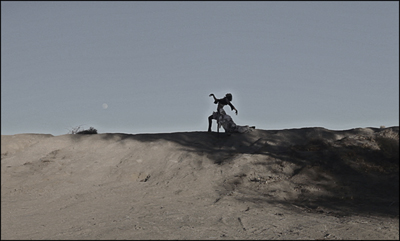
LA-based imagemaker/mover/shaker Sequoia Emmanuelle has just premiered this video of dancer Auberon Shull (definitely watch it full screen):

Filmed, edited and directed by Sequoia Emmanuelle
Dance by Auberon Shull
Hair and makeup by Ashley Joy Beck
Costumes by Tiffa Novoa and Auberon Shull
Music by Distance and Adventure Club

Auberon is a powerhouse. Sequoia, too, is a force of nature who has shot countless portrait series and fashion editorials with all manner of West Coast lovelies: SkingraftEskmo, Zoe Jakes and Rachel Brice (for Tawapa/Wild Card/Five and Diamond), Galareh, Kucoon, Beats AntiqueLucent Dossier Vaudeville Circus, El Circo… the list’s about a mile long. In addition to her photography portfolio and video work, Sequoia’s also got a well-established background in fashion design (check out her S&G Clothing line), wardrobe styling, painting, and graphic design.

Recently, she took the time to answer a few questions about her collaboration with Auberon, and to let us know what’s coming next. (Thank you, Sequoia! Always a pleasure.)

Much of the Coilhouse readership is already familiar with your photography, but this may be the first time many of us have (knowingly) watched a video by you. Can you tell us a bit about the differences and parallels between your creative process shooting/editing film and your photography methods?
Sequoia Emmanuelle: I grew up watching music videos, [they're] a huge inspiration to me, and I have always planned on getting more involved with film/video as well as photography. In the last year I have been working on several videos for fashion, music and dance. It feels very natural to the way I see things for photography, but of course it is very different, too. For one thing, everything you shoot needs to be horizontal, so it changes the composition of how you set things up. Your lenses change, and lighting changes. You can’t use strobe lights for video, so you have to set things up quite differently. When it comes to editing, it’s quite involved, because you have to pay attention to all the moving details and make your cuts flow in an interesting and creative way, not to mention syncing up the music. Right now I am focusing on simple ways of creating artistic videos… using less is more for the time being, and I’ll surely get more experimental as I keep working at it.

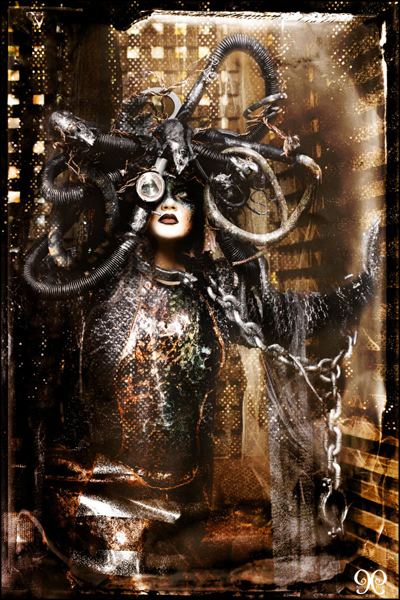
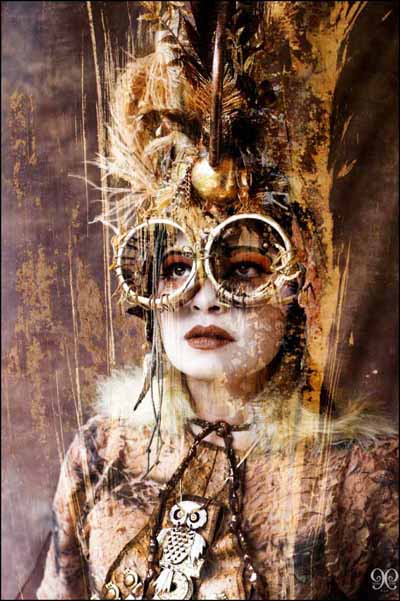
“Athena’s Curse, Medusa’s Fate” — Created by Jessica Rowell, Nina Pak, and Elizabeth Maiden

Sometimes, when creative and inspired people get together to collaborate on making imagery in a specific vein that no one’s attempted before, a special kind of magic happens. Case in point, this elaborate photo series independently produced by Jessica Rowell of J-Chan Designs and photographer Nina Pak in cahoots with model Elizabeth Maiden:

Κατάρα της Αθηνάς, η μοίρα της Μέδουσας
Αθηνάς: Elizabeth Maiden
Μέδουσας: Jessica Rowell of J-Chan’s Designs
Photography: Nina Pak
Costume Design & Styling: J-Chan’s Designs
Location: Vancouver, British Columbia, Canada

Ancient Greek lore and steampunk culture clash, titan style, in a sumptuous mythos-meets-modernity photo series depicting the Goddess Athena (Elizabeth Maiden) and the Gorgon Medusa (Jessica Rowell).

According to legend, the once ravishing Medusa was cursed with a monstrous appearance after “seducing” Poseidon, Lord of the Sea, under the roof of Athena’s sacred temple. Hence, this series title (which, translated into English, means) “Athena’s curse, Medusa’s fate.”

Rowell pulled “inspiration from Desmond Davis’ 1981 film Clash of the Titans, then put an atemporal spin on things by incorporating several contemporary ingredients that “also felt industrial and familiar to alternative culture.”

Breathing New Life into Dead Men’s Patterns: An Interview with Artist Hormazd Narielwalla


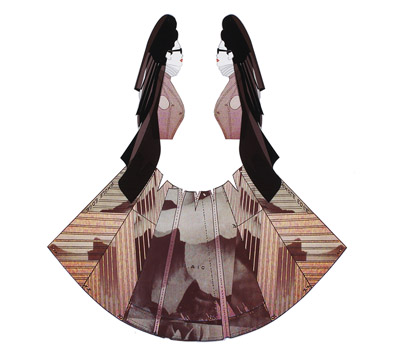
From the “Fairy-God, Fashion Mother” series by Hormazd Narielwalla.

Born in India of Persian-Zoroastrian ancestry and now living London, artist Hormazd Narielwalla forages for patterns in historic tailoring archives to use in conjunction with his own photography, sketches and digital compositions, giving their forms new life as whimsical narrative works of art.

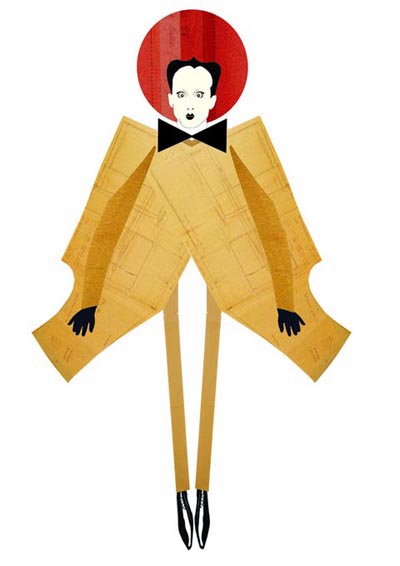
You can see some lovely examples of Homi’s unique work in our Issue Six feature devoted to Klaus Nomi. The puppet-like pattern collages are taken from Narielwalla (nickame Homi)’s series A little bit of Klaus…a little bit of Homi. Each Nomi figure contains elements extracted from the vintage bespoke pattern blocks of Savile Row tailors, made for customers now long-deceased. We could not have found a more deeply fitting serenade to the operatic, avant-garde style icon than Narielwalla’s work, with its deft mixture of affection, craft, and thoughtfulness. (Thank you again, Homi.)

In the following interview, Narielwalla tells Coilhouse a bit more about his work and his life. His current show, Fairy-God, Fashion-Mother, which features a series of paper collages inspired by cult curator Diane Pernet, will be viewable at The Modern Pantry in London until January 7th.


From Hormazd Narielwalla’s “A Little Bit of Klaus, a Little Bit of Homi” series.

How did you get started making art, and what eventually drew you to this very specific and personal form of creative expression?
I was pursuing a Masters degree at the University of Westminster, aiming to become a menswear designer specializing in alternate ways of communicating fashion. During one of many research meeting with William Skinner (the Managing Director of Savile Row tailors Dege & Skinner), I acquired a single set of bespoke patterns belonging to a customer, now-deceased.


From the “Dead Man’s Patterns” series by Hormazd Narielwalla.

The tailors no longer needed the patterns, as they were made for a shape that no longer exists. With the support of my mentors British designers Shelley Fox and Zowie Broach (from Boudicca), I followed my instinct to divorce the patterns from their original context, viewing them as abstract shapes of the human body instead. That is when and where my first publication, Dead Man’s Patterns, was conceived.

The Mark of Princess Hijab

Editor’s note: today marks the birth date of one of our most tireless and incisive contributors, Mr. David Forbes. For his birthday, David gave us a present: an interview with elusive street artist Princess Hijab. Thanks, David – happy birthday!

A spectre is haunting Paris. For five years, Metro-goers have rounded corners to find heavy, black marker strokes obscuring the idealized arcadia depicted in subway advertisements, the airbrushed bodies of the inhabitants — men and women — disappeared behind a heavy veil. Princess Hijab has struck again.

When she started her “reign” in 2006, observers initially couldn’t decide if it was the work of a modernity-hating zealot or some sort of rabble-rousing commentary. The year before Paris had destructive rioting. France has its own serious racial and ethnic issues, and culture wars are never a place for nuance. The hijab is now, controversially, banned in public.

But from her work, there is no hiding, Parisians still pour out of trains to find the mark of Princess Hijab.

She hasn’t exactly hidden from the media, either. But strangely, in an era craving constant revelation, her identity remains a closely guarded secret. She claims to be around 22 years old, poor, from an immigrant background, and not a Muslim. Those who meet her aren’t even sure if she’s female.

Via e-mail, Princess Hijab, the alias chosen to represent “a mixture of precarity and aristocracy,” has chosen to draw back the veil, just a bit, and tell us about how — and why — she chose her domain.