Alt Culture Antibodies


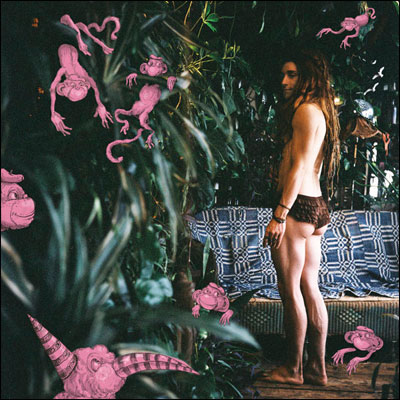
Photo by Hunter Freeman.

I’ll try to keep this short; it’s late and there’s not much time left. Please forgive me if you’ve heard parts of this story before.

For me, it started with an old box of science fiction. I tore through Samuel R. Delany, Joanna Russ, Gene Wolfe, and others, reliving stories old by the time I cracked the pages. I didn’t care.

To my mind, the New Wave had it: the future was something to play in. This status quo was the most transient of things, its passing viewed with a sense of infinite possibility. If there were other cultures out in space, forward in time, why not here? Why not now?


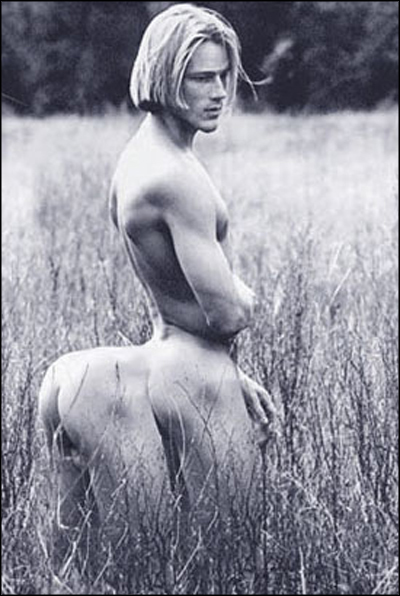
Photo by Mike Brodie.

I lived in one of those amazing, barely-clinging corners of the country too many ignore when they talk about culture of any variety. No metropoli there, just a scattering of people trying their desperate best. By the time I busted open the box full of old books, I had already faced a fair amount of poverty, hardship, and even death.


90s Cyberpunk portraiture by Steve Pyke.

But here, as the years wore on and I read my way through an uneasy adolescence, was something else: here was hope, in the most dangerous fashion. Somewhere out there, people changed their personalities, moved in unison, turned boundaries into blurs transitory as old blood on a highway.

By that point I did not care about ridicule, and laughed when someone threatened me, but this I was terrified of, sure that the half-described scenes — goths, ravers, activists, and more —  faced possibility with a courage I felt I’d never know.

Supersonic: Third Wave Feminism and the Importance of the “Hard Femme”-Cee (via Geekquality)

A final, fantastic Geekquality cross-posting written by Moxie Munroe. Thanks again to everyone over at our cherished sister blog for their thoughtful contributions and ongoing inspiration. We love you! Keep up the empowering, nourishing work. ~Mer

It’s a widely accepted idea that music, like fashion, social movements, and menstruation, runs in cycles. Sometimes this theory runs less true than others, but right now I think it’s pretty applicable. Because right now, in the year of our Lord 2012, three things are making a huge media comeback: feminism, babydoll dresses, and female [presenting] emcees. This is important on several different levels, one being that the rise of the female emcee in 2012, and the performance styles they’ve adopted, gives us the chance to have some real conversations about race, class, and presentation in the role of third wave feminism.

You might say, “But Moxie, this is a blog for geeks by geeks! What does this have to do with my geek culture?” And I might answer, “Well, you beautiful newborn baby, geek culture is fringe culture, just like this is fringe culture. Music geeks are geeks too, and music geeks encompass a wider berth than just Flaming Lips fans, so get over it – hip-hop geeks need some shine too, and the issues we’re dealing with here are the same issues we deal with when we talk about representation of women of color in media in general, including comics, so double get over it, zip your lips and listen up, sporty.” And you might say, “Moxie, that’s mean!” And I might say “I don’t care!” So let’s continue.

Third wave feminism, is Now feminism; it’s pop feminism; some people might identify it as “girl power” Spice Girls feminism. It’s important, because this particular wave allows us to focus on things like sexual progressiveness and agency as it exists within the feminist sphere. A lot of the criticisms surrounding third wave feminism (and feminism in general) focus on the perceived and actual exclusion of race, class, and gender presentation in discourse. Several of the up and coming femcees in 2012 serve to challenge many of the practical aspects of both the standard patriarchy and the perceived paradigm of the feminist ideal. I’d say a lot of this is because most femcees exist in a racial/sexual no-man’s land, where subversiveness is almost necessary to survival.


Azealia Banks in GQ Magazine.

The first wave of femcees seems to have come around sometime in the 80s and early 90s with folks like Queen Latifah, MC Lyte, Salt N Pepa, and TLC; with tracks like “Ladies First” and “None Of Your Business” lending a particularly feminist voice to the hip-hop game. As hot as these songs (and artists) were, none of them became banner anthems of the feminist movement, falling behind artists like Bikini Kill and other darlings of the Riot Grrl movement. Recently though, vintage fem-penned hip-hop has been getting more play in feminist circles, due in large part to this generation’s penchant for nostalgia, and also the rise of social media’s role in social movements, allowing more voices of color to come to the forefront of the conversation. Social media has aided in the diversity of the music scene as well, allowing more underground artists to be heard by a wide range of demographics.

But let’s get back to the future. Today’s crop of female emcees seems to be as influenced by the socially conscious hip-hop of the 80s and 90s as it is the more raw sexually charged female hip-hop of the early 00s, when artists like Lil’ Kim and Foxy Brown ruled the school. The explicit lyrics of that form of the genre tended to turn off a lot of feminists who dismissed it as both heteronormative and degrading.

Mykki Blanco & Crew Get “Wavvy”

Wren Britton of PUREVILE just posted this (and several more scorching hot, queer-as-fuck music videos) on his website, saying: “Just some pretty amazing gay positive hip hop…FINALLY…I mean with so many in this genre still on the DL its really amazing to see some new kids standing up and saying ‘YES HUNTY’…..Keep that shit up !!!!!”

Oh, hells yass.

The video for Mykki Blanco‘s “Wavvy” is particularly off the hook. Really, what’s not to love about a juicy, no-holds-barred, 19th Century salon style orgy? Some of our east coast readers may recognize some familiar faces and names from the downtown NYC bohemian gallery scene: Susan Surface, No Bra, Christelle de Castro, Jeanette Hayes, Ruth Gruca…

“What the fuck I gotta prove to a room full of dudes who ain’t listenin to my words cause they starin at my shoes?”

Indeed. Mykki Blanco, babies. GIT IT.

Announcing Genderplayful

Our long-admired colleague Sarah Dopp –a compulsive mover/shaker/go-getter whose Twitter description aptly reads “Gets excited and poops out communities”– has just announced the official launch of Genderplayful, a new venture she’s running with several cohorts. Sixteen months in the making, Genderplayful is an online marketplace celebrating diversity in gender presentation and body types, and it is wonderful.


GENDERFUCKER Etched Copper Necklace, available at Genderplayful.

From their press release:

This is for anyone who can’t easily find what they’re looking for in a typical clothing store, with special support for androgynous, unisex, butch, dapper, femme, gender-bending, gender-transgressive, and gender-fanflippingtastic clothing solutions for all kinds of bodies.

Genderplayful cares about custom solutions, and the marketplace will host a lively community that finds and creates those solutions together. Vendors will include indie designers, crafters, clothing makers, tailors, and people selling things from their closets and local thrift stores. Community members will pool notes on what they’re excited about, and vendors will take cues from buyers on what to create more of. The goal is to create a culture-rich gorgeous Internet bazaar for the playful, the exquisite, and the just trying to get dressed in the morning.

Dopp further states, “It rallies a community to work collectively on the question, ‘How can we build wardrobes we love that fit our bodies well?’, and it offers extra encouraging support for trans, genderqueer, and gender nonconforming folks (an identity set that we define very broadly). The project was inspired by what we’ve learned in our work at Genderfork.com.”


IKE tee by Genderplayful vendor komsikomsi.

Hearty congratulations to Dopp and the entire Genderplayful family. We know how long and hard you’ve worked to put this community/interface together, and it’s really exciting.

Genderfuckery is fun! Let’s go shopping!

The Incredibly True Adventures of Gerda Wegener and Lili Elbe


Gerda Wegener, Cuckoo, 1920. Note the fallen black mask on the floor: it repeats in many of Gerda’s erotic paintings.

This is the true story of turn-of-the-century lesbian romance, erotic Deco illustrations rife with harlequins and crinolines, the world’s first male-to-female sex reassignment surgery, and the 1950s pulp novel that brought it all to light.

The story begins one hundred years ago. In 1912, artist couple Gerda and Einar Wegener arrived in Paris, hoping for greater prosperity and freedom than their conservative hometown of Copengahen would allow. They checked into the Hôtel d’Alsace, where – they were shocked to learn – they had been placed into the very same room where Oscar Wilde had once died twelve years earlier. The couple spent the next few days reading Wilde’s works out loud to each other. The forbidden sexuality, transformation, beauty and tragedy in Wilde’s work was reflected in the couple’s following years together.


Gerda, left. Lili, right.

In Paris, Gerda quickly became well-known for her sensual, free-spirited illustrations. Her work often featured a mysterious beauty with a stylish short bob, full lips, and beguiling brown eyes. In 1913, the public was shocked to learn the identity of the mystery model: Gerda’s husband, Einar. Einar was transitioning to living life openly as woman named Lili Elbe.

Geekquality: Where All Geeks Are Created Equal

Our longtime contributor and multi-talented friend Tanya Virodova has been keeping even more busy than usual, thanks to her relatively new role as the Managing Editor of Geekquality, a lively collaborative blog venture she co-founded in late 2011 with several other bad-ass, beautiful people.

Tanya tells us that the idea for Geekquality emerged last year when several of the founding editors met for the first time at the first annual Geek Girl Con in Seattle, Washington. Since that time, they’ve been steadily building/ramping up their online presence. Nowadays, the Geekquality venture is a thriving example of diverse collaborative writing and online community-building.

With staff members hailing from both the West and East coasts of the United States –all geeks and vocal participants in online communities and united by a “love/hate relationship with geeky media”– Geekquality, in addition to celebrating examples of inclusivity and diversity in geek culture, addresses its writers’ mutual, ever-growing dissatisfaction with a frequent lack of intersectionality and diversity both in current geek media and in many fandom communities. This from a group statement emailed to Coilhouse by their editorial team:

“Being a nerd isn’t really so much a choice as it is a facet of your person. How you live, consume, and interpret your experience, however, most certainly is a matter of informed choice. All of us have been disappointed to find that often, analysis that challenges beloved content and creators is dismissed as unproductive and overly negative, when it’s actually critically important. The geek is indeed inheriting the earth, and it’s up to geeks to make sure our influence is not a negative and exclusive one.”

“Talking about video games, comic books, TV shows, movies, etc and pointing out flaws in writing or casting, accuracy in representation of unique perspectives, and general discussion of what could be done better sometimes are met with an arms crossed, head-shaking refusal to admit that some pop culture thing we love can also be flawed. While we are all united by our geekdom, there can still be more inclusion from lenses of feminism, sex and gender, race, ability, and various cultural perspectives.”


Jodie Landon LOLZ!

A Radical Gabfest With Laurie Penny


Author and independent journalist Laurie Penny, aka Penny Red. Photo © Montalbetti + Campbell.

Sharp, exuberant, funny, passionate, and radically progressive, Laurie Penny (aka Penny Red) has a lot to say, and she isn’t afraid to say it… no matter what. In early 2011, at the age of twenty-three, this English writer skyrocketed into the press with her on-the-ground, heart-in-mouth coverage of the UK student protests. Later that same year, her shrewd reportage of the NYC-based Occupy protests garnered her an even larger readership around the blogosphere, on Twitter, and via various mainstream media outlets.

Since then, Penny’s been a columnist for The New Statesman and has written several articles for The Guardian and The Evening Standard. Her first two books, Meat Market: Female Flesh Under Capitalism, and Penny Red: Notes from the New Age of Dissent, were both published in 2011 by Zero Press. Currently, she and our good chum Molly Crabapple are collaborating on an ebook project called Discordia for Random House. Penny’s also spearheading a super secret video series that will “aim to challenge contemporary debate culture” by implementing a time-honored salon format. More information on that coming soon.

I’ve been keen to interview Laurie Penny for ages. Earlier this weekend, we finally got around to talking, and talking… AND TALKING, via Gchat (she at her mum’s house in the woods somewhere in England, me at my folks’ place in the chaparral somewhere in California). In fact, we didn’t shut up for several hours. What follows is the lion’s share of that conversation, minus our occasional indecipherable segues into bat country. (Well, most of them, anyway.)

Good readers, let it be known that this transcript is quite long, so we’ve broken it up into sub-headed sections in the hopes of keeping your eyeballs from bleeding. Laurie, thanks again! Always happy to put a kettle on for you here at Coilhouse. Can’t wait to see what you and your “savage red pen of justice” get up to next!

AD HOMINEM

Mer: You’re not afraid to lead with deeply personal experiences. It’s fair to say that your approach often triggers some very polarizing reactions, both positive/appreciative, and negative/dismissive.  I’ve been wanting to ask you for a long time: how do you balance your openness and vulnerability with the inevitable need for thick skin and tough armor. How do you stay balanced? What’s your “safe space”, figuratively speaking?

Laurie:  Well, I do get a lot of attacks – people tell me I get more and more frightening trolling even than the usual barrage of hate and intimidation and slut-shaming that any woman raising her voice above a whisper on the internet has come to expect. It’s hard, sometimes. I’ve had very dark moments with it, and I don’t know how I would have coped without my friends. I’ve always been a sensitive person. I’ve had to develop a thicker skin, but at the same time I don’t want a tough hide. I think that’s a dangerous thing for a writer, particularly now. You can get to the stage where all criticism, even the legitimate, useful kind, just bounces off you, and you ossify into a little cocoon of your own prejudices. I’ve been very close to kicking it all in several times, particularly last spring, when I had some personal threats against my family on top of the rest of it, and I was also burned out from overwork. I started wondering if the toll it was all taking was worth it, the stress and exhaustion and panic attacks. When I get very low, which happens sometimes, I often think that I’d give up and shut up like these scumbags want if I didn’t hate the idea of letting them win. But spite alone is no way to work or write if you believe in doing your own small bit to change the world.

Mer: No, it’s not.

Laurie: Part of all this is particular to the British press, too. The culture of political debate in this country is toxic right now. Has been for years. And geographically as well as figuratively, it’s a very small island. Also, it’s just that some people really hate it when young women talk about things that aren’t shoes. Not that shoes aren’t important, too! In their own way.

FREE PUSSY RIOT!

In early 2012, the Russian feminist punk band/avant grade group Pussy Riot staged several disruptive performances in Moscow. Inspired by Oi! bands, the riot grrrl movement, and an diverse slew of cultural thinkers, the band donned colorful ski masks, armed themselves with electric guitars, and sang in protest of the  devastating violations of civil rights happening under Putin’s regime.

Back in February, Mer blogged about the band’s “Punk Prayer” – an incident in which the band stormed Moscow’s Christ the Savior Cathedral for an impromptu performance. The lyrics of the song criticized the Orthodox Church’s corrupt alliance with Putin’s government, asking Mother Mary to deliver Russia from Putin’s third term. “Virgin Mary, Mother of God, become a feminist,” the girls sang before they were dragged away by the authorities.


Nadezhda Tolokonnikova, Mariya Alekhina and Yekaterina Samutsevich, the three jailed members of Russian punk collective Pussy Riot

After the performance, things got dark for Pussy Riot. Three members of the group were arrested, thrown in jail, denied bail, and held without trial for months. They have been charged with “hooliganism,” and are facing up to seven years in prison. At time of writing, the women have spent 117 days in jail, with the trial postponed for months longer. This is without any family visits, despite two of the girls being young mothers.

Shit is fucked up and bullshit in Russia. Putin has just exponentially increased the anti-protest fine, riot police are savagely beating anti-Putin protesters, and the homes of opposition leaders just got raided. Moscow has just placed a 100-year ban on LGBT pride parades, and St. Petersburg has banned any images of “gay propaganda.” Meanwhile, Russia’s Kremlin-controlled media has done its best to sway public opinion against the girls, painting them as “blasphemous” criminals bent on destroying the entire Russian Orthodox religion. In this climate, it’s likely that the three members of Pussy Riot will be convicted. In fact, just 7% of Russians believe that the band should not somehow be punished.

Luckily, Pussy Riot’s plight has started to gain international attention. Solidarity demonstrations are happening around the world, there have been enthusiastic benefit shows, and Pussy Riot has caught the attention of the art world. In Russia, more than 100 of Russia’s best-known cultural figures have signed a letter urging for the band to be released. Abroad, musicians including Kathleen Hanna have taken up the cause, and Anti-Flag released a Punk Prayer cover in support.

What can you do to help? For one, spread the word. Organize a local benefit, or donate to their legal fund (note: at time of writing, the site freepussyriot.org where you can donate is down, but most of the time it’s running). Take action with Amnesty International, urging the Prosecutor’s Office to drop the charges and release the band. Stage a protest at your local Russian Embassy  or Russian Orthodox Church. Take pictures. Show the band that they are not forgotten.

The Collective Tarot: Queer-centric, Radically-Politicked Mysticism

Have you ever wanted Tarot card explanations that rejected the gender binary, referenced political movements, and quoted riot grrl music? If so, this deck is for you.

In The Collective Tarot, wands, coins, cups and swords are replaced with magical found objects:  keys, bones, bottles and feathers. The court cards (page, knight, king and queen) are replaced with the Seeker, Apprentice, Artist and Mentor.  While most card names in the Major Arcana remain unchanged, all have inspired new interpretations. Certain cards that contain outdated tropes (for example, “The Hierophant” – when is the last time that metaphor was relevant to your life?) have been replaced with more relevant symbols, such as “The Code” (referencing the hanky code) and “Intermission.”

The deck is designed by 5 core collective members and 25 contributing artists/co-collaborators. Artist Annie Murphy, one of the deck’s creators, said she felt inspired make a new Tarot deck when she found that she and her friends were unable to relate to the Christian, Euro- and hetero-centric symbolism found in many modern decks. In crafting the Collective Tarot, Murphy and other artists wanted to represent “beings and bodies of size and of color … as well as differently-abled, multi-gendered and multi-generational characters.” The card interpretations speak to the problems of modern people – the struggle to complete an art project, negotiate a polyamory agreement, or organize a volunteer group – while remaining rich with magical lore.

The deck has been out of print for two years. Now, the artists are putting out a limited third edition. A Kickstarter (with only 5 days left to contribute!) is going on for the third print run of the Collective Tarot. Those who contribute $30 or more will get a copy of the deck. In addition to a deck, one of the prizes is a T-shirt featuring the Ace of Bones by Annie Murphy, as seen below:

Transmography: Thirteen Fairytale Portraits of Queers Beyond the Gender Binary


Leo

Bay Area residents: tonight is the opening of the Transmography exhibit at the Union Square Lomo store!

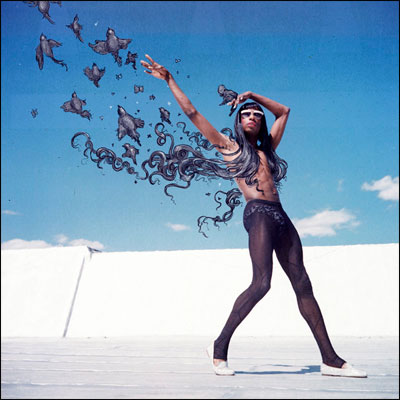
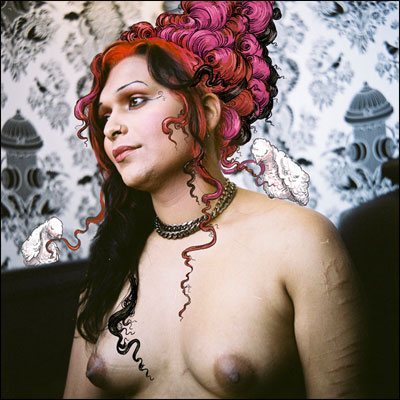
Transmography is a collaboration between photographer Najva Sol and artist Molly Crabapple. Najva took the photos using a Lomo camera, and Molly embellished them with her unique illustrations:

Transmogrify, Verb: To transform, esp. in a surprising or magical manner.

From poets to porn-stars, computer nerds to community gardeners, artists to activists: these portraits capture some of the real gender warriors today. They are trans, genderqueer, or just gender-fabulous, and they deserve their own magical realm.


Ahnika

You can also see the photos on display at the New York Lomo store in Greenwich Village, or buy them on Molly’s site. All prints are 17″ x 17″. The images are signed and numbered by both artists in an edition of 5, and cost $200 each. More images, after the cut.


Ashi