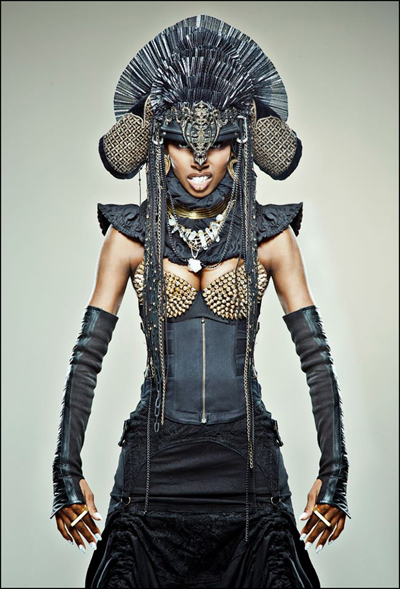
WHOAH. Check out this sneak preview photograph of Aja Lathan as The Queen of Diamonds from a shoot for the San Francisco-based Five & Diamond collective by Allan Amato. Lathan is adorned with a breathtaking array of pieces crafted by various indie and alternative designers associated with the 5&D store/gallery:
Aja Lathan as The Queen of Diamonds for Five & Diamond / Photography by Allan Amato / Art Direction by Jessica Atreides / Styling by Ricardo Felix / Makeup by Medina Maitreya / “Pharoah” Headdress by Monica Wallway / Gold Neck Coil by Tawapa / Crystal Necklace by DUST / “Ruff” Ruched Scarf by Radio Cloth / Studded Bra / Axis Waist Cincher by Steam Trunk / Burlesque Skirt by Miss Be / Leather Gloves by Sparrow / Rings by Jungle Tribe / Shot at Purebred Pro Studios
“The Five and Diamond Design collective is a collaborative project created to promote local artists and designers while providing a resource to San Franciscans and beyond for unique, artistically designed apparel, jewelry and accessories.”
This shoot was obviously a massive group effort. (Bravo!) Keep an eye on 5&D’s twitter for more information about this shoot and other lovely stuff.
Pass the Cherry Garcia and load up OMGCATSINSPACE, because it’s time to “travel back to the Psychedelic ’60s with the new music video from Walter and the Wizards off the album Litter Trippin’…”
Yep. This is an honest-to-pete advertisement created by JWT New York for the “revolutionary” Litter Genie® brand litter disposal system wot keeps ‘dem stinky cat pooz with their pesky mind-controlling brain parasites from harshing your mellow.
Thanks, Internet. No, seriously, thank you, for becoming even more insidiously infectious than T. gondii. That’s genuinely impressive.
Hollywood would have you believe that American Indians are a pretty humorless lot. Stoic, tragic, fierce, mystical, romantic? Sure. But funny? Somehow the notion never caught on and yet nothing could be further from the truth.
Though I was born too late to share a joke with my more culturally connected Mvskoke relatives in Poarch Creek, Alabama, I had the benefit of spending much of my childhood in an Ojibwa household where laughter reigned supreme. I never saw anyone cry over garbage being tossed by the roadside, but I’ve spent many evenings shedding tears of joy. Bawdiness and wit are, for many indigenous peoples, virtues which help hold communities together, ensure the survival of stories and traditions and offer healthy means to cope with frustration and heartache.
Perhaps no one sums up the native experience and debunks stereotypes more concisely or hilariously than the 1491s, an all-native comedy group that describes itself as “a gaggle of Indians chock full of cynicism and splashed with a good dose of indigenous satire.”
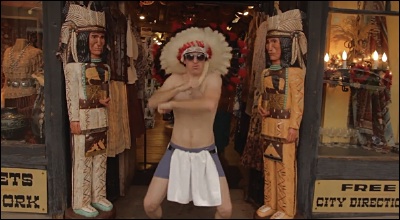
In the video below – set to a 1979 disco cover of the song “I’m an Indian Too” from Annie Get Your Gun – the 1491s tackle the ongoing obsession in pop culture with all things Indian, lampooning hipsters who sport headdresses and contrasting popular images of Indians with natives (and a few fans of native culture) at the Santa Fe Indian Market:
It was a Thursday night in Albuquerque, discount NM, and on the floor of a small club on the outskirts of town a member of the Foundations of Freedom dance crew drew applause from onlookers. With his synthesis of moves culled from breakdance and traditions far older, the dancer transitioned from handspins to a kneeling archer’s position in one fluid motion. When the song – itself a hybrid of house and powwow music – finishes, the dancer straightened his shirt emblazoned with the image of a Playboy bunny sporting eagle feathers in place of ears.
A Tribe Called Red comprised some of the music at the event. The group, which emerged out of Canada in 2008, synthesizes powwow music and electronica into a genre known as “Powwow Step.”
The club was packed with people predominately from New Mexico’s 19 Pueblos and from the Navajo (Diné) nation. Those who turned out were clad in intricately beaded jewelry, hand-painted Chucks and witty T-shirts which nodded to pop culture or made parody and political statement out of the stereotypes that so many non-indigenous Americans ascribe to when it comes to native peoples.
The party was one among dozens of music, art and fashion events surrounding the Gathering of Nations powwow held every April in Albuquerque, NM, where more than 50,000 individuals from more than 500 nations come to dance, sell their wares and mingle. But for most of those in the club that night, the powwow itself wasn’t the main event.
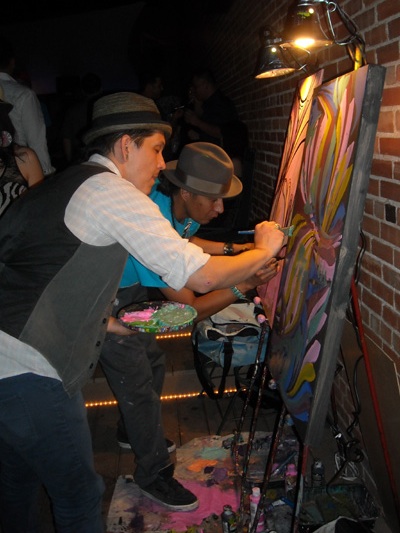
Patrick CloudFace Burnham (foreground) and Randy Barton create live paintings at a Gathering of Nations after party.
In fact, for many it represented just another means for non-natives to exploit native people. And while some would go to support friends and family, others declared the event fodder for the colonized and instead chose to attend native-organized counter powwows and Sacred Cyphers where musicians, painters and dancers could express themselves in their own spaces through a fusion of native song, hip hop and electronic dance.
Posted by Guest Blogger: Rachel "Io" Waters on October 8th, 2012
Filed under Native, Race | Comments (4)
Columbus Day has been rebranded as many things – from Indigenous People’s Day to Imperialist Day to Exploration Day. To celebrate this holiday, we’ll be publishing a three-part series of blog posts by guest writer and Coilhouse Issue 01 contributor Rachel Waters, a.k.a. Io, about modern native art and culture.
Io writes, “I’ve gotten pretty weary of the Diane Sawyer/Lisa Ling poverty porn about natives and I felt it was time someone focused on the massive renaissance of native art/music/dance as it relates to decolonization and forging a 21st century native identity which pays homage to the traditional whilst being thoroughly cutting edge. I mean, these guys are creating genres of music like Powwow-Step, creating really strong public art, mixing breakdance and grass dance and holding Sacred Cypher competitions with all native hip-hop and dance troupes.”
The first piece in the series is going up imminently. For now, enjoy this video of hoop dancer Nakotah LaRance dancing to a song by New York-based electronic duo The Knocks. LaRance, 23, is a six-time world hoop dancing championship winner who was just 19 years old when Cirque du Soleil discovered a video of one of his performances, and invited him to go on tour. In this video, Nakotah takes to the desert to perform a stunning dance routine. [via Io]
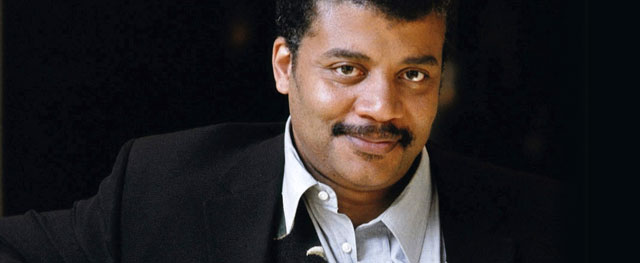
Happy birthday, Doctor Neil deGrasse Tyson! Here’s a fantastic piece all about the internet’s very favorite (bada)as(s)trophysicist, written by Rick G. and cross-posted from Geekquality. ~M
Astrophysicist Doctor Neil deGrasse Tyson.
In the latter half of 1958, two events occurred that would have a profound effect on the science of astrophysics: one was the signing of the National Aeronautics and Space Act by President Dwight D. Eisenhower, which authorized the creation of NASA as a civilian space agency; the other, much more humble of the two, was the birth in the West Bronx of Neil deGrasse Tyson.
Born to Cyril deGrasse Tyson and Sunchita Feliciano Tyson, Neil grew up in the Skyview Apartments, a prophetically-named complex located in the relatively well-to-do neighborhood of Riverdale. His father, himself a son of immigrants from the Caribbean, was a sociologist and activist; his mother was a housewife who would later earn a Master’s degree in gerontology. That the Tyson family lived in a middle-class enclave was rather remarkable for the late 1950?s, especially since there had been protests from residents at the time to keep Black families from moving in. Though the family was fairly well off for the time, Neil was acutely aware of how fortunate he was, and how difficult things were for many other people of color in America. During Neil’s childhood, his father’s career centered on collaborating with city officials to create employment opportunities in the inner city for urban youth.
“Year after year, the forces operating against this effort were huge: poor schools, bad teachers, meager resources, abject racism, and assassinated leaders… I was watching America do all it could to marginalize who I was and what I wanted to become in life.” (1)
In a piece written for NASA’s 50th Anniversary, he describes his fascination and excitement about the space program in the 1960’s, an excitement tempered by the knowledge that he could never be an astronaut:
“[T]he vicarious thrill of the journey, so prevalent in the hearts and minds of others, was absent from my emotions. I was obviously too young to be an astronaut. But I also knew that my skin color was much too dark for you to picture me as part of this epic adventure.”
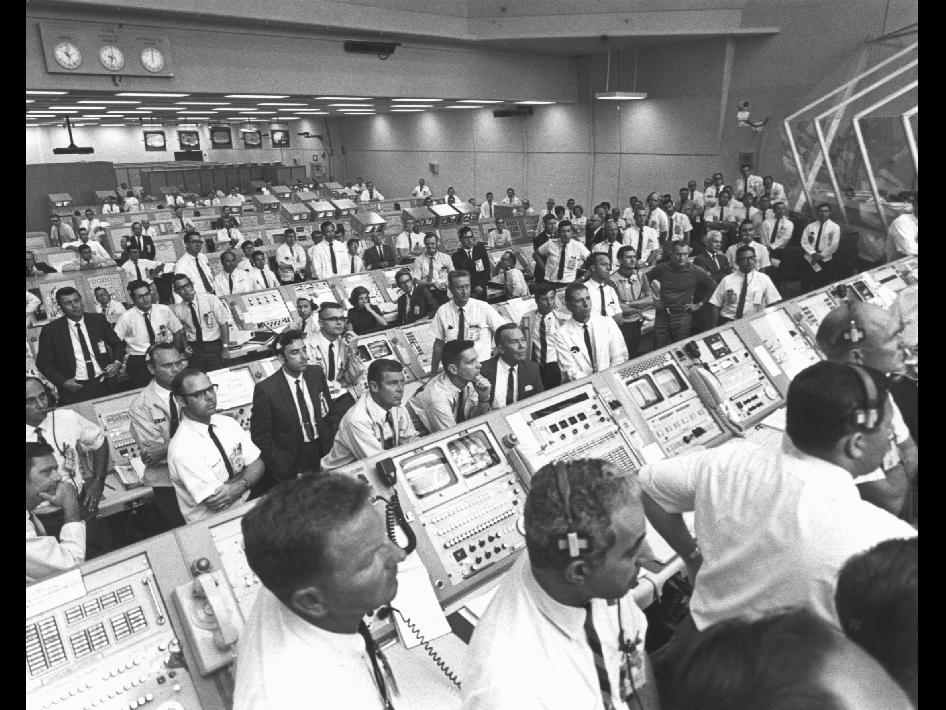
NASA personnel at Mission Control during the Apollo 11 launch.
As a matter of fact, NASA was only integrated by a direct Presidential order from Lyndon Johnson to Wernher von Braun, rocketry pioneer and first director of the National Aeronautics and Space Administration. And, while President Johnson’s mandate instructed NASA to work with Alabama A&M and Tuskeegee University to locate qualified candidates to work with the space program, the idea of a Black astrophysicist was essentially unheard of.
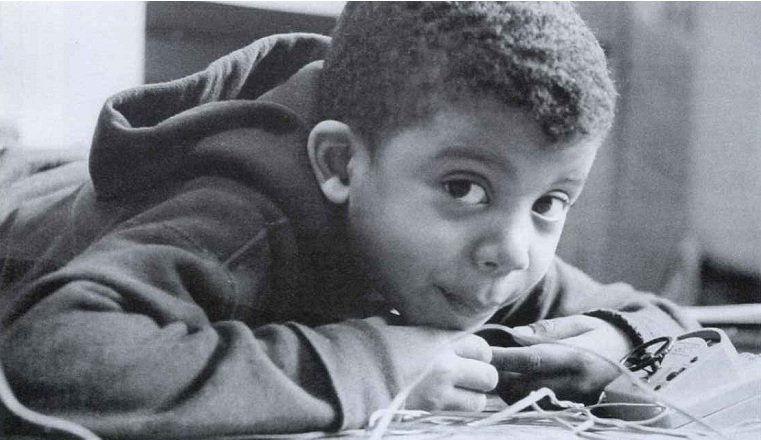
Young Neil deGrasse Tyson.
It’s a good thing that no one bothered to tell young Neil, who wouldn’t be stopped from exploring the Universe even if all the astronauts were White.
(Big thanks to our longtime friend, the Posthuman Romantic/tech gonzo/all-around dashing gent M1K3Y, for this delightful rave review! Be sure to visit him over at Grinding.be. ~Mer)
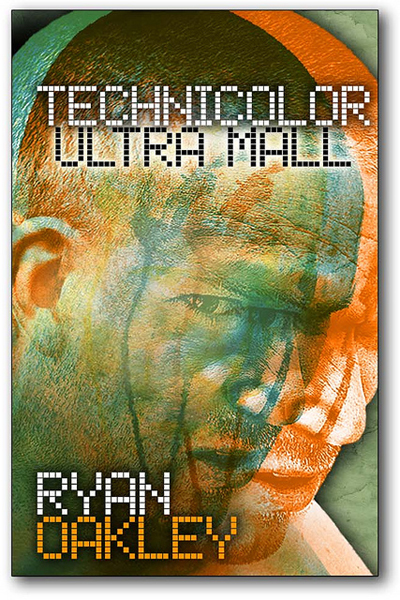
Little is widely known about Canada’s speculative super soldier program. Much was rumoured, little actually validated. Ryan Oakley was whispered to be the bastard mind-child of Anthony Burgess and Philip K. Dick, but this was only confirmed with the release of his debut novel TECHNICOLOR ULTRA MALL into the wild. Torn pages clutched by catatonic mall rats left to rot in the back rows of electronic superstores. Curious graffiti in bathroom stalls announcing “The Coming Revelation of the Great Chosen One, Teevee”. Russian squats full of lively debate driven by dot-matrix printed excerpts, mistranslated from German. Ultraviolent science fiction makes its heroic return; travelling through time, back to kill the future.
TECHNICOLOR ULTRA MALL (#TCUM) is a busted neon literary warning sign. Where cyberpunk failed, this must succeed in alerting us to hyper-capitalism’s end state: the mega-mall as polis. Born to shop, in death do we become commerce itself (“you could usually get more for a dead person than you could pull from their pockets”). Hyper-mediated, people are alienated from their own body, unable to feel anything without the right chemical compound. Corporate colonisation of emotion and sensation.
This is what comes of the “old people afraid of the sky” future, as Bruce Sterling has described it, written before he even uttered the words. Outside may as well be the surface of the Moon (or better yet, Mars); there is only the Mall. The adult version of Nausicaä Valley of the Wind, but with gigantic, hermetically sealed machinery instead of mutant bugs. The malls feed on the garbage of the past, as the book itself mines the midden heaps of the collective refuse of the decadent 20th century (that still lingers on like a dying fire-breathing dragon stumbling into a village, unaware it’s killing us all.) This is Demolition Man mutated and buried underground by the Umbrella Corporation. This is Plato’s three-souled corporate Republic with its Red (bronze-souled favella), Green (silver-souled bourgeoisie) and Blue (golden-souled ruling class) levels, and twice as sickening.
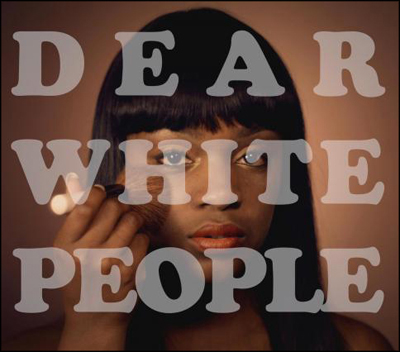
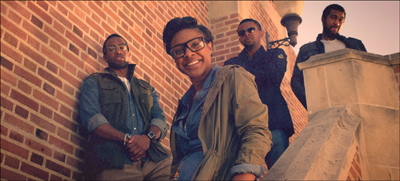
As mentioned previously, for the next wee bit, we’re going to be cross-posting some choice Geekquality blog pieces that we think may be of interest to the Coilhouse readership. First up, this interview with writer/director/producer Justin Simien and producer Lena Waithe about their indie film Dear White People, conducted by Geekquality contributing editor Moxie Munroe earlier this summer. (Thanks again to everybody over there. We <3 you.) ~Mer
MOXIE: I’m completely in love with your project, having seen the trailer on Shadow And Act. What sparked the idea for the project? JUSTIN SIMIEN: The original idea for the film happened during my senior year at Chapman University. After growing up in Houston, attending the rather diverse High School for the Performing and Visual Arts, college life at a small private college in Orange County was a four year long culture shock. I wanted to comment on my experience and started collecting personal episodes like mitigating the sheer disillusionment in certain White students when I couldn’t teach them how to crypt walk, or when I decided to finally cut my substantial fro, or just in general when I acted differently then the Black people they saw on 106 and Park. LENA WAITHE: I was first introduced to [the project] in a writers group (which is how Justin and I met). He was writing it as a TV show, but all the themes and the characters were the same, and it had a huge impact on me. I loved his voice and I loved him. Of course we quickly became close friends and I finally read the feature length version of “2%” which is what it was originally called (because the black students at Manchester only made up two percent of the population). And once I read the feature, I was just sold on helping him bring this story to light.
M: As a Black woman and a creative I know I’ve had conversations with folks time and time again, especially in college, that are reminiscent of a lot of moments in the trailer. What was the moment when you all said, “We need to make a movie about this”? JS: I had been working on the material for a few years, trying it as a TV pilot or an overwritten 265 page feature, which didn’t garner much interest for some strange reason, when I realized that my professional life was mirroring my experiences in college. I was still one of VERY few black faces in most of the places I found myself professionally. Requests to teach friends how to crypt walk were replaced with requests for “Dougie lessons.” I was being confused for the one other Black guy in the office, and the requests to see me with an afro continued unabated, despite my insistence that it was a pain for me to manage and I didn’t really want one.
Also (and more importantly) in the culture there seemed to be a real need for a fresh dialogue about race. The birther movement was gaining momentum, the ugly incidents over a “Black” themed party thrown at UCSD mirrored scenes from the script, and debate over the lack of Black voices in film and tv was happening all around me. That’s when I started the twitter account @DearWhitePeople and working in earnest to get the script to a place where it could be shot as a feature.
LW: I dug [his Twitter] so much that every now and then I would pitch him jokes for it and he would throw them up there. But myself, and one of the other producers Ann Le (who’s been there from the beginning) have been passionate about the film for years. And Justin’s been working on the project for about 7 years. So it’s always been around, I think we just all came to the point where we said it’s either now or never. And thank God, because the timing could not have been better.
M: How has the use of social networking aided in the development of this project? (Big congratulations on meeting and exceeding your IndieGoGo goal, by the way.) JS: Starting the Twitter account was great because it allowed me to really work out the voice of one of the film’s leads. In the film Samantha White starts a radio show on campus called “Dear White People,” the controversy over which is a driving force for a lot of the plot. Through Twitter I was able to test out material, refine her voice, and gain some insight on the people that were so offended by what they perceived as an accusation of racism they responded to the account with genuinely racist comments.
LW: We’re a generation that lives on the internet. I actually credit Facebook the most because we can send the link to people we aren’t even friends with in a Facebook message, and the people we are friends with have no problem with us posting the link on their wall. When something is shared and posted on Facebook a million times, that’s when you know you’ve struck a nerve. And all the producers started to get all these random friend requests soon after the trailer launched. That’s when we knew folks were sharing it, emailing it, tweeting about, and blogging about it. When the producers would sit down and discuss the strategy to push the trailer we always knew that we would use Facebook and Twitter. That’s the best way to reach OUR audience.
M: There have been conversations about Blackness and the “Black Monolith” and what that means since the dawn of the Huxtable Dynasty (a name I’ve just decided to give the period of time between when The Cosby Show hit it big and Girlfriends went off the air). I know the project is called Dear White People but what do you think of the idea of a cultural Black monolith and “authentic Blackness”, and what sorts of conversations about it are you trying to raise with this project? JS: To me the film is ultimately about identity and how race identity in particular can be both a gateway to and a huge obstacle for reaching one’s potential. This is compounded by the fact that Black folks and non-Black folks all have very different opinions about what being “authentically Black” actually means.
Each of the main characters are going through an identity crisis with regards to their “blackness” whether its not feeling Black enough for the Black kids, not feeling Black enough for the white kids, or feeling too Black for anyone.
Minorities, along with systemic socio economic disadvantage, have the added pleasure of going through life being pre-defined by everyone according to their race, gender, or sexual orientation. Based on how we define ourselves, some of us find solace in our “ethnic cultures” and some of us feel alienated by it.
Ultimately the role of culture (black or otherwise) as I see it is to help us find our voice and footing in the world. But there also comes a time when to really reach our true potential we have to transcend the cultural and identity cues we’ve come to be defined by. Yes I’ve been watching a lot of OWN.
M: All of your characters seem to be very original, and quite different from each other, yet all of them are also really relatable, both to people of color and universally, which is really refreshing to see. Do you think, with independently produced content on the rise and this age of the webseries, we will see more projects by minorities and see a much needed shift toward more diversity in the mainstream media? JS: The Misadventures of Awkward Black Girl, Sh*t Black Girls Say, andSh*T White Girls Say To Black Girls is proof that the internet has made it easier for minority voices to circumvent the usual obstacles of creating and distributing content and connect directly with an audience. Here’s hoping that traditional media, be it films or television, pays attention. Diverse stories in the mainstream seem to be shrinking, creating an even bigger disparity between the demographic make-up of the country and the stories dominating our culture. LW: I think folks have always wondered when there is one Black success others will follow, and I’ve come to the realization that the work just has to be brilliant. The only way a Black writer/director/actor/producer will be recognized is if the work is amazing and inspired. Not everything out there is great. Justin is extremely gifted. That’s why he has 3 producers behind him (me, Ann Le, and Angel Lopez) because his vision is so amazing. So if Black artists continue to hold themselves to a higher standard then, yes we’ll see a surge.
Artist, musician, and grand master tinkerer Felix Thorn builds machines –wondrous, whimsical, beautiful machines– by taking apart old, obsolete contraptions and breathing new life, motion, song and light into them. His pieces have been featured in galleries and shop window displays and art installations and commercials, used in various live performances, or as theatrical accompaniment, or as stand-alone film fodder.
He states: “Although my medium focuses on the development of acoustic sounds, I am continually inspired by electronic music – the countless abstractions act as blueprints for the construction of its acoustic counterparts. I aim to build a space where artificial and dream-like environments can become a reality.”
Felix’s Machines EP available here. The stunning film above was recorded and shot at Gasworks in the UK in the winter 2008, and here’s another one (more of an overview) by Tom Mansell: