In the past two months, seven clips have appeared on YouTube under a mysterious account titled iamamiwhoami. Two days ago, the first full-length music video appeared – and many are claiming that, based on a few clues in the video, the identity of the author (widely rumored to be Goldfrapp, Trent Reznor, Lykke Li, Lady Gaga, The Knife and, seriously, Christina Aguilera) has finally been uncovered. But first, a bit of background by Leila Brillson to underscore the sheer amount of gematrical/Fortean weirdness packed into this haunting viral endeavor:

In December, a 55-second clip of a hyper-saturated, eerie (Scandinavian?) forest appeared on YouTube. No information was given, just the title “Prelude 699130082.451322-5.4.21.3.1.20.9.15.14.1.12.” The set of numbers following the dash, when matched to their alphabetical correspondents, spell “Educational.”

A few weeks later, a second video emerged, with a dirt-covered blonde girl seductively licking trees to a slow, driving electronic beat – the message this time, “Its Me.” Each video ended with the outline of an animal: a goat and an owl, respectively. The next video, accompanied by a funkier and more cheerful song, featured the painted girl again, up-close, with freakishly large eyes… this time, it spelled “Mandragora.”

The next video (“Officinarum”) increased the count to five (the featured animals, at that point, comprised of a goat, owl, whale, bee and llama). Then, on Friday, [James Montgomery, a music editor] received a package from a messenger service. “It was a thin, brown envelope with my name and floor typed on the front, and no return address.” Inside was a strand of hair from the blonde wig, some bits of wood, and what Montgomery calls a codex.

The project is not without a sense of humor. Each of the videos has a hyperlink in its description to another random but zoologically relevant YouTube clip -  Spit On by a Lllama, Screaming Monkeys, Bumble Bee on a Sunflower, to name a few. The new music video, which you can see below, links to this terrifying monstrosity.

So, yes! Now that the new music video has been posted, people have been started putting together the pieces. The most compelling evidence is here – while it does take a bit of magic out of the whole thing, it’s an impressive piece of internet sleuthing.

Yep, she’s a weird one. Please, please let it be her, and not some overproduced pop star. I mean, look at what she did to Nitzer Ebb. Jonna, if this is you, you have arrived!

Some more Serious Journalism from my time in Japan (see also: cat cafes). I previously mentioned Yaso Magazine in a post about Neon O’Clockworks – as promised in that post, here are some snapshots of Yaso for you to see! It’s a beautiful, hefty magazine with themed issues, published and distributed almost exclusively in Japan. I took some photos of three issues with the following themes: Vampire: Painful Eternity / Heartrendingness, Victorian: Influences & Metamorphoses of Victorian Culture in Today’s Japanese Sub-Cultures, and Sense of Beauty: Japanese Aesthetic. Other themed issues I didn’t get my hands on: Svankmajer (yes, an entire Svankmajer-themed issue), Gothic, Monster & Freaks [sic]. I also had a fourth issue called Doll, but gave it away to Ross because he is a doll fancier before I got a chance to snap some photos.

It’s a stunning magazine. Paging through it feels like like falling into a paper-fetish world that’s at once completely alien and intimately familiar.

The small pictures don’t do it justice, so click on through to the Coilhouse Flickr Set to see the full, annotated collection of images. This magazine cost around $15 in Japan, but I’m only finding it priced at $35 for those of us living in the US or in Europe. I’ve even seen copies appear and disappear for about $45 on Ebay. The magazine is almost entirely in Japanese, as is their site.

We are so inspired to see others publishing the kinds of things that we love, all over the word. We don’t know the people who do Yaso, but we are so, so grateful for them.

Who wants to see the kawaii-est wide-eyed fuzzy meow-meows? If you said “yes,” venture quickly beyond the cut for some serious Investigative Journalism that I did for you all while I was in Japan. Yes, dear readers, I took time out of my precious vacation to conduct some intensive research into the fascinating phenomenon of Tokyo Cat Cafes. It was extremely taxing work, and I’m pleased to report the results of my findings: fat kitties, skinny kitties, airborne kitties, funnel-wearing kitties, and much, much more.

It’s known that holding or stroking a cat reduces blood pressure and improves one’s general state of mind. For Tokyo residents, the level of everyday stress faced by the average worker, coupled with the fact that most apartments forbid pets, has created a niche industry: a set of cafes where, for an hourly rate, one can bask in the blissful company of felines. Of these cafes, Calico is one of the most popular. An exclusive look, full of kitty shenanigans, after the jump!


Kate Moss in Alexander McQueen, Image by Cedric Rivrain

40 years old – and gone. Lee Alexander McQueen, I hope you’re out drinking with Yves Saint Laurent and your old friend Isabella Blow, collaborating on new shoots with Irving Penn and Bob Carlos Clarke and other fashion greats who’ve left us in recent years. Your vision was singular, your talent unparalleled. You summoned ghosts in front of our disbelieving eyes, and crafted runway landscapes of rain, fire and snow. You challenged norms by collaborating with unconventional beauties such as Beth Ditto, and stunned us with your visions of antlered seraphs, Leigh Bowery-inspired harlequins and dashing turn-of-the-century brutes. In the wake of what appeared on the outside to be a successful, inspired year for you, it’s hard to imagine what was in your heart at the moment you took your life. But we all have our demons. May yours finally be at rest.

Just a cute little video for a cute little techno song: a budget version of the Sofia Coppola’s Antoinette cast engulfed in a messy food fight for a video called “Lightworks” by the Acid Girls – a band consisting of these two mustached dudes. What’s interesting about this video is that it was paid for by Toyota Scion. As part of their marketing efforts, Scion pours tons of money into the arts. But most of the artists in Scion’s stable always struck me as rather safe, rather dull. This music video isn’t “transgressive” by any means, but there’s something genuine about it that I found missing from many of the other artists on Scion’s A/V site. The word I’m looking for may not even be genuine, but silly. I mean that in a good way.

In 1930, the MPAA drafted the Motion Picture Production Code, also called the Hays Code – named after its creator, Postmaster General-turned-Hollywood-censor William Hays. The original text can be found here. “Sex perversion” (aka homosexuality) was forbidden, as were scenes of miscegenation, safe-cracking, “dances which emphasize indecent movements,” surgical operations, and “white slavery.” The Hayes Code went into effect in 1934, ending the brief, unregulated era of talking pictures that had started in 1927 and was known as Pre-Code Hollywood. (Two great Top 10 lists of Pre-Code films can be found here and here). Over at Sociological Images, Gwen Sharp has uncovered a photo from the era that intentionally incorporates the code’s top 10 banned items into one image. “The photograph, [taken by A.L. Shafer, head of photography at Columbia], was clandestinely passed around among photographers and publicists in Hollywood as a method of symbolic protest to the Hays Code.”

Silent-era glam, Balkan patterns and futuristic, fortified silhouettes: this is the work of Lamija Suljevic, a 22-year-old designer based in Stockholm. In her new collection, shot by Emma Johnsson Dysell and unveiled last week, the Bosnian-born designer reflects on childhood memories of the home her family had to flee when she was five years old. “When I think of my hometown, I think of old techniques and handmade garments,” the designer told styleskilling blog. “Having that with me during my design process has become one of my strengths. If I’m working on my collections, I work wholeheartedly. Nothing else is good enough. If my grandmother were alive she would be proud, and things like that are very important to me.” Some of the old techniques incorporated into these garments include braiding, embroidery, pleating and crochet. Prior to this collection, Suljevicreleased some vintage-romantic looks on Lookbook under the label name Lamilla.


Designer -  Lamija Suljevic’. Stylist – Tekla Knaust @ new blood agency. Hair & make up – Nina Belkhir @ link details. Model – Olivia @ stockholmsgruppen. Photo – Emma Jonsson Dysell @ new blood agency

Just in case you missed this announcement elsewhere, Zo is selling these gorgeous contoured vinyl stickers of her original artwork over at her site, Biorequiem! There are two designs: Cumulus Confection, which appeared as one of the Coilhouse section headers in Issue 02, and Poke, an artwork that Zo released as fine-art print some time ago. The stickers are coated with a UV finish, making them resistant to discoloration over time. Get ‘em before they’re gone!

Jay-Z’s hypnotic music video for the song On to the Next One was released as “the first music video of the decade” on the morning of 01/01/10. Of course, Vigilant Citizen – who you’ll remember for his incisive analysis of Lady Gaga’s true Masonic origins – was immediately on the case. Jay-Z has been on the Citizen shitlist ever since the rapper wore a “Do What Thou Wilt” shirt last August, so with the release of this video came righteous vindication and the kind of breathless analysis that causes sharp spikes in the purchasing of duct tape and canned beans amongst the site’s core readership. God-fearing truthseekers weren’t the only ones dissecting the macabre clip. In an article on Jay-Z’s ties to the art world, Slate commented on the clip’s symbols of wealth and status:

Jay-Z and the director Sam Brown jumble bluntly evocative status symbols—a bulging stack of hundreds, Armand de Brignac champagne—with more mysterious symbolism—a bell jar containing taxidermy birds, a swirling ink blot, those whipping cords (which, it bears mentioning, are lifted from the 2002 video for Interpol’s “Obstacle 1″). Some of the most memorable shots in the video are of black paint pouring down a diamond-covered skull. The skull is a replica of “For the Love of God,” a Damien Hirst sculpture that the British artist fabricated for about $30 million in 2007 and sold for a purported $100 million (to a group of investors that includes the Ukrainian billionaire Viktor Pinchuk and, oddly, Hirst himself). Like the Jaguar XJ, Hirst’s skull telegraphs extreme wealth, but that’s not all: Screaming its value while begging to be mulled over, it’s a status symbol and a puzzle in one.’

But Slate’s art-fag analysis is just part of the big cover-up, because this video’s occult powers are clearly beyond anything that even Vigilant Citizen could conceive of, as explained by Derek Jones from the Light of the Lamb Church (Mr. Jones’ breakdown is, perhaps, the true masterpiece here).

Satanic mind control issues aside, the video itself is well-played. Watching this clip is like stumbling across yet another mind-blowingly amazing, anonymous Tumblr blog where nothing is contextualized, nothing is credited, and nothing stays on top for long (hello, NOWITSDARK). Incredible images flash past your eyes as you continue to scroll down… sometimes you’ll recognize a film still or some fashion editorial from 10 months ago, but most times you have no idea, though you feverishly wish you did. You look at the image properties for a clue, and of course it’s only named something like “tumblr_kwqnmlcOoe1qa2t6ho1_500.jpg”. You will probably never know. This video captures the awed anxiety of seeing too many disembodied things in rapid succession.

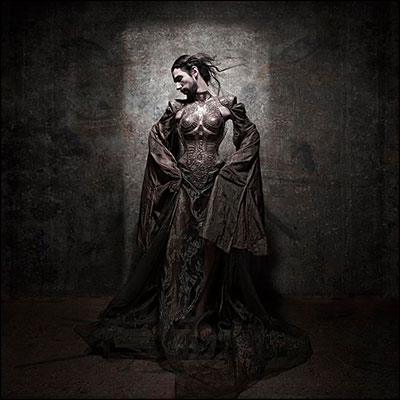
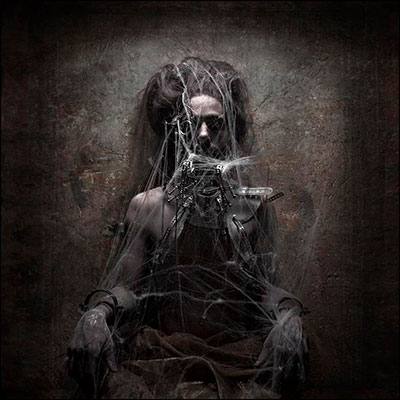
These images, created by conceptual art/illustration/photography unit Neon O’Clockworks, appeared in the Japan/Victorian issue of Yaso Magazine. (Yaso, a Japanese-only art magazine published in Tokyo, has issues with themes like “doll,” “vampire” and “Svankmajer” – more about this incredible publication, with pictures and reviews of specific issues, later this week!) The series that these images come from is called “Timeless Prelude,” subtitled “Victorian Period & Huge Head” – click here to see the entire project. The artists write that the series was inspired by the huge wigs of bygone eras, along with Japanese geisha makeup. The result is a nostalgic, Sarah Moon-esque atmosphere that dips into the 1700s and the 1900s, Kabuki stylings and German expressionism, East and West. Not to be missed on their site are some of the other projects: the Kragenedechse installation (make sure you see the room of silence and the exhibition’s window display!), the Japan Avant-Garde portraits and the Dressed/Naked book.