Supersonic: Third Wave Feminism and the Importance of the “Hard Femme”-Cee (via Geekquality)

A final, fantastic Geekquality cross-posting written by Moxie Munroe. Thanks again to everyone over at our cherished sister blog for their thoughtful contributions and ongoing inspiration. We love you! Keep up the empowering, nourishing work. ~Mer

It’s a widely accepted idea that music, like fashion, social movements, and menstruation, runs in cycles. Sometimes this theory runs less true than others, but right now I think it’s pretty applicable. Because right now, in the year of our Lord 2012, three things are making a huge media comeback: feminism, babydoll dresses, and female [presenting] emcees. This is important on several different levels, one being that the rise of the female emcee in 2012, and the performance styles they’ve adopted, gives us the chance to have some real conversations about race, class, and presentation in the role of third wave feminism.

You might say, “But Moxie, this is a blog for geeks by geeks! What does this have to do with my geek culture?” And I might answer, “Well, you beautiful newborn baby, geek culture is fringe culture, just like this is fringe culture. Music geeks are geeks too, and music geeks encompass a wider berth than just Flaming Lips fans, so get over it – hip-hop geeks need some shine too, and the issues we’re dealing with here are the same issues we deal with when we talk about representation of women of color in media in general, including comics, so double get over it, zip your lips and listen up, sporty.” And you might say, “Moxie, that’s mean!” And I might say “I don’t care!” So let’s continue.

Third wave feminism, is Now feminism; it’s pop feminism; some people might identify it as “girl power” Spice Girls feminism. It’s important, because this particular wave allows us to focus on things like sexual progressiveness and agency as it exists within the feminist sphere. A lot of the criticisms surrounding third wave feminism (and feminism in general) focus on the perceived and actual exclusion of race, class, and gender presentation in discourse. Several of the up and coming femcees in 2012 serve to challenge many of the practical aspects of both the standard patriarchy and the perceived paradigm of the feminist ideal. I’d say a lot of this is because most femcees exist in a racial/sexual no-man’s land, where subversiveness is almost necessary to survival.


Azealia Banks in GQ Magazine.

The first wave of femcees seems to have come around sometime in the 80s and early 90s with folks like Queen Latifah, MC Lyte, Salt N Pepa, and TLC; with tracks like “Ladies First” and “None Of Your Business” lending a particularly feminist voice to the hip-hop game. As hot as these songs (and artists) were, none of them became banner anthems of the feminist movement, falling behind artists like Bikini Kill and other darlings of the Riot Grrl movement. Recently though, vintage fem-penned hip-hop has been getting more play in feminist circles, due in large part to this generation’s penchant for nostalgia, and also the rise of social media’s role in social movements, allowing more voices of color to come to the forefront of the conversation. Social media has aided in the diversity of the music scene as well, allowing more underground artists to be heard by a wide range of demographics.

But let’s get back to the future. Today’s crop of female emcees seems to be as influenced by the socially conscious hip-hop of the 80s and 90s as it is the more raw sexually charged female hip-hop of the early 00s, when artists like Lil’ Kim and Foxy Brown ruled the school. The explicit lyrics of that form of the genre tended to turn off a lot of feminists who dismissed it as both heteronormative and degrading.

The Knife’s New Album Will Feature Vocals By Shannon Funchess of Light Asylum!


Photo of Shannon Funchess by Grant Thomas for Bullett Magazine.

IT’S ALL RIIIIIGHT. IT’S OKAAAAAAY. THERE’S SOMETHIN’ TO LIVE FOOOOORRR. PITCHFORK TOOOOOOOLD ME SOOOOOOO

It doesn’t appear that the Knife‘s long-awaited new record will come in 2012, as initially rumored. But here’s a nice little album factoid to tide you over, perhaps: According to aninterview she did with Dazed Digital, Shannon Funchess of goth-leaning electronic act Light Asylum will contribute vocals, which seems like a natural fit.

“I recorded with them after we left here last time, and in a couple of days I’m going to Berlin to record some more… They’re totally sweet people!,” she said about a month ago.

Funchess also told No Conclusion that the track features lyrics written by visual artist Emily Roysdon. “Karin [Dreijer Andersson] and I sang the lyrics and created the melodies along with Emily as well, and Olof [Dreijer] and Karin produced the music.”


The Knife. Photo by Stian Andersen.

HOHMAIGAAHHD. So much squeeee, you guys. SOOOO! MUCH! SQUEEEEEEEEE! (Maybe even a little peeeeee.)

Previously on Coilhouse:

A chat with Justin Simien & Lena Waithe of “Dear White People” (via Geekquality)

As mentioned previously, for the next wee bit, we’re going to be cross-posting some choice Geekquality blog pieces that we think may be of interest to the Coilhouse readership. First up, this interview with writer/director/producer Justin Simien and producer Lena Waithe about their indie film Dear White People, conducted by Geekquality contributing editor Moxie Munroe earlier this summer. (Thanks again to everybody over there. We <3 you.) ~Mer


MOXIE: I’m completely in love with your project, having seen the trailer on Shadow And Act. What sparked the idea for the project?
JUSTIN SIMIEN: The original idea for the film happened during my senior year at Chapman University. After growing up in Houston, attending the rather diverse High School for the Performing and Visual Arts, college life at a small private college in Orange County was a four year long culture shock. I wanted to comment on my experience and started collecting personal episodes like mitigating the sheer disillusionment in certain White students when I couldn’t teach them how to crypt walk, or when I decided to finally cut my substantial fro, or just in general when I acted differently then the Black people they saw on 106 and Park.
LENA WAITHE: I was first introduced to [the project] in a writers group (which is how Justin and I met). He was writing it as a TV show, but all the themes and the characters were the same, and it had a huge impact on me. I loved his voice and I loved him. Of course we quickly became close friends and I finally read the feature length version of “2%” which is what it was originally called (because the black students at Manchester only made up two percent of the population). And once I read the feature, I was just sold on helping him bring this story to light.

M: As a Black woman and a creative I know I’ve had conversations with folks time and time again, especially in college, that are reminiscent of a lot of moments in the trailer. What was the moment when you all said, “We need to make a movie about this”?
JS: I had been working on the material for a few years, trying it as a TV pilot or an overwritten 265 page feature, which didn’t garner much interest for some strange reason, when I realized that my professional life was mirroring my experiences in college. I was still one of VERY few black faces in most of the places I found myself professionally. Requests to teach friends how to crypt walk were replaced with requests for “Dougie lessons.” I was being confused for the one other Black guy in the office, and the requests to see me with an afro continued unabated, despite my insistence that it was a pain for me to manage and I didn’t really want one.

Also (and more importantly) in the culture there seemed to be a real need for a fresh dialogue about race. The birther movement was gaining momentum, the ugly incidents over a “Black” themed party thrown at UCSD mirrored scenes from the script, and debate over the lack of Black voices in film and tv was happening all around me. That’s when I started the twitter account @DearWhitePeople and working in earnest to get the script to a place where it could be shot as a feature.

LW: I dug [his Twitter] so much that every now and then I would pitch him jokes for it and he would throw them up there. But myself, and one of the other producers Ann Le (who’s been there from the beginning) have been passionate about the film for years. And Justin’s been working on the project for about 7 years. So it’s always been around, I think we just all came to the point where we said it’s either now or never. And thank God, because the timing could not have been better.

M: How has the use of social networking aided in the development of this project? (Big congratulations on meeting and exceeding your IndieGoGo goal, by the way.)
JS: Starting the Twitter account was great because it allowed me to really work out the voice of one of the film’s leads. In the film Samantha White starts a radio show on campus called “Dear White People,” the controversy over which is a driving force for a lot of the plot. Through Twitter I was able to test out material, refine her voice, and gain some insight on the people that were so offended by what they perceived as an accusation of racism they responded to the account with genuinely racist comments.

LW: We’re a generation that lives on the internet. I actually credit Facebook the most because we can send the link to people we aren’t even friends with in a Facebook message, and the people we are friends with have no problem with us posting the link on their wall. When something is shared and posted on Facebook a million times, that’s when you know you’ve struck a nerve. And all the producers started to get all these random friend requests soon after the trailer launched. That’s when we knew folks were sharing it, emailing it, tweeting about, and blogging about it. When the producers would sit down and discuss the strategy to push the trailer we always knew that we would use Facebook and Twitter. That’s the best way to reach OUR audience.

M: There have been conversations about Blackness and the “Black Monolith” and what that means since the dawn of the Huxtable Dynasty (a name I’ve just decided to give the period of time between when The Cosby Show hit it big and Girlfriends went off the air). I know the project is called Dear White People but what do you think of the idea of a cultural Black monolith and “authentic Blackness”, and what sorts of conversations about it are you trying to raise with this project?
JS: To me the film is ultimately about identity and how race identity in particular can be both a gateway to and a huge obstacle for reaching one’s potential. This is compounded by the fact that Black folks and non-Black folks all have very different opinions about what being “authentically Black” actually means.

Each of the main characters are going through an identity crisis with regards to their “blackness” whether its not feeling Black enough for the Black kids, not feeling Black enough for the white kids, or feeling too Black for anyone.

Minorities, along with systemic socio economic disadvantage, have the added pleasure of going through life being pre-defined by everyone according to their race, gender, or sexual orientation. Based on how we define ourselves, some of us find solace in our “ethnic cultures” and some of us feel alienated by it.

Ultimately the role of culture (black or otherwise) as I see it is to help us find our voice and footing in the world. But there also comes a time when to really reach our true potential we have to transcend the cultural and identity cues we’ve come to be defined by. Yes I’ve been watching a lot of OWN.

M: All of your characters seem to be very original, and quite different from each other, yet all of them are also really relatable, both to people of color and universally, which is really refreshing to see. Do you think, with independently produced content on the rise and this age of the webseries, we will see more projects by minorities and see a much needed shift toward more diversity in the mainstream media?
JSThe Misadventures of Awkward Black GirlSh*t Black Girls Say, and Sh*T White Girls Say To Black Girls is proof that the internet has made it easier for minority voices to circumvent the usual obstacles of creating and distributing content and connect directly with an audience. Here’s hoping that traditional media, be it films or television, pays attention. Diverse stories in the mainstream seem to be shrinking, creating an even bigger disparity between the demographic make-up of the country and the stories dominating our culture.
LW: I think folks have always wondered when there is one Black success others will follow, and I’ve come to the realization that the work just has to be brilliant. The only way a Black writer/director/actor/producer will be recognized is if the work is amazing and inspired. Not everything out there is great. Justin is extremely gifted. That’s why he has 3 producers behind him (me, Ann Le, and Angel Lopez) because his vision is so amazing. So if Black artists continue to hold themselves to a higher standard then, yes we’ll see a surge.

Geekquality: Where All Geeks Are Created Equal

Our longtime contributor and multi-talented friend Tanya Virodova has been keeping even more busy than usual, thanks to her relatively new role as the Managing Editor of Geekquality, a lively collaborative blog venture she co-founded in late 2011 with several other bad-ass, beautiful people.

Tanya tells us that the idea for Geekquality emerged last year when several of the founding editors met for the first time at the first annual Geek Girl Con in Seattle, Washington. Since that time, they’ve been steadily building/ramping up their online presence. Nowadays, the Geekquality venture is a thriving example of diverse collaborative writing and online community-building.

With staff members hailing from both the West and East coasts of the United States –all geeks and vocal participants in online communities and united by a “love/hate relationship with geeky media”– Geekquality, in addition to celebrating examples of inclusivity and diversity in geek culture, addresses its writers’ mutual, ever-growing dissatisfaction with a frequent lack of intersectionality and diversity both in current geek media and in many fandom communities. This from a group statement emailed to Coilhouse by their editorial team:

“Being a nerd isn’t really so much a choice as it is a facet of your person. How you live, consume, and interpret your experience, however, most certainly is a matter of informed choice. All of us have been disappointed to find that often, analysis that challenges beloved content and creators is dismissed as unproductive and overly negative, when it’s actually critically important. The geek is indeed inheriting the earth, and it’s up to geeks to make sure our influence is not a negative and exclusive one.”

“Talking about video games, comic books, TV shows, movies, etc and pointing out flaws in writing or casting, accuracy in representation of unique perspectives, and general discussion of what could be done better sometimes are met with an arms crossed, head-shaking refusal to admit that some pop culture thing we love can also be flawed. While we are all united by our geekdom, there can still be more inclusion from lenses of feminism, sex and gender, race, ability, and various cultural perspectives.”


Jodie Landon LOLZ!

Shien Lee Launches “Not Your China Girl”


Shien Lee. Styling by Vecona. Photo by Tina Cassati.

New blog alert!

New York-based artist/performer Shien Lee - who you’ll know as the fanciful designer of the anachronistic event Dances of Vice –  has launched a new blog, titled ”Not Your China Girl.” In Shien’s own words:

The title of the blog was conceived in response to the frequent catcalls I’d get on city streets, which include “China Girl”, “China Doll”, “Konnichiwa”, “Ni hao”, and “Geisha Girl”, among other terms associated with The Asian Mystique. This compelled me to examine the Orientalized and fetishized filter through which Westerners frequently view Asia—and Asian women in particular—which perpetuates a subconscious racism fueled by dehumanizing stereotypes. I wish to challenge the Occidental misperceptions about Asia that are based on mythologies and sexualized for the male imagination.

My aim is not to attack or destroy the fantasy of an exotic, romantic, and beautiful Orient, which many Asians, including myself, can and do appreciate. You’ll find that many of my photos are infused with romanticized Asian imagery; even Asians possess a fantasy of the grandeur of their own history, colored by art, images, and stories passed through time. But can a beautiful thing be detached from the social inferences governed by the male gaze? Yes, and no. To analyze a dream, a fantasy, or thing of beauty calls attention to its flaws, and takes away from its wonderful mystique. Nevertheless, it is imperative to acknowledge and understand the filters that contort our perspectives so that we can see ourselves and the world in which we live more clearly. My goal is to call attention to the issues of race and sex, fantasy and power in representations of Asian culture.

By simultaneously appreciating and examining lavish Orientalist imagery through a feminist lens, Shien tackles an interesting set of issues that often crop up in anachronistic/decadent movements. Within the steampunk subculture, questions are regularly raised about whether or not certain ideals ganked from the Victorian era have reinforced a colonialist narrative. In gothic/industrial spheres, conflicts often flare up around longstanding presumptions regarding whiteness (why has there never been a dark-skinned cover model in 12 years of Gothic Beauty? Why was Side-Linestunned“, in 2010, by the black lead singer of O. Children?), misogyny (the phenomenon of Combichrist), and supremacism (the racist gray area that begins with Death in June).

Shien clearly cares very deeply about the world that she’s creating for herself and her friends – in the case of Dances of Vice, a world of cinched waists, powdered faces, and themes that reach into a deeply gendered past. Enough to ask: What’s really going on here? How can we be more self-aware about the motifs we’re playing with?  So far, the answers involve a romp through 1950s Rockabilly in China, 1920s Deco Japan, and a thoughtful post titled “On the Asian Fetish, Why Asian Women Date White Men, and the Remasculation of the Western Man“. Throw in some gorgeous Pinterest finds, and the blog becomes an addictive mix of analysis, pop culture, fashion, and art.

Congratulations on your new platform, Shien… we’ll be reading!

BTC: Lady Peanut, Sarah Donner, and a Kitteh Trap/Neuter/Return Adventure

Good afternoon! Is anybody else having trouble staying awake today? You’re not alone…

This is Lady Peanut. She is a very good listener:

(Guh.  Is it any wonder this video’s going spectacularly viral?)

The soporific object of this wee kitteh’s affection is Sarah Donner, a self-proclaimed singer/songwriter/creative type/cat lady with a bright, sweet voice.  She says “Lady Peanut [...] likes to sit by me when I get out the ukulele.” The catchy tune Sarah’s singing is called “Treeline”, and she is kindly offering it as a free download through her ReverbNation account.

Sarah and a cameraman also made this charming Trap/Neuter/Return video documenting their personal TNR experience, which feels like an interesting/informative thing to share on a sleepy Monday afternoon:

To learn more about TNR and feral cat colonies, check out this ASCPA webpage. (In the interest of fair and complete reportage, while the ASPCA, the Humane Society of the Unites States, and other animal rights groups are pro-TNR, it is a controversial procedure which many wildlife and bird advocacy organizations have argued against. But either way, something to think/talk about.)

Visit Sarah’s website to find out lots of cute and funny details about her, and to hear more strummy folky yumminess.

In conclusion, here’s a screenshot of  Lady Peanut’s sweet little face. Because, well, just LOOK at her. Squeeee…

Coilhouse Interview: Molly Crabapple Discusses Art, Occupy, and “Shell Game”

In September of 2011, shortly after launching a highly successful Kickstarter campaign, our intrepid chum Molly Crabapple locked herself into a hotel room in New York City for a week, eventually filling 270 square feet of paper-covered wall with her art. Yesterday, IDW published  The Art of Molly Crabapple, Vol #1: Molly Crabapple’s Week In Hell, a book chronicling the whirlwind project (with beautiful contributions from several more Coilhouse friends: photo documentation by Steve Prue, a cover shot by Clayton Cubitt, and a foreword by Warren Ellis).

Last week, Molly returned to Kickstarter to launch Shell Game, a crowd-funded art show about the massive ongoing international financial meltdown. For Shell Game, she plans to create “nine giant paintings about the collapses and upheavals of the last year, then rig out storefront like a gambling parlor and display them to the city and the internet for a week.” Shell Game is an experiment of sorts for Molly, who is keen to fund large scale, labor-intensive work without having to depend on wealthy collectors. This type of crowd-funding is, she hopes, “a way of finding Medici in the crowd.”


“The Great American Bubble Machine” by Molly Crabapple, the first of nine in her Shell Game series.

As they did with Week In Hell, $1 contributors get to peep at Molly’s progress through a backers-only blog with livestreamed painting sessions, and those who donate larger amounts receive incrementally impressive artistic rewards. With well over a week still left to go, the campaign has already raised well over 50K through backers small and large. DANG.

Today on Coilhouse, Molly Crabapple tells us more about the Shell Game campaign, and shares related thoughts about the nature of Occupy and the future of art… and vice versa.


Molly’s “Vampire Squid” stencil, as seen at various Occupy camps all over the world.

You’ve mentioned that, until 2011, you weren’t comfortable with making political art, that you were “afraid of being hypocritical, propagandistic or boring.” Can you tell us a bit about the specific thought process that changed your mind? Was there some particular catalyst, or was it a gradual shift in perspective?
I’m an essentially capitalist little hustler who likes Louboutins and who draws frivolous things, sometimes for very rich people.  For a long time, I felt this if I made “activist art” it was straight up radical posturing.  I didn’t want to win cool points on someone else’s movement.  So I’d donate money or sell work for charity, but hide any subversive thoughts in a whole lots of illustrative metaphor.  My thoughts started changing when I painted The Box in London.  Suddenly I was drawing straight-up parodies of the British class system on the walls of what would be one of the world’s most depraved nightclubs, while being given a privileged view of the student occupations by the unspeakably brilliant journalist Laurie Penny.  Suddenly avoiding politics in my art seemed like a cop-out.  Wikileaks, Wisconson, and finally Occupy Wall Street meant that upheaval was hitting America.  I had to engage.

Has there been any criticism thrown at you about your means of involvement? If so, how do you engage with that? 
I’ve had a few people call me an evil latte liberal or whatever, but honestly, who cares.  The idea that you have to be a vegan saint to care about having a vaguely just world is just a way of making sure no one does anything.

Limerence for Ron Turner

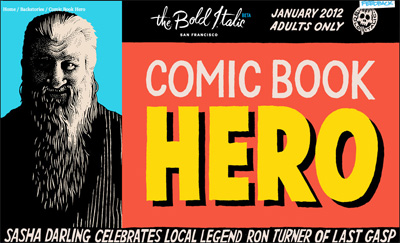
I just stumbled across The Bold Italic‘s lovely tribute to countercultural legend Ron Turner via Laughing Squid and smiled until my face hurt. Sasha Darling writes:

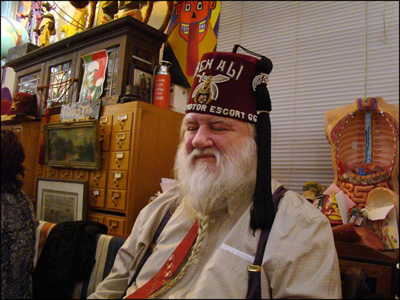
Of all the brilliant and amazing people I have encountered here, none are as dear to me as Mr. Ron Turner of Last Gasp. He’s equal parts underground comic book publishing icon, art collector extraordinaire, genuine gentleman, and dirty old man.

[...] Ron, with his long white beard and rosy cheeks, is a man who has rubbed shoulders with Timothy Leary, received fan letters from Charles Manson, and discovered important artists like R. Crumb. Yet he still has the dignified character to make every person in the room feel just as interesting as the legends he shares his delightfully interesting past with.”

Truer and more accurate words were never spoken! Nadya and I had the pleasure of taking Mr. Turner out to a business lunch in SF early last year. Our valiant-but-inevitably-hopeless attempts at verbally “one-upping” this unflappable pervert, this wondrous wizard, this mischievous genius, over quivering bowls of Cafe Gratitude porridge, resulted in one of the most memorable, not to mention visceral, professional lunches Coilhouse will ever host.*

After our meal, Ron graciously invited us back to Last Gasp headquarters, which feels simultaneously like a publisher’s warehouse and a cozily vibrant museum, thanks to his astonishing personal collection of books, prints, original artwork, vintage magician posters, carny ephemera, taxidermy, etc. Another treasured memory. Be sure to check out Darling’s photographs of Ron’s office, as well as his and his wife Carol Sue’s wondrous home. So great. We adore this man. Art crush, for sure.


Photo of Ron Turner by Pilar Vree for artbusiness.com.

*I’m honestly not sure how it happened, but we ended up spending approximately 91% of our summit with this legendary gentleman gabbing about about strap-ons and breathatarians and fecal impaction and ejaculate –the Landmark hippie vegans were nonplussed, lemme tell ya– and perhaps 9% of it discussing business strategy. (Though, to be fair, it was very powerful and insightful 9%.) BEST BUSINESS LUNCH EVAR.

New Larkin Grimm Album Imminent, Free Village Voice Download


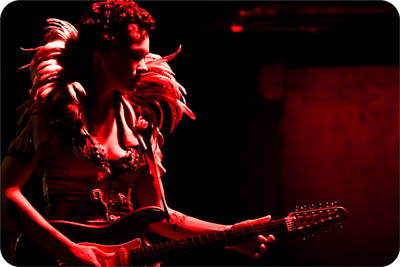
Photo by Dese’Rae L. Stage

The powerfully enchanting Larkin Grimm, previously interviewed by Angeliska on the Coilhouse blog and featured in Issue Four of our print issue, has a new album coming out next month! You can read about what she’s been up to recently, and preview/download her song “Paradise And So Many Colors” at the Village Voice website.

Last year, the sartorial site StyleLikeU (oh good gracious, LOVE these ladies) posted a wonderful “Closet Feature” on Grimm. It’s as endearing a portrait of the woman as you’ll find anywhere:

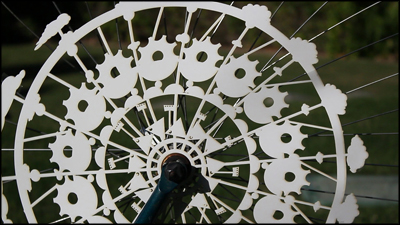
“The Bicycle Animation” by Katy Beveridge

Katy Beveridge is the mastermind behind this surprising and gorgeous animation piece “that explores whether it’s possible to film animation in realtime.” Beveridge did a ton of research on “proto animation” (which basically means super early, basic, rudimentary animation) in modern design, and cross-referenced work by other contemporary designers using similar techniques.

“I have interviewed animators such as Jim le Fevre and in my research referenced other people using this technique such as David Wilson and Tim Wheatley who did this before me. I developed this project based on what is being done in animation right now as well as a lot of primary research into the history of animation techniques.”

Her friend Stefan Neidermeyer created the piece’s perfect soundtrack by remixing random bike noies recorded during filming.

For a limited time, Beveridge is offering heavy, glossy paper stock laser cuts of the bicycle wheel paper cuts for sale in her Etsy shop. She also co-runs the informative Londoncentric graphics/art/design blog, Freda & Franck.