Geekquality: Where All Geeks Are Created Equal

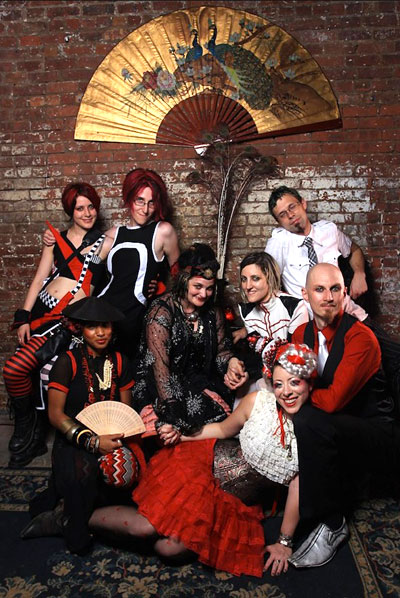
Our longtime contributor and multi-talented friend Tanya Virodova has been keeping even more busy than usual, thanks to her relatively new role as the Managing Editor of Geekquality, a lively collaborative blog venture she co-founded in late 2011 with several other bad-ass, beautiful people.

Tanya tells us that the idea for Geekquality emerged last year when several of the founding editors met for the first time at the first annual Geek Girl Con in Seattle, Washington. Since that time, they’ve been steadily building/ramping up their online presence. Nowadays, the Geekquality venture is a thriving example of diverse collaborative writing and online community-building.

With staff members hailing from both the West and East coasts of the United States –all geeks and vocal participants in online communities and united by a “love/hate relationship with geeky media”– Geekquality, in addition to celebrating examples of inclusivity and diversity in geek culture, addresses its writers’ mutual, ever-growing dissatisfaction with a frequent lack of intersectionality and diversity both in current geek media and in many fandom communities. This from a group statement emailed to Coilhouse by their editorial team:

“Being a nerd isn’t really so much a choice as it is a facet of your person. How you live, consume, and interpret your experience, however, most certainly is a matter of informed choice. All of us have been disappointed to find that often, analysis that challenges beloved content and creators is dismissed as unproductive and overly negative, when it’s actually critically important. The geek is indeed inheriting the earth, and it’s up to geeks to make sure our influence is not a negative and exclusive one.”

“Talking about video games, comic books, TV shows, movies, etc and pointing out flaws in writing or casting, accuracy in representation of unique perspectives, and general discussion of what could be done better sometimes are met with an arms crossed, head-shaking refusal to admit that some pop culture thing we love can also be flawed. While we are all united by our geekdom, there can still be more inclusion from lenses of feminism, sex and gender, race, ability, and various cultural perspectives.”


Jodie Landon LOLZ!

A Radical Gabfest With Laurie Penny


Author and independent journalist Laurie Penny, aka Penny Red. Photo © Montalbetti + Campbell.

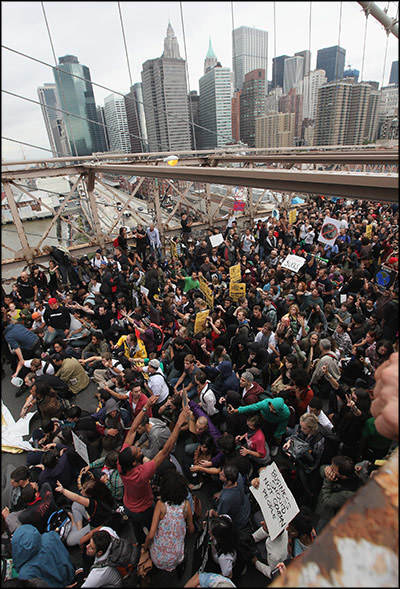
Sharp, exuberant, funny, passionate, and radically progressive, Laurie Penny (aka Penny Red) has a lot to say, and she isn’t afraid to say it… no matter what. In early 2011, at the age of twenty-three, this English writer skyrocketed into the press with her on-the-ground, heart-in-mouth coverage of the UK student protests. Later that same year, her shrewd reportage of the NYC-based Occupy protests garnered her an even larger readership around the blogosphere, on Twitter, and via various mainstream media outlets.

Since then, Penny’s been a columnist for The New Statesman and has written several articles for The Guardian and The Evening Standard. Her first two books, Meat Market: Female Flesh Under Capitalism, and Penny Red: Notes from the New Age of Dissent, were both published in 2011 by Zero Press. Currently, she and our good chum Molly Crabapple are collaborating on an ebook project called Discordia for Random House. Penny’s also spearheading a super secret video series that will “aim to challenge contemporary debate culture” by implementing a time-honored salon format. More information on that coming soon.

I’ve been keen to interview Laurie Penny for ages. Earlier this weekend, we finally got around to talking, and talking… AND TALKING, via Gchat (she at her mum’s house in the woods somewhere in England, me at my folks’ place in the chaparral somewhere in California). In fact, we didn’t shut up for several hours. What follows is the lion’s share of that conversation, minus our occasional indecipherable segues into bat country. (Well, most of them, anyway.)

Good readers, let it be known that this transcript is quite long, so we’ve broken it up into sub-headed sections in the hopes of keeping your eyeballs from bleeding. Laurie, thanks again! Always happy to put a kettle on for you here at Coilhouse. Can’t wait to see what you and your “savage red pen of justice” get up to next!

AD HOMINEM

Mer: You’re not afraid to lead with deeply personal experiences. It’s fair to say that your approach often triggers some very polarizing reactions, both positive/appreciative, and negative/dismissive.  I’ve been wanting to ask you for a long time: how do you balance your openness and vulnerability with the inevitable need for thick skin and tough armor. How do you stay balanced? What’s your “safe space”, figuratively speaking?

Laurie:  Well, I do get a lot of attacks – people tell me I get more and more frightening trolling even than the usual barrage of hate and intimidation and slut-shaming that any woman raising her voice above a whisper on the internet has come to expect. It’s hard, sometimes. I’ve had very dark moments with it, and I don’t know how I would have coped without my friends. I’ve always been a sensitive person. I’ve had to develop a thicker skin, but at the same time I don’t want a tough hide. I think that’s a dangerous thing for a writer, particularly now. You can get to the stage where all criticism, even the legitimate, useful kind, just bounces off you, and you ossify into a little cocoon of your own prejudices. I’ve been very close to kicking it all in several times, particularly last spring, when I had some personal threats against my family on top of the rest of it, and I was also burned out from overwork. I started wondering if the toll it was all taking was worth it, the stress and exhaustion and panic attacks. When I get very low, which happens sometimes, I often think that I’d give up and shut up like these scumbags want if I didn’t hate the idea of letting them win. But spite alone is no way to work or write if you believe in doing your own small bit to change the world.

Mer: No, it’s not.

Laurie: Part of all this is particular to the British press, too. The culture of political debate in this country is toxic right now. Has been for years. And geographically as well as figuratively, it’s a very small island. Also, it’s just that some people really hate it when young women talk about things that aren’t shoes. Not that shoes aren’t important, too! In their own way.

FREE PUSSY RIOT!

In early 2012, the Russian feminist punk band/avant grade group Pussy Riot staged several disruptive performances in Moscow. Inspired by Oi! bands, the riot grrrl movement, and an diverse slew of cultural thinkers, the band donned colorful ski masks, armed themselves with electric guitars, and sang in protest of the  devastating violations of civil rights happening under Putin’s regime.

Back in February, Mer blogged about the band’s “Punk Prayer” – an incident in which the band stormed Moscow’s Christ the Savior Cathedral for an impromptu performance. The lyrics of the song criticized the Orthodox Church’s corrupt alliance with Putin’s government, asking Mother Mary to deliver Russia from Putin’s third term. “Virgin Mary, Mother of God, become a feminist,” the girls sang before they were dragged away by the authorities.


Nadezhda Tolokonnikova, Mariya Alekhina and Yekaterina Samutsevich, the three jailed members of Russian punk collective Pussy Riot

After the performance, things got dark for Pussy Riot. Three members of the group were arrested, thrown in jail, denied bail, and held without trial for months. They have been charged with “hooliganism,” and are facing up to seven years in prison. At time of writing, the women have spent 117 days in jail, with the trial postponed for months longer. This is without any family visits, despite two of the girls being young mothers.

Shit is fucked up and bullshit in Russia. Putin has just exponentially increased the anti-protest fine, riot police are savagely beating anti-Putin protesters, and the homes of opposition leaders just got raided. Moscow has just placed a 100-year ban on LGBT pride parades, and St. Petersburg has banned any images of “gay propaganda.” Meanwhile, Russia’s Kremlin-controlled media has done its best to sway public opinion against the girls, painting them as “blasphemous” criminals bent on destroying the entire Russian Orthodox religion. In this climate, it’s likely that the three members of Pussy Riot will be convicted. In fact, just 7% of Russians believe that the band should not somehow be punished.

Luckily, Pussy Riot’s plight has started to gain international attention. Solidarity demonstrations are happening around the world, there have been enthusiastic benefit shows, and Pussy Riot has caught the attention of the art world. In Russia, more than 100 of Russia’s best-known cultural figures have signed a letter urging for the band to be released. Abroad, musicians including Kathleen Hanna have taken up the cause, and Anti-Flag released a Punk Prayer cover in support.

What can you do to help? For one, spread the word. Organize a local benefit, or donate to their legal fund (note: at time of writing, the site freepussyriot.org where you can donate is down, but most of the time it’s running). Take action with Amnesty International, urging the Prosecutor’s Office to drop the charges and release the band. Stage a protest at your local Russian Embassy  or Russian Orthodox Church. Take pictures. Show the band that they are not forgotten.

Where Have You Gone, Lando Calrissian?

EDITOR’S NOTE: Here’s another insightfully inciting essay from Jeffrey Wengrofsky, who is currently co-starring as Chief Medical Examiner of the City of New York City in Speakeasy Dollhouse, a real life, vice-filled murder mystery set in a former speakeasy on the Lower East Side of Manhattan. Directed by Cynthia von Buhler, the production’s cast has also included Edgar Oliver, Kate Black, Edgar Stephen SNAFU, Katrina Galore, Amanda Palmer, Neil Gaiman, Katelan Foisy, Dana McDonald, Ali Luminescent, Heather Bunch, Porcelain Dalya, Russell Farhang, Amber Baldet, (Silent) James Lake, Rachel Boyadjis, Justin and Travis Moore, Syrie Moskowitz, Maria Rusolo, and Josh Weinstein, to name a few. Everyone we know in NYC’s been going gaga for this production, so please check it out and report back!


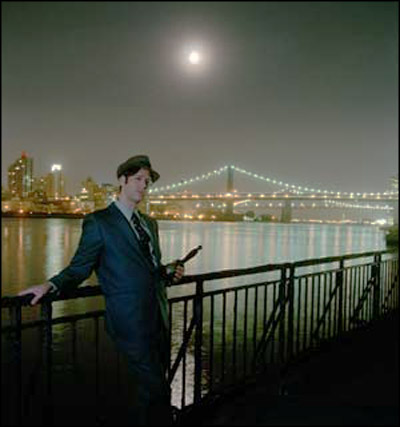
New York as Cloud City. Photo by Heather Allen.

“Suddenly everything became clear!
This was the…Atlantis of Plato…There it was before my eyes,
with undeniable evidence of its catastrophic end!” – Jules Verne1

After DJing at the Coilhouse Black & White & Red All Over Ball last August, I came down hard and fast. As a resident of lower Manhattan, I winced at the oncoming anniversary of 9-11 and braced for the immediate impact of Hurricane Irene. Media experts speculated that my neighborhood, barely three feet above sea level, would soon be under the swelling East River, and I imagined New York City’s primordial industrial artery oozing green across my lobby like that scene in The Shining when the blood comes out of the elevator. After a trip to the local store for batteries, canned goods, and bottled water, I got on my elevator with a veteran of Burning Man who shared information about high tides, planetary formations, and the Mayan calendar, bringing together science, new age pontificating, and classic Lower East Side pessimism to pronounce absolute DOOM on the city, the United States, Western civilization, and the world as we know it.

In the least it seemed certain that my building, only a block from the river, would join New Orleans, Indonesia, and Bangladesh as places where people waited atop roofs for relocation by helicopter. My dear friend and fellow Coilhouse contributor Angel Polacheck, herself an evacuee from New Orleans, appealed to her personal experience of relocation and invited me to travel with her to Pittsburgh, but after weighing my fears and imminent responsibilities (my fall semester teaching responsibilities beckoned from the coming week), I resolved to go down with the city. Having been born only a few blocks from where I now live, I imagined myself reclaimed by this land, neck deep in slimy muck with the likes of Jimmy Hoffa and the wrecks of old sailing ships on the gooey bottom of the East River. Hatches were battened in defiance. My computer was fastened to the National Weather Service for constant updates. Rain fell hard against my windows. Waters swirled and rose. As I drew a bath for future use, I stared at the water – my nemesis. What could be more innocent than water and who was I to defy it? Conscienceless, unconscious nature seemed poised to dish out death with the blank remorselessness of the bear in Grizzly Man. I compiled plaintive dispatches from the new Atlantis and contemplated the worst.


Damn the clichés: will rising tides sink all ships?

As it turned out, Irene did not tuck New York into its riverbed with a long “goodnight.” Instead, she spat her guts out all over New England and upstate New York, flooding several towns and small cities. New York City incurred minimal damage, but the hours of anxiously awaiting my fate left an impression on me. Shortly thereafter, my building, like much of the Northeast, undulated during an earthquake possibly attributable to natural gas fracking in Virginia.  In the past ten years, a sense of looming cataclysm—whether from ecological disaster, nuclear conflagration, terrorism, martial law, biological contagion, or economic implosion—has settled on people I know, forming a sad, silent backdrop to our lives. We are resigned to our coming undoing, but we do not yet know what form it will take; so we grin and grind and grunt toward a collective future that none of us will have consciously chosen.

While one of the conversion points of the left and right of the political spectrum may come at the oft-professed fashionable desire to see New York City destroyed, such an event would drown the entire global economy, which would be more than a merely “inconvenient truth.” Besides, rising sea levels will inundate every coastal city and small town in the world and the millions of soggy, displaced persons washing up on every door will make a mess not easily absorbed by any society or economy. And if, somehow, you are still savoring some schadenfreude, then contemplating the water shortages, heatwaves, tornadoes, earthquakes, or forest fires soon to be visiting the hinterland should stir the embers of empathy in your Grinchly heart.

To paraphrase Joe Strummer: New York is sinking and we all live by the East River.


Where have you gone, Lando Calrissian?

  1. Jules Verne, 20,000 Leagues Under the Sea. Trans. A. Bonner. (Bantam Books, 1962). p. 256.

Doc Watson: “Just One of the People.”

Arthel Lane “Doc” Watson was born March 3, 1923 in the Blue Ridge Mountains of North Carolina. At the age of one, he lost his eyesight after developing a severe ocular infection that was compounded by a pre-existing vascular disorder. Watson came from a musical family, so as soon as the boy’s hands were big enough, his father placed a harmonica in them. By age five, little Arthel Lane was picking a banjo and learning chords on a $12 Stella guitar.

Spontaneously nicknamed “Doc” in his late teens by an audience member, this child would one day come to be known as “the Godfather of all flatpickers” and “a powerful singer and a tremendously influential picker who virtually invented the art of playing mountain fiddle tunes on the flattop guitar” according to Folklore Productions.

From the early ’60s onward, Doc became better and better known for his rare and precious ability to re-contextualize the old (some might’ve said “musty”) southern Appalachian folk traditions of balladry and bluegrass as vibrantly contemporary forms. Decades later, all of his Grammy-winning records still sound fresh– full of life and oxygen and timeless pathos.

Watson, who experienced a hell of a lot of tragedy and hardship in his lifetime, remained a humble, self-sufficient and generous artist to the last, telling a close friend, David Holt, toward the end of his life that he hoped to be remembered as “just as a good ol’ down-to-earth boy that didn’t think he was perfect and that loved music [...] I’d like to leave quite a few friends behind and I hope I will. Other than that, I don’t want nobody putting me on a pedestal when I leave here. I’m just one of the people … just me.” (via)

Last year, when a life-size bench statue of Watson was dedicated in Boone, N.C. (at the very spot where Watson had busked for pennies in the nineteen-forties and fifties to support his family), Doc requested that inscription read precisely that: simply “Just One of the People.” And so it was.

Rest in Peace, Doc Watson. (1923 – 2012)


(via)

A Futuristic Ad on the Culture of Co-Opting

Via Mike Estee, who writes: “the overt culture co-opting is perhaps the most realistic aspect of this futuristic Burning Man ad.”

In this Absolut Vodka commercial, bougie leather-and-feathers trustafarians congregate for a day at the dog races in the desert. Except that the dogs are mechanical, controlled through a Tron-like interface in which three DJs play bad house music. Still, the fashion is breathtaking, the expensive props are beautifully-crafted, and the robotic greyhounds are strikingly feral and majestic. So mute the video, put on a song by Birdy Nam Nam, and enjoy.

Ultimately, the video’s douchy atmosphere (and weird racial tension) ruins what could have been a timeless commercial on par with Campari’s artful, transgressive spot for Red Passion.

It’s interesting to compare this video to images that clearly served as reference. The the groundbreaking influence of Tiffa Novoa, which manifests itself in many of the opulent fashions featured on the Twisted Lamb blog, likely inspired the ad’s costume design. A recent video crafted by Sequoia Emmanuelle that features Auberon Shull dancing in the desert is on par, in terms of quality, with this expensive ad. Except that instead of selling a beverage, Emmanuelle’s video promotes a powerful performer, independent musicians and alt designers.

We’re getting so close to the point where we have the tools to outstrip the industries that co-opt us. For example, with the advent of the RED, the Mark II, and the upcoming Blackmagic Cinema Camera, producing high-quality film footage is becoming more and more affordable. Kickstarter is providing a way for people to fund independent productions on a larger scale than ever before. So even as this Absolut ad tries to be futuristic, in many ways, it’s racing towards becoming a relic of the past – a time in which production quality belonged squarely to large advertisers with vapid aims. The future can’t come fast enough.

“Pentagram Sam” by Da Grimston & Mist-E

Guys, I’m gonna be real with you.

I may have just peed a little in my witchy-pooh panties.

And that’s all I have say about this:

The sprawling, quicksilver lyrics to this bilaterally symmetrical magnum LULZ opus have been posted below, because they’re… well, just read ‘em. And weep bitter crimson diamonds. Ov Darqueness.

[via DJ Dead Billy / Dangerous Minds]

The Enduring Power of the NYC Vogue Ball Scene and “Paris Is Burning”

A quick heads up: NPR just posted “The Music and Meaning of Paris Is Burning“, an article by Julianne Escobedo Shepherd that discusses Jennie Livingston‘s classic 1990 documentary Paris Is Burning and the legendary scene and songs that it celebrates.

In addition to providing an overview of both the documentary and vogue ball culture (both past and present) the NPR feature includes testimonies from Big Freedia, Light Asylum, Zebra Katz, Del Marquis, and many others. A quick, great read. It’s also exciting to discover that the documentary –which has been, for decades, fairly difficult to track down a decent copy of– is now readily available on iTunes and Netflix Streaming.

The realm of Paris Is Burning: resonant and radiant as it ever was.

Bad Romance: Women’s Suffrage by Soomo

Slick, thoughtful, and surprisingly moving, the following Gaga parody music video pays “homage to Alice Paul and the generations of brave women who joined together in the fight to pass the 19th Amendment, giving women the right to vote in 1920.” (Sharing this feels like a good way to acknowledge International Woman’s Day!)

It was conceived and produced by the Soomo Publishing group, a small team of educators and designers who create next generation learning resources that can be used as textbook replacements, or to supplement them. More info:

In 2010, Soomo Publishing launched a parody music video called Too Late to Apologize: A Declaration. The result was a viral hit and remains a popular teaching resource for history teachers and political science professors across the United States. The response was so overwhelming that Soomo decided to follow it up with Bad Romance: Women’s Suffrage.

[ via Katherine McKinley ]

Sharp, Funny, Thought-Provoking “Crazy Watering Can” Short by Vania Heymann

Last year, Vania Heymann, a first-year student at Bezalel art school, took a Canon 7D out into the seething spiritual/cultural microcosm of Jerusalem and –over the course of two very busy afternoons– shot the footage for this remarkable satirical short. Beautifully done. Can’t wait to see what Heymann comes up with next!

(Via Reddit / Sam Harris / GreatDismal )