Alt Culture Antibodies


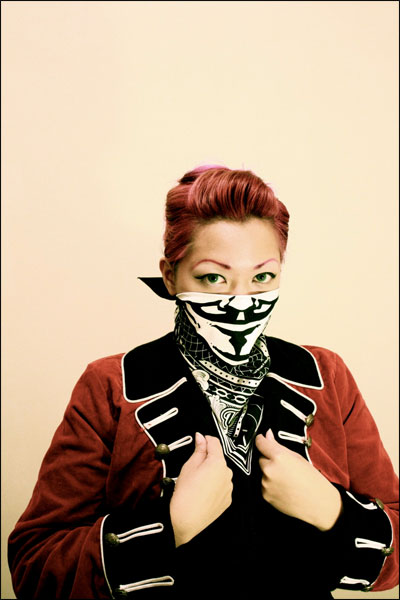
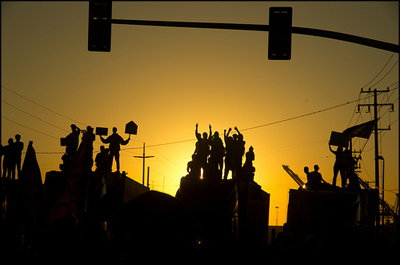
Photo by Hunter Freeman.

I’ll try to keep this short; it’s late and there’s not much time left. Please forgive me if you’ve heard parts of this story before.

For me, it started with an old box of science fiction. I tore through Samuel R. Delany, Joanna Russ, Gene Wolfe, and others, reliving stories old by the time I cracked the pages. I didn’t care.

To my mind, the New Wave had it: the future was something to play in. This status quo was the most transient of things, its passing viewed with a sense of infinite possibility. If there were other cultures out in space, forward in time, why not here? Why not now?


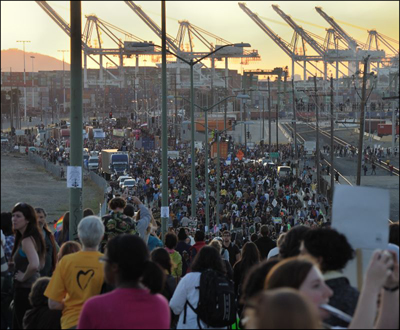
Photo by Mike Brodie.

I lived in one of those amazing, barely-clinging corners of the country too many ignore when they talk about culture of any variety. No metropoli there, just a scattering of people trying their desperate best. By the time I busted open the box full of old books, I had already faced a fair amount of poverty, hardship, and even death.


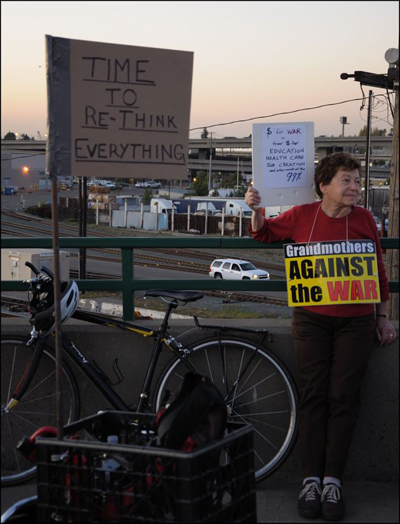
90s Cyberpunk portraiture by Steve Pyke.

But here, as the years wore on and I read my way through an uneasy adolescence, was something else: here was hope, in the most dangerous fashion. Somewhere out there, people changed their personalities, moved in unison, turned boundaries into blurs transitory as old blood on a highway.

By that point I did not care about ridicule, and laughed when someone threatened me, but this I was terrified of, sure that the half-described scenes — goths, ravers, activists, and more —  faced possibility with a courage I felt I’d never know.

Supersonic: Third Wave Feminism and the Importance of the “Hard Femme”-Cee (via Geekquality)

A final, fantastic Geekquality cross-posting written by Moxie Munroe. Thanks again to everyone over at our cherished sister blog for their thoughtful contributions and ongoing inspiration. We love you! Keep up the empowering, nourishing work. ~Mer

It’s a widely accepted idea that music, like fashion, social movements, and menstruation, runs in cycles. Sometimes this theory runs less true than others, but right now I think it’s pretty applicable. Because right now, in the year of our Lord 2012, three things are making a huge media comeback: feminism, babydoll dresses, and female [presenting] emcees. This is important on several different levels, one being that the rise of the female emcee in 2012, and the performance styles they’ve adopted, gives us the chance to have some real conversations about race, class, and presentation in the role of third wave feminism.

You might say, “But Moxie, this is a blog for geeks by geeks! What does this have to do with my geek culture?” And I might answer, “Well, you beautiful newborn baby, geek culture is fringe culture, just like this is fringe culture. Music geeks are geeks too, and music geeks encompass a wider berth than just Flaming Lips fans, so get over it – hip-hop geeks need some shine too, and the issues we’re dealing with here are the same issues we deal with when we talk about representation of women of color in media in general, including comics, so double get over it, zip your lips and listen up, sporty.” And you might say, “Moxie, that’s mean!” And I might say “I don’t care!” So let’s continue.

Third wave feminism, is Now feminism; it’s pop feminism; some people might identify it as “girl power” Spice Girls feminism. It’s important, because this particular wave allows us to focus on things like sexual progressiveness and agency as it exists within the feminist sphere. A lot of the criticisms surrounding third wave feminism (and feminism in general) focus on the perceived and actual exclusion of race, class, and gender presentation in discourse. Several of the up and coming femcees in 2012 serve to challenge many of the practical aspects of both the standard patriarchy and the perceived paradigm of the feminist ideal. I’d say a lot of this is because most femcees exist in a racial/sexual no-man’s land, where subversiveness is almost necessary to survival.


Azealia Banks in GQ Magazine.

The first wave of femcees seems to have come around sometime in the 80s and early 90s with folks like Queen Latifah, MC Lyte, Salt N Pepa, and TLC; with tracks like “Ladies First” and “None Of Your Business” lending a particularly feminist voice to the hip-hop game. As hot as these songs (and artists) were, none of them became banner anthems of the feminist movement, falling behind artists like Bikini Kill and other darlings of the Riot Grrl movement. Recently though, vintage fem-penned hip-hop has been getting more play in feminist circles, due in large part to this generation’s penchant for nostalgia, and also the rise of social media’s role in social movements, allowing more voices of color to come to the forefront of the conversation. Social media has aided in the diversity of the music scene as well, allowing more underground artists to be heard by a wide range of demographics.

But let’s get back to the future. Today’s crop of female emcees seems to be as influenced by the socially conscious hip-hop of the 80s and 90s as it is the more raw sexually charged female hip-hop of the early 00s, when artists like Lil’ Kim and Foxy Brown ruled the school. The explicit lyrics of that form of the genre tended to turn off a lot of feminists who dismissed it as both heteronormative and degrading.

Signed, Sealed, Delivered, Sure. But Don’t Forget About Sandy.


“Big Bird” casting his vote yesterday in Austin, Texas. (via)

OBAMA FTW.

Defiant Son of the Lord of the Solid Gold Cock Rings has trouble accepting this reality graciously, as do other assorted racist old fartknockers and Twitterdouchecanoes, and all of the irrationally fearful and phobic folk they represent. Meanwhile, much of the rest of the country is happily celebrating huge victories for our femaleLGBTQ, and midnight toking citizens.

Heads up, though; I just received an alarming message from Sxip Shirey, conveying word from his friend Greg Squared who’s volunteering in some of the most devastated burroughs of New York. Sxip says, “Our city is NOT back to normal. People need help. Please help. READ.” Here is Greg’s from-the-trenches assessment of what’s going on right now:

“Okay. Now that the election is over, can we get back to what’s actually important: the state of the areas hardest hit by Hurricane Sandy? The Rockaways, the Jersey Shore, Coney Island, Red Hook, Staten Island all need your help. They’re having trouble getting food, FEMA and the Red Cross seem to be completely absent, and there’s a big storm bearing down, scheduled to hit Wed., and bring snow on Thurs. I urge everyone that’s celebrating Obama’s victory tonight not only to call on their Congress people to get some shit done vis-a-vis the pitiful federal response, but to take an active part by donating urgently needed material and financial support. One place you can do that is at the link below. Furthermore, a couple of Occupy Sandy kitchens that have been supplying something like 20,000 hot meals for people without electricity are very close to being completely out of food. If you live in the New York area and want to donate food, please bring it to one of the distribution centers listed at interoccupy.net/occupysandy/.”

Stay warm, stay kind, stay mindful, comrades. We’ve still got a long, dubious winter ahead of us.

UPDATE, NOV 7:  ”On Friday, we’ll be airing a very special episode of Sesame Street.

“A hurricane has swept through Sesame Street and everyone is working together to clean up the neighborhood. When Big Bird checks on his home, he is heartbroken to find that the storm has destroyed his nest. Big Bird’s friends and neighbors gather to show their support and let him know they can fix his home, but it will take time. While everyone on Sesame Street spends the next few days cleaning up and making repairs, Big Bird still has moments where he is sad, angry, and confused…”

“Please check your local listings to see what time the episode will air on PBS.”

Joss Whedon: “The Zomneys will come for all of us.”

Joss Whedon, y’all.

“You know, like a lot of liberal Americans, I was excited when Barack Obama took office four years ago. But it’s a very different world now, and Mitt Romney is a very different candidate. One with the vision and determination to cut through ‘business as usual’ politics’ and finally put this country back on the path to the zombie apocalypse. Romney is ready to make the deep rollbacks in healthcare, education, social services, and reproductive rights that will guaranty poverty, unemployment, overpopulation, disease, rioting – all crucial elements in creating a nightmare zombie wasteland. But it’s his commitment to ungoverned corporate privilege that will nose-dive this economy into true insolvency and chaos. The kind of chaos you can’t buy back. Money is only so much paper to the undead. The 1% will no longer be the very rich, it’ll be the very fast. Anyone can run, fight, make explosives out of household objects or especially do parkour of any kind – you’ll want to stick with them, unless they read Ayn Rand.”

“Look, I don’t pretend to see the future. No one knows for sure if they’ll be the super-fast 28 Days Later zombies or the old-school shambling kind. But they’re out there, and they need brains. So, whether you’re a small business man just trying to keep his doors open, a single mom so concerned for her son’s welfare that she’ll run to embrace him when he’s clearly infected and going to bite her. Or a strung-out ex-military type, who’s been out there too long and is taking the kind of damn-fool chances that’ll get us all killed, you need to ask yourself, ‘Am I ready? Am I ready for the purity and courage of Mitt Romney’s apocalyptic vision?’ Mitt’s ready. He’s not afraid to face a ravening, rasping hoard of sub-humans, because that’s how he sees poor people already. Let’s all embrace the future, stop pretending we care about each other, and start hoarding canned goods. Because if Mitt takes office, sooner or later, the zombies will come for all of us.”

“Zomney – He Needs Brains”

“Paid for by the Committee to Learn Parkour, Like Really Soon, Like Maybe Take A Class Or Something.”

“I am so goth, I was born black.”


Clockwise: Ms. Sally Bonetta Forbes, Cathleen Naundorf, Untitled (check out the rest of the “gothic lolita” tag as well), Roni Zulu

While there’s still never been a black model on the cover of Gothic Beauty Magazine (in fact, having looked the past twelve years of covers up close, it’s clear that even models with brown eyes appear to be a rarity among the blue- and green-eyed cover ladies), and while most spooky fashion designers still prefer white models for their branding, a host of blogs dedicated to multicultural dark fashion are bringing greater visibility to the people that these venues ignore. Just on Tumblr, there’s Darque & Lovely, DarkSKIN (subtitled “I was so goth, I was born black), and Black Sheep Goths. On Facebook, groups such as Black/African American Goths foster lively discussion.

Of the Tumblr communities, Black Sheep focuses most specifically on people who are othered (providing a platform for “queer/fat/trans/non-binary/disabled/POC” goths), while DarkSKIN delves most deeply into different time periods (from Victorian photographs to seventies album covers to a friend’s most recently-uploaded snapshots), pop culture personalities taking a turn for the macabre (from Eartha Kitt singing “I want to be evil” to Aaliyah playing a sultry Anne Rice vampire) and media (from high-end fashion shoots to grainy self-portraits)

Many of the images come with empowering and, at times, defensive captions. It seems that even in 2012, some try to claim that the goth scene belongs to white people only. One caption on the Darque & Lovely blog, below an image of tattoo artist Roni Zulu, reads: “this is for the chicken-shit anon who said black people shouldn’t ‘do’ goth or punk. At certain points in history to be black in America was (still can be) a pretty gothic experience, to say the least.”


Clockwise: Asha Beta/Silentinfinite collaboration, Neon Leon, photo by Mert and Marcus, Actress Vonetta McGee as Princess Luva in Blacula, photo copyright Everett Collection / Rex Features

Is the goth scene unfriendly to people with dark skin? What do non-white goths think about the fetishization of paleness in the gothic subculture?

“The only time I experienced anything racial in the scene was at Death Guild [a San Francisco goth night],” says Shamika “Meeks” Baker, a San Francisco-based writer, artist and model. “A guy walked up to me, shouted ‘scuse me!’ and shoved me aside. Of couse, when I grabbed the back of his Fun Fur coat and yanked him back to demand an apology, he started screaming ‘get your black hands off of me!’ Happily, after I finished scaring him and turned around, I discovered several of my friends behind me and ready to back me up. [Other than that incident], I’ve found that the goth scene has been really welcoming and open.”

“For me, the fetishization of paleness in beauty in general is very much a class issue as opposed to straight race,” says New York-based artist/maker Numidas Prasarn. “The ‘ideal gothic beauty’ of being pale comes from this sense of otherness. When mainstream de mode is tanned beach babe, the pale contrast is taken up as the signifier of an Other that defensively puffs itself up. The problem is that it’s a microcosm that doesn’t necessary carry the sense of self-awareness to realize that it’s also othering people.”


Clockwise: Amanda Tea, Barron Claiborne, Leif Podhajsky, Unknown from Burning Man by Iñaki Vinaixa

Asha Beta, a sculptor, jewelry designer and musician currently living in Prescott, Arizona, comments on her invisibility within a community that borrows aesthetics from her cultural heritage:

The “traditional” ideal of the scene as the pale-faced, black-clad individual definitely never applied to me, but because of my instant and deep connection and attraction to the music and atmosphere of the scene I had to set that aside. I always felt that I was not perceived to be as attractive, as beautiful or even as “goth” as girls who were paler than me. I never attracted many suitors and I reconciled myself to never being able to approach the “gothic ideal of beauty” very early on, although I felt within myself that my personal way of being “goth” was very sincere and creative and very much true to what “goth” was all about. The one part of the scene that obviously made me uncomfortable was the military/Nazi/Aryan faction of it, although I understand that for many of those people it was a fetish or history obsession type of thing, and not necessarily based in racism.

Many of the aesthetics of goth culture are taken from my cultural heritage (Asian/East Indian/Middle Eastern, African/Egyptian/Voodoo/Haitian-Caribbean) so I still felt and feel strongly that my connection to it is natural and instinctive and powerful. It was achingly difficult to be a minority within the subculture I deeply loved because it’s within these that we find acceptance and understanding where the larger society rejects us. I was a loner within the scene just as I was in society. I found a personal solace and creative outlet, but I never found the community I was searching for. I am overjoyed to finally see our subcultures mirroring the multicultural quality of our world, and so glad to see the younger generations of subcultures finding and creating communities to connect with and support one another.

Meeks Baker agrees. “I love that more emerging blogs/sites focus on us dark-skinned gothy types. To be honest, I never really cared much for gothic beauty magazines because they didn’t really reflect my aesthetic, but I did still feel marginalized. To this day I am thrilled to see ethnic diversity represented in alternative culture.”

A Radical Gabfest With Laurie Penny


Author and independent journalist Laurie Penny, aka Penny Red. Photo © Montalbetti + Campbell.

Sharp, exuberant, funny, passionate, and radically progressive, Laurie Penny (aka Penny Red) has a lot to say, and she isn’t afraid to say it… no matter what. In early 2011, at the age of twenty-three, this English writer skyrocketed into the press with her on-the-ground, heart-in-mouth coverage of the UK student protests. Later that same year, her shrewd reportage of the NYC-based Occupy protests garnered her an even larger readership around the blogosphere, on Twitter, and via various mainstream media outlets.

Since then, Penny’s been a columnist for The New Statesman and has written several articles for The Guardian and The Evening Standard. Her first two books, Meat Market: Female Flesh Under Capitalism, and Penny Red: Notes from the New Age of Dissent, were both published in 2011 by Zero Press. Currently, she and our good chum Molly Crabapple are collaborating on an ebook project called Discordia for Random House. Penny’s also spearheading a super secret video series that will “aim to challenge contemporary debate culture” by implementing a time-honored salon format. More information on that coming soon.

I’ve been keen to interview Laurie Penny for ages. Earlier this weekend, we finally got around to talking, and talking… AND TALKING, via Gchat (she at her mum’s house in the woods somewhere in England, me at my folks’ place in the chaparral somewhere in California). In fact, we didn’t shut up for several hours. What follows is the lion’s share of that conversation, minus our occasional indecipherable segues into bat country. (Well, most of them, anyway.)

Good readers, let it be known that this transcript is quite long, so we’ve broken it up into sub-headed sections in the hopes of keeping your eyeballs from bleeding. Laurie, thanks again! Always happy to put a kettle on for you here at Coilhouse. Can’t wait to see what you and your “savage red pen of justice” get up to next!

AD HOMINEM

Mer: You’re not afraid to lead with deeply personal experiences. It’s fair to say that your approach often triggers some very polarizing reactions, both positive/appreciative, and negative/dismissive.  I’ve been wanting to ask you for a long time: how do you balance your openness and vulnerability with the inevitable need for thick skin and tough armor. How do you stay balanced? What’s your “safe space”, figuratively speaking?

Laurie:  Well, I do get a lot of attacks – people tell me I get more and more frightening trolling even than the usual barrage of hate and intimidation and slut-shaming that any woman raising her voice above a whisper on the internet has come to expect. It’s hard, sometimes. I’ve had very dark moments with it, and I don’t know how I would have coped without my friends. I’ve always been a sensitive person. I’ve had to develop a thicker skin, but at the same time I don’t want a tough hide. I think that’s a dangerous thing for a writer, particularly now. You can get to the stage where all criticism, even the legitimate, useful kind, just bounces off you, and you ossify into a little cocoon of your own prejudices. I’ve been very close to kicking it all in several times, particularly last spring, when I had some personal threats against my family on top of the rest of it, and I was also burned out from overwork. I started wondering if the toll it was all taking was worth it, the stress and exhaustion and panic attacks. When I get very low, which happens sometimes, I often think that I’d give up and shut up like these scumbags want if I didn’t hate the idea of letting them win. But spite alone is no way to work or write if you believe in doing your own small bit to change the world.

Mer: No, it’s not.

Laurie: Part of all this is particular to the British press, too. The culture of political debate in this country is toxic right now. Has been for years. And geographically as well as figuratively, it’s a very small island. Also, it’s just that some people really hate it when young women talk about things that aren’t shoes. Not that shoes aren’t important, too! In their own way.

FREE PUSSY RIOT!

In early 2012, the Russian feminist punk band/avant grade group Pussy Riot staged several disruptive performances in Moscow. Inspired by Oi! bands, the riot grrrl movement, and an diverse slew of cultural thinkers, the band donned colorful ski masks, armed themselves with electric guitars, and sang in protest of the  devastating violations of civil rights happening under Putin’s regime.

Back in February, Mer blogged about the band’s “Punk Prayer” – an incident in which the band stormed Moscow’s Christ the Savior Cathedral for an impromptu performance. The lyrics of the song criticized the Orthodox Church’s corrupt alliance with Putin’s government, asking Mother Mary to deliver Russia from Putin’s third term. “Virgin Mary, Mother of God, become a feminist,” the girls sang before they were dragged away by the authorities.


Nadezhda Tolokonnikova, Mariya Alekhina and Yekaterina Samutsevich, the three jailed members of Russian punk collective Pussy Riot

After the performance, things got dark for Pussy Riot. Three members of the group were arrested, thrown in jail, denied bail, and held without trial for months. They have been charged with “hooliganism,” and are facing up to seven years in prison. At time of writing, the women have spent 117 days in jail, with the trial postponed for months longer. This is without any family visits, despite two of the girls being young mothers.

Shit is fucked up and bullshit in Russia. Putin has just exponentially increased the anti-protest fine, riot police are savagely beating anti-Putin protesters, and the homes of opposition leaders just got raided. Moscow has just placed a 100-year ban on LGBT pride parades, and St. Petersburg has banned any images of “gay propaganda.” Meanwhile, Russia’s Kremlin-controlled media has done its best to sway public opinion against the girls, painting them as “blasphemous” criminals bent on destroying the entire Russian Orthodox religion. In this climate, it’s likely that the three members of Pussy Riot will be convicted. In fact, just 7% of Russians believe that the band should not somehow be punished.

Luckily, Pussy Riot’s plight has started to gain international attention. Solidarity demonstrations are happening around the world, there have been enthusiastic benefit shows, and Pussy Riot has caught the attention of the art world. In Russia, more than 100 of Russia’s best-known cultural figures have signed a letter urging for the band to be released. Abroad, musicians including Kathleen Hanna have taken up the cause, and Anti-Flag released a Punk Prayer cover in support.

What can you do to help? For one, spread the word. Organize a local benefit, or donate to their legal fund (note: at time of writing, the site freepussyriot.org where you can donate is down, but most of the time it’s running). Take action with Amnesty International, urging the Prosecutor’s Office to drop the charges and release the band. Stage a protest at your local Russian Embassy  or Russian Orthodox Church. Take pictures. Show the band that they are not forgotten.

The Collective Tarot: Queer-centric, Radically-Politicked Mysticism

Have you ever wanted Tarot card explanations that rejected the gender binary, referenced political movements, and quoted riot grrl music? If so, this deck is for you.

In The Collective Tarot, wands, coins, cups and swords are replaced with magical found objects:  keys, bones, bottles and feathers. The court cards (page, knight, king and queen) are replaced with the Seeker, Apprentice, Artist and Mentor.  While most card names in the Major Arcana remain unchanged, all have inspired new interpretations. Certain cards that contain outdated tropes (for example, “The Hierophant” – when is the last time that metaphor was relevant to your life?) have been replaced with more relevant symbols, such as “The Code” (referencing the hanky code) and “Intermission.”

The deck is designed by 5 core collective members and 25 contributing artists/co-collaborators. Artist Annie Murphy, one of the deck’s creators, said she felt inspired make a new Tarot deck when she found that she and her friends were unable to relate to the Christian, Euro- and hetero-centric symbolism found in many modern decks. In crafting the Collective Tarot, Murphy and other artists wanted to represent “beings and bodies of size and of color … as well as differently-abled, multi-gendered and multi-generational characters.” The card interpretations speak to the problems of modern people – the struggle to complete an art project, negotiate a polyamory agreement, or organize a volunteer group – while remaining rich with magical lore.

The deck has been out of print for two years. Now, the artists are putting out a limited third edition. A Kickstarter (with only 5 days left to contribute!) is going on for the third print run of the Collective Tarot. Those who contribute $30 or more will get a copy of the deck. In addition to a deck, one of the prizes is a T-shirt featuring the Ace of Bones by Annie Murphy, as seen below:

Where Have You Gone, Lando Calrissian?

EDITOR’S NOTE: Here’s another insightfully inciting essay from Jeffrey Wengrofsky, who is currently co-starring as Chief Medical Examiner of the City of New York City in Speakeasy Dollhouse, a real life, vice-filled murder mystery set in a former speakeasy on the Lower East Side of Manhattan. Directed by Cynthia von Buhler, the production’s cast has also included Edgar Oliver, Kate Black, Edgar Stephen SNAFU, Katrina Galore, Amanda Palmer, Neil Gaiman, Katelan Foisy, Dana McDonald, Ali Luminescent, Heather Bunch, Porcelain Dalya, Russell Farhang, Amber Baldet, (Silent) James Lake, Rachel Boyadjis, Justin and Travis Moore, Syrie Moskowitz, Maria Rusolo, and Josh Weinstein, to name a few. Everyone we know in NYC’s been going gaga for this production, so please check it out and report back!


New York as Cloud City. Photo by Heather Allen.

“Suddenly everything became clear!
This was the…Atlantis of Plato…There it was before my eyes,
with undeniable evidence of its catastrophic end!” – Jules Verne1

After DJing at the Coilhouse Black & White & Red All Over Ball last August, I came down hard and fast. As a resident of lower Manhattan, I winced at the oncoming anniversary of 9-11 and braced for the immediate impact of Hurricane Irene. Media experts speculated that my neighborhood, barely three feet above sea level, would soon be under the swelling East River, and I imagined New York City’s primordial industrial artery oozing green across my lobby like that scene in The Shining when the blood comes out of the elevator. After a trip to the local store for batteries, canned goods, and bottled water, I got on my elevator with a veteran of Burning Man who shared information about high tides, planetary formations, and the Mayan calendar, bringing together science, new age pontificating, and classic Lower East Side pessimism to pronounce absolute DOOM on the city, the United States, Western civilization, and the world as we know it.

In the least it seemed certain that my building, only a block from the river, would join New Orleans, Indonesia, and Bangladesh as places where people waited atop roofs for relocation by helicopter. My dear friend and fellow Coilhouse contributor Angel Polacheck, herself an evacuee from New Orleans, appealed to her personal experience of relocation and invited me to travel with her to Pittsburgh, but after weighing my fears and imminent responsibilities (my fall semester teaching responsibilities beckoned from the coming week), I resolved to go down with the city. Having been born only a few blocks from where I now live, I imagined myself reclaimed by this land, neck deep in slimy muck with the likes of Jimmy Hoffa and the wrecks of old sailing ships on the gooey bottom of the East River. Hatches were battened in defiance. My computer was fastened to the National Weather Service for constant updates. Rain fell hard against my windows. Waters swirled and rose. As I drew a bath for future use, I stared at the water – my nemesis. What could be more innocent than water and who was I to defy it? Conscienceless, unconscious nature seemed poised to dish out death with the blank remorselessness of the bear in Grizzly Man. I compiled plaintive dispatches from the new Atlantis and contemplated the worst.


Damn the clichés: will rising tides sink all ships?

As it turned out, Irene did not tuck New York into its riverbed with a long “goodnight.” Instead, she spat her guts out all over New England and upstate New York, flooding several towns and small cities. New York City incurred minimal damage, but the hours of anxiously awaiting my fate left an impression on me. Shortly thereafter, my building, like much of the Northeast, undulated during an earthquake possibly attributable to natural gas fracking in Virginia.  In the past ten years, a sense of looming cataclysm—whether from ecological disaster, nuclear conflagration, terrorism, martial law, biological contagion, or economic implosion—has settled on people I know, forming a sad, silent backdrop to our lives. We are resigned to our coming undoing, but we do not yet know what form it will take; so we grin and grind and grunt toward a collective future that none of us will have consciously chosen.

While one of the conversion points of the left and right of the political spectrum may come at the oft-professed fashionable desire to see New York City destroyed, such an event would drown the entire global economy, which would be more than a merely “inconvenient truth.” Besides, rising sea levels will inundate every coastal city and small town in the world and the millions of soggy, displaced persons washing up on every door will make a mess not easily absorbed by any society or economy. And if, somehow, you are still savoring some schadenfreude, then contemplating the water shortages, heatwaves, tornadoes, earthquakes, or forest fires soon to be visiting the hinterland should stir the embers of empathy in your Grinchly heart.

To paraphrase Joe Strummer: New York is sinking and we all live by the East River.


Where have you gone, Lando Calrissian?

  1. Jules Verne, 20,000 Leagues Under the Sea. Trans. A. Bonner. (Bantam Books, 1962). p. 256.

Know Your Rights: Photography in Public (Courtesy of Lifehacker)

Over at Lifehacker, Thorin Klosowski has written a clear and edifying overview about First Amendment rights in the US as they apply (or sometimes don’t apply) to taking pictures in a public place:

Nearly every modern phone has a camera attached to it and subsequently more and more people are taking photos in public places than ever before. The shot might be as simple as snapping a picture of a parade or as tricky as recording video of a riot. Regardless of the reasons, the rules for photographing in public places are the same.

For the most part, your right to take photographs and video in public places in the United States is protected under the First Amendment under free speech. This includes snapping pictures of your favorite monument when you’re on vacation or taking part in a little citizen journalism. It’s not as cut and dried as you may think and it’s good to know your rights and the caveats that come with them.

He links to this handy, free  downloadable flyer explaining your rights when stopped or confronted for photography. Both are definitely worth checking out.

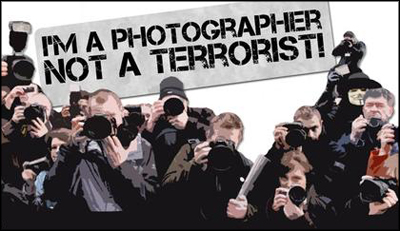
And, from across the pond, in the UK, there’s also I’m a Photographer, Not a Terrorist.

[Lifehacker link via Marisa Kakoulas, thanks!]