I’ll try to keep this short; it’s late and there’s not much time left. Please forgive me if you’ve heard parts of this story before.
For me, it started with an old box of science fiction. I tore through Samuel R. Delany, Joanna Russ, Gene Wolfe, and others, reliving stories old by the time I cracked the pages. I didn’t care.
To my mind, the New Wave had it: the future was something to play in. This status quo was the most transient of things, its passing viewed with a sense of infinite possibility. If there were other cultures out in space, forward in time, why not here? Why not now?
I lived in one of those amazing, barely-clinging corners of the country too many ignore when they talk about culture of any variety. No metropoli there, just a scattering of people trying their desperate best. By the time I busted open the box full of old books, I had already faced a fair amount of poverty, hardship, and even death.
But here, as the years wore on and I read my way through an uneasy adolescence, was something else: here was hope, in the most dangerous fashion. Somewhere out there, people changed their personalities, moved in unison, turned boundaries into blurs transitory as old blood on a highway.
By that point I did not care about ridicule, and laughed when someone threatened me, but this I was terrified of, sure that the half-described scenes — goths, ravers, activists, and more — faced possibility with a courage I felt I’d never know.
A final, fantastic Geekqualitycross-posting written by Moxie Munroe. Thanks again to everyone over at our cherished sister blog for their thoughtful contributions and ongoing inspiration. We love you! Keep up the empowering, nourishing work. ~Mer
It’s a widely accepted idea that music, like fashion, social movements, and menstruation, runs in cycles. Sometimes this theory runs less true than others, but right now I think it’s pretty applicable. Because right now, in the year of our Lord 2012, three things are making a huge media comeback: feminism, babydoll dresses, and female [presenting] emcees. This is important on several different levels, one being that the rise of the female emcee in 2012, and the performance styles they’ve adopted, gives us the chance to have some real conversations about race, class, and presentation in the role of third wave feminism.
You might say, “But Moxie, this is a blog for geeks by geeks! What does this have to do with my geek culture?” And I might answer, “Well, you beautiful newborn baby, geek culture is fringe culture, just like this is fringe culture. Music geeks are geeks too, and music geeks encompass a wider berth than just Flaming Lips fans, so get over it – hip-hop geeks need some shine too, and the issues we’re dealing with here are the same issues we deal with when we talk about representation of women of color in media in general, including comics, so double get over it, zip your lips and listen up, sporty.” And you might say, “Moxie, that’s mean!” And I might say “I don’t care!” So let’s continue.
Third wave feminism, is Now feminism; it’s pop feminism; some people might identify it as “girl power” Spice Girls feminism. It’s important, because this particular wave allows us to focus on things like sexual progressiveness and agency as it exists within the feminist sphere. A lot of the criticisms surrounding third wave feminism (and feminism in general) focus on the perceived and actual exclusion of race, class, and gender presentation in discourse. Several of the up and coming femcees in 2012 serve to challenge many of the practical aspects of both the standard patriarchy and the perceived paradigm of the feminist ideal. I’d say a lot of this is because most femcees exist in a racial/sexual no-man’s land, where subversiveness is almost necessary to survival.
The first wave of femcees seems to have come around sometime in the 80s and early 90s with folks like Queen Latifah, MC Lyte, Salt N Pepa, and TLC; with tracks like “Ladies First” and “None Of Your Business” lending a particularly feminist voice to the hip-hop game. As hot as these songs (and artists) were, none of them became banner anthems of the feminist movement, falling behind artists like Bikini Kill and other darlings of the Riot Grrl movement. Recently though, vintage fem-penned hip-hop has been getting more play in feminist circles, due in large part to this generation’s penchant for nostalgia, and also the rise of social media’s role in social movements, allowing more voices of color to come to the forefront of the conversation. Social media has aided in the diversity of the music scene as well, allowing more underground artists to be heard by a wide range of demographics.
But let’s get back to the future. Today’s crop of female emcees seems to be as influenced by the socially conscious hip-hop of the 80s and 90s as it is the more raw sexually charged female hip-hop of the early 00s, when artists like Lil’ Kim and Foxy Brown ruled the school. The explicit lyrics of that form of the genre tended to turn off a lot of feminists who dismissed it as both heteronormative and degrading.
Hollywood would have you believe that American Indians are a pretty humorless lot. Stoic, tragic, fierce, mystical, romantic? Sure. But funny? Somehow the notion never caught on and yet nothing could be further from the truth.
Though I was born too late to share a joke with my more culturally connected Mvskoke relatives in Poarch Creek, Alabama, I had the benefit of spending much of my childhood in an Ojibwa household where laughter reigned supreme. I never saw anyone cry over garbage being tossed by the roadside, but I’ve spent many evenings shedding tears of joy. Bawdiness and wit are, for many indigenous peoples, virtues which help hold communities together, ensure the survival of stories and traditions and offer healthy means to cope with frustration and heartache.
Perhaps no one sums up the native experience and debunks stereotypes more concisely or hilariously than the 1491s, an all-native comedy group that describes itself as “a gaggle of Indians chock full of cynicism and splashed with a good dose of indigenous satire.”
In the video below – set to a 1979 disco cover of the song “I’m an Indian Too” from Annie Get Your Gun - the 1491s tackle the ongoing obsession in pop culture with all things Indian, lampooning hipsters who sport headdresses and contrasting popular images of Indians with natives (and a few fans of native culture) at the Santa Fe Indian Market:
It was a Thursday night in Albuquerque, NM, and on the floor of a small club on the outskirts of town a member of the Foundations of Freedom dance crew drew applause from onlookers. With his synthesis of moves culled from breakdance and traditions far older, the dancer transitioned from handspins to a kneeling archer’s position in one fluid motion. When the song – itself a hybrid of house and powwow music – finishes, the dancer straightened his shirt emblazoned with the image of a Playboy bunny sporting eagle feathers in place of ears.
A Tribe Called Red comprised some of the music at the event. The group, which emerged out of Canada in 2008, synthesizes powwow music and electronica into a genre known as “Powwow Step.”
The club was packed with people predominately from New Mexico’s 19 Pueblos and from the Navajo (Diné) nation. Those who turned out were clad in intricately beaded jewelry, hand-painted Chucks and witty T-shirts which nodded to pop culture or made parody and political statement out of the stereotypes that so many non-indigenous Americans ascribe to when it comes to native peoples.
The party was one among dozens of music, art and fashion events surrounding the Gathering of Nations powwow held every April in Albuquerque, NM, where more than 50,000 individuals from more than 500 nations come to dance, sell their wares and mingle. But for most of those in the club that night, the powwow itself wasn’t the main event.
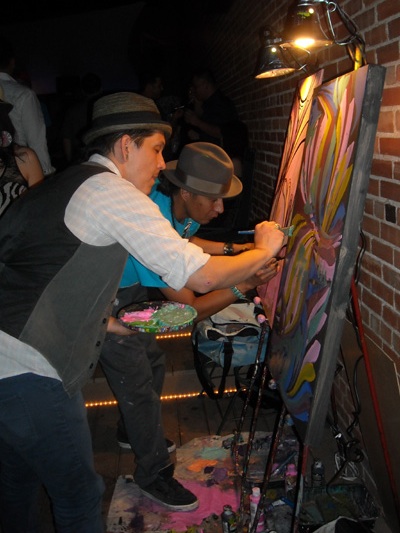
Patrick CloudFace Burnham (foreground) and Randy Barton create live paintings at a Gathering of Nations after party.
In fact, for many it represented just another means for non-natives to exploit native people. And while some would go to support friends and family, others declared the event fodder for the colonized and instead chose to attend native-organized counter powwows and Sacred Cyphers where musicians, painters and dancers could express themselves in their own spaces through a fusion of native song, hip hop and electronic dance.
Happy birthday, Doctor Neil deGrasse Tyson! Here’s a fantastic piece all about the internet’s very favorite (bada)as(s)trophysicist, written by Rick G. and cross-posted from Geekquality. ~M
Astrophysicist Doctor Neil deGrasse Tyson.
In the latter half of 1958, two events occurred that would have a profound effect on the science of astrophysics: one was the signing of the National Aeronautics and Space Act by President Dwight D. Eisenhower, which authorized the creation of NASA as a civilian space agency; the other, much more humble of the two, was the birth in the West Bronx of Neil deGrasse Tyson.
Born to Cyril deGrasse Tyson and Sunchita Feliciano Tyson, Neil grew up in the Skyview Apartments, a prophetically-named complex located in the relatively well-to-do neighborhood of Riverdale. His father, himself a son of immigrants from the Caribbean, was a sociologist and activist; his mother was a housewife who would later earn a Master’s degree in gerontology. That the Tyson family lived in a middle-class enclave was rather remarkable for the late 1950′s, especially since there had been protests from residents at the time to keep Black families from moving in. Though the family was fairly well off for the time, Neil was acutely aware of how fortunate he was, and how difficult things were for many other people of color in America. During Neil’s childhood, his father’s career centered on collaborating with city officials to create employment opportunities in the inner city for urban youth.
“Year after year, the forces operating against this effort were huge: poor schools, bad teachers, meager resources, abject racism, and assassinated leaders… I was watching America do all it could to marginalize who I was and what I wanted to become in life.” (1)
In a piece written for NASA’s 50th Anniversary, he describes his fascination and excitement about the space program in the 1960’s, an excitement tempered by the knowledge that he could never be an astronaut:
“[T]he vicarious thrill of the journey, so prevalent in the hearts and minds of others, was absent from my emotions. I was obviously too young to be an astronaut. But I also knew that my skin color was much too dark for you to picture me as part of this epic adventure.”
NASA personnel at Mission Control during the Apollo 11 launch.
As a matter of fact, NASA was only integrated by a direct Presidential order from Lyndon Johnson to Wernher von Braun, rocketry pioneer and first director of the National Aeronautics and Space Administration. And, while President Johnson’s mandate instructed NASA to work with Alabama A&M and Tuskeegee University to locate qualified candidates to work with the space program, the idea of a Black astrophysicist was essentially unheard of.
Young Neil deGrasse Tyson.
It’s a good thing that no one bothered to tell young Neil, who wouldn’t be stopped from exploring the Universe even if all the astronauts were White.
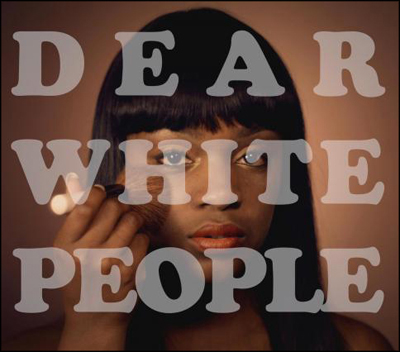
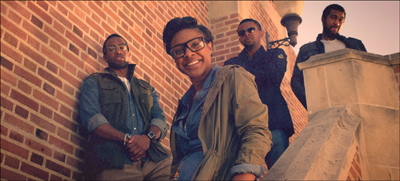
As mentioned previously, for the next wee bit, we’re going to be cross-posting some choice Geekquality blog pieces that we think may be of interest to the Coilhouse readership. First up, this interview with writer/director/producer Justin Simien and producer Lena Waithe about their indie film Dear White People, conducted by Geekquality contributing editor Moxie Munroe earlier this summer. (Thanks again to everybody over there. We <3 you.) ~Mer
MOXIE: I’m completely in love with your project, having seen the trailer on Shadow And Act. What sparked the idea for the project? JUSTIN SIMIEN: The original idea for the film happened during my senior year at Chapman University. After growing up in Houston, attending the rather diverse High School for the Performing and Visual Arts, college life at a small private college in Orange County was a four year long culture shock. I wanted to comment on my experience and started collecting personal episodes like mitigating the sheer disillusionment in certain White students when I couldn’t teach them how to crypt walk, or when I decided to finally cut my substantial fro, or just in general when I acted differently then the Black people they saw on 106 and Park. LENA WAITHE: I was first introduced to [the project] in a writers group (which is how Justin and I met). He was writing it as a TV show, but all the themes and the characters were the same, and it had a huge impact on me. I loved his voice and I loved him. Of course we quickly became close friends and I finally read the feature length version of “2%” which is what it was originally called (because the black students at Manchester only made up two percent of the population). And once I read the feature, I was just sold on helping him bring this story to light.
M: As a Black woman and a creative I know I’ve had conversations with folks time and time again, especially in college, that are reminiscent of a lot of moments in the trailer. What was the moment when you all said, “We need to make a movie about this”? JS: I had been working on the material for a few years, trying it as a TV pilot or an overwritten 265 page feature, which didn’t garner much interest for some strange reason, when I realized that my professional life was mirroring my experiences in college. I was still one of VERY few black faces in most of the places I found myself professionally. Requests to teach friends how to crypt walk were replaced with requests for “Dougie lessons.” I was being confused for the one other Black guy in the office, and the requests to see me with an afro continued unabated, despite my insistence that it was a pain for me to manage and I didn’t really want one.
Also (and more importantly) in the culture there seemed to be a real need for a fresh dialogue about race. The birther movement was gaining momentum, the ugly incidents over a “Black” themed party thrown at UCSD mirrored scenes from the script, and debate over the lack of Black voices in film and tv was happening all around me. That’s when I started the twitter account @DearWhitePeople and working in earnest to get the script to a place where it could be shot as a feature.
LW: I dug [his Twitter] so much that every now and then I would pitch him jokes for it and he would throw them up there. But myself, and one of the other producers Ann Le (who’s been there from the beginning) have been passionate about the film for years. And Justin’s been working on the project for about 7 years. So it’s always been around, I think we just all came to the point where we said it’s either now or never. And thank God, because the timing could not have been better.
M: How has the use of social networking aided in the development of this project? (Big congratulations on meeting and exceeding your IndieGoGo goal, by the way.) JS: Starting the Twitter account was great because it allowed me to really work out the voice of one of the film’s leads. In the film Samantha White starts a radio show on campus called “Dear White People,” the controversy over which is a driving force for a lot of the plot. Through Twitter I was able to test out material, refine her voice, and gain some insight on the people that were so offended by what they perceived as an accusation of racism they responded to the account with genuinely racist comments.
LW: We’re a generation that lives on the internet. I actually credit Facebook the most because we can send the link to people we aren’t even friends with in a Facebook message, and the people we are friends with have no problem with us posting the link on their wall. When something is shared and posted on Facebook a million times, that’s when you know you’ve struck a nerve. And all the producers started to get all these random friend requests soon after the trailer launched. That’s when we knew folks were sharing it, emailing it, tweeting about, and blogging about it. When the producers would sit down and discuss the strategy to push the trailer we always knew that we would use Facebook and Twitter. That’s the best way to reach OUR audience.
M: There have been conversations about Blackness and the “Black Monolith” and what that means since the dawn of the Huxtable Dynasty (a name I’ve just decided to give the period of time between when The Cosby Show hit it big and Girlfriends went off the air). I know the project is called Dear White People but what do you think of the idea of a cultural Black monolith and “authentic Blackness”, and what sorts of conversations about it are you trying to raise with this project? JS: To me the film is ultimately about identity and how race identity in particular can be both a gateway to and a huge obstacle for reaching one’s potential. This is compounded by the fact that Black folks and non-Black folks all have very different opinions about what being “authentically Black” actually means.
Each of the main characters are going through an identity crisis with regards to their “blackness” whether its not feeling Black enough for the Black kids, not feeling Black enough for the white kids, or feeling too Black for anyone.
Minorities, along with systemic socio economic disadvantage, have the added pleasure of going through life being pre-defined by everyone according to their race, gender, or sexual orientation. Based on how we define ourselves, some of us find solace in our “ethnic cultures” and some of us feel alienated by it.
Ultimately the role of culture (black or otherwise) as I see it is to help us find our voice and footing in the world. But there also comes a time when to really reach our true potential we have to transcend the cultural and identity cues we’ve come to be defined by. Yes I’ve been watching a lot of OWN.
M: All of your characters seem to be very original, and quite different from each other, yet all of them are also really relatable, both to people of color and universally, which is really refreshing to see. Do you think, with independently produced content on the rise and this age of the webseries, we will see more projects by minorities and see a much needed shift toward more diversity in the mainstream media? JS: The Misadventures of Awkward Black Girl, Sh*t Black Girls Say, andSh*T White Girls Say To Black Girls is proof that the internet has made it easier for minority voices to circumvent the usual obstacles of creating and distributing content and connect directly with an audience. Here’s hoping that traditional media, be it films or television, pays attention. Diverse stories in the mainstream seem to be shrinking, creating an even bigger disparity between the demographic make-up of the country and the stories dominating our culture. LW: I think folks have always wondered when there is one Black success others will follow, and I’ve come to the realization that the work just has to be brilliant. The only way a Black writer/director/actor/producer will be recognized is if the work is amazing and inspired. Not everything out there is great. Justin is extremely gifted. That’s why he has 3 producers behind him (me, Ann Le, and Angel Lopez) because his vision is so amazing. So if Black artists continue to hold themselves to a higher standard then, yes we’ll see a surge.
While there’s still never been a black model on the cover of Gothic Beauty Magazine (in fact, having looked the past twelve years of covers up close, it’s clear that even models with brown eyes appear to be a rarity among the blue- and green-eyed cover ladies), and while most spooky fashion designers still prefer white models for their branding, a host of blogs dedicated to multicultural dark fashion are bringing greater visibility to the people that these venues ignore. Just on Tumblr, there’s Darque & Lovely, DarkSKIN (subtitled “I was so goth, I was born black), and Black Sheep Goths. On Facebook, groups such as Black/African American Goths foster lively discussion.
Of the Tumblr communities, Black Sheep focuses most specifically on people who are othered (providing a platform for “queer/fat/trans/non-binary/disabled/POC” goths), while DarkSKIN delves most deeply into different time periods (from Victorian photographs to seventies album covers to a friend’s most recently-uploaded snapshots), pop culture personalities taking a turn for the macabre (from Eartha Kitt singing “I want to be evil” to Aaliyah playing a sultry Anne Rice vampire) and media (from high-end fashion shoots to grainy self-portraits)
Many of the images come with empowering and, at times, defensive captions. It seems that even in 2012, some try to claim that the goth scene belongs to white people only. One caption on the Darque & Lovely blog, below an image of tattoo artist Roni Zulu, reads: “this is for the chicken-shit anon who said black people shouldn’t ‘do’ goth or punk. At certain points in history to be black in America was (still can be) a pretty gothic experience, to say the least.”
Is the goth scene unfriendly to people with dark skin? What do non-white goths think about the fetishization of paleness in the gothic subculture?
“The only time I experienced anything racial in the scene was at Death Guild [a San Francisco goth night],” says Shamika “Meeks” Baker, a San Francisco-based writer, artist and model. “A guy walked up to me, shouted ‘scuse me!’ and shoved me aside. Of couse, when I grabbed the back of his Fun Fur coat and yanked him back to demand an apology, he started screaming ‘get your black hands off of me!’ Happily, after I finished scaring him and turned around, I discovered several of my friends behind me and ready to back me up. [Other than that incident], I’ve found that the goth scene has been really welcoming and open.”
“For me, the fetishization of paleness in beauty in general is very much a class issue as opposed to straight race,” says New York-based artist/maker Numidas Prasarn. “The ‘ideal gothic beauty’ of being pale comes from this sense of otherness. When mainstream de mode is tanned beach babe, the pale contrast is taken up as the signifier of an Other that defensively puffs itself up. The problem is that it’s a microcosm that doesn’t necessary carry the sense of self-awareness to realize that it’s also othering people.”
Asha Beta, a sculptor, jewelry designer and musician currently living in Prescott, Arizona, comments on her invisibility within a community that borrows aesthetics from her cultural heritage:
The “traditional” ideal of the scene as the pale-faced, black-clad individual definitely never applied to me, but because of my instant and deep connection and attraction to the music and atmosphere of the scene I had to set that aside. I always felt that I was not perceived to be as attractive, as beautiful or even as “goth” as girls who were paler than me. I never attracted many suitors and I reconciled myself to never being able to approach the “gothic ideal of beauty” very early on, although I felt within myself that my personal way of being “goth” was very sincere and creative and very much true to what “goth” was all about. The one part of the scene that obviously made me uncomfortable was the military/Nazi/Aryan faction of it, although I understand that for many of those people it was a fetish or history obsession type of thing, and not necessarily based in racism.
Many of the aesthetics of goth culture are taken from my cultural heritage (Asian/East Indian/Middle Eastern, African/Egyptian/Voodoo/Haitian-Caribbean) so I still felt and feel strongly that my connection to it is natural and instinctive and powerful. It was achingly difficult to be a minority within the subculture I deeply loved because it’s within these that we find acceptance and understanding where the larger society rejects us. I was a loner within the scene just as I was in society. I found a personal solace and creative outlet, but I never found the community I was searching for. I am overjoyed to finally see our subcultures mirroring the multicultural quality of our world, and so glad to see the younger generations of subcultures finding and creating communities to connect with and support one another.
Meeks Baker agrees. “I love that more emerging blogs/sites focus on us dark-skinned gothy types. To be honest, I never really cared much for gothic beauty magazines because they didn’t really reflect my aesthetic, but I did still feel marginalized. To this day I am thrilled to see ethnic diversity represented in alternative culture.”
In addition to providing an overview of both the documentary and vogue ball culture (both past and present) the NPR feature includes testimonies from Big Freedia, Light Asylum, Zebra Katz, Del Marquis, and many others. A quick, great read. It’s also exciting to discover that the documentary –which has been, for decades, fairly difficult to track down a decent copy of– is now readily available on iTunes and Netflix Streaming.
The realm of Paris Is Burning: resonant and radiant as it ever was.
Shien Lee. Styling by Vecona. Photo by Tina Cassati.
New blog alert!
New York-based artist/performer Shien Lee - who you’ll know as the fanciful designer of the anachronistic event Dances of Vice – has launched a new blog, titled ”Not Your China Girl.” In Shien’s own words:
The title of the blog was conceived in response to the frequent catcalls I’d get on city streets, which include “China Girl”, “China Doll”, “Konnichiwa”, “Ni hao”, and “Geisha Girl”, among other terms associated with The Asian Mystique. This compelled me to examine the Orientalized and fetishized filter through which Westerners frequently view Asia—and Asian women in particular—which perpetuates a subconscious racism fueled by dehumanizing stereotypes. I wish to challenge the Occidental misperceptions about Asia that are based on mythologies and sexualized for the male imagination.
My aim is not to attack or destroy the fantasy of an exotic, romantic, and beautiful Orient, which many Asians, including myself, can and do appreciate. You’ll find that many of my photos are infused with romanticized Asian imagery; even Asians possess a fantasy of the grandeur of their own history, colored by art, images, and stories passed through time. But can a beautiful thing be detached from the social inferences governed by the male gaze? Yes, and no. To analyze a dream, a fantasy, or thing of beauty calls attention to its flaws, and takes away from its wonderful mystique. Nevertheless, it is imperative to acknowledge and understand the filters that contort our perspectives so that we can see ourselves and the world in which we live more clearly. My goal is to call attention to the issues of race and sex, fantasy and power in representations of Asian culture.
By simultaneously appreciating and examining lavish Orientalist imagery through a feminist lens, Shien tackles an interesting set of issues that often crop up in anachronistic/decadent movements. Within the steampunk subculture, questions are regularly raised about whether or not certain ideals ganked from the Victorian era have reinforced a colonialist narrative. In gothic/industrial spheres, conflicts often flare up around longstanding presumptions regarding whiteness (why has there never been a dark-skinned cover model in 12 years of Gothic Beauty? Why was Side-Line “stunned“, in 2010, by the black lead singer of O. Children?), misogyny (the phenomenon of Combichrist), and supremacism (the racist gray area that begins with Death in June).
Shien clearly cares very deeply about the world that she’s creating for herself and her friends – in the case of Dances of Vice, a world of cinched waists, powdered faces, and themes that reach into a deeply gendered past. Enough to ask: What’s really going on here? How can we be more self-aware about the motifs we’re playing with? So far, the answers involve a romp through 1950s Rockabilly in China, 1920s Deco Japan, and a thoughtful post titled “On the Asian Fetish, Why Asian Women Date White Men, and the Remasculation of the Western Man“. Throw in some gorgeous Pinterest finds, and the blog becomes an addictive mix of analysis, pop culture, fashion, and art.
Congratulations on your new platform, Shien… we’ll be reading!
In 1940, Disney released Fantasia; an epic animated film consisting of several shorts set to classical pieces. If you haven’t seen it, it’s perfect for the holidays. There are fairies and unicorns and dancing mushrooms.
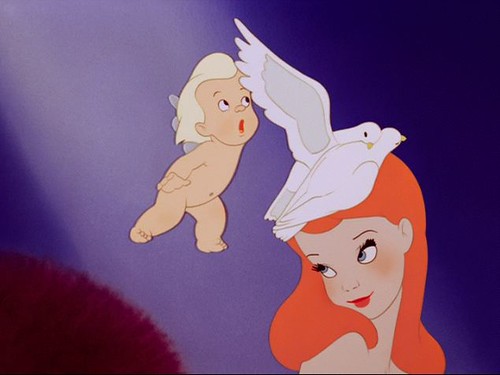
And, of course, Fantasia includes the Pastoral Symphony. As a child, I was happily unaware of the heteronormative, gender essentialist overtones of this piece. I was just excited to see all the centaur boobs and watch the fashion show unfold. Multicolored centaurettes wearing hats made from lotus flowers, birch bark and even live white doves. Exotic mythical creatures lazing around all day, spending the beautiful sunset hours eating grapes, swinging on giant swings, and bathing by the waterfall. It was just lovely. Looking back, it’s clear how ridiculous the whole thing was. A post at Nectarade provides a hilarious, pitch-perfect overview (click through to the site, it’s better with pictures):
There’s a centaur meetup and the ladies are “dressing up” so it’s not so obvious they’re all clones of each other in different colors. The males are also clonic, but they don’t give a shit about looking alike because they’re there for the mare pussy (well, that sounded funny). Also, there are some weird “little cherubs” playing as sassy gay friends of the girls, matchmakers, makeover artists, and creepy voyeurs. My first reaction: “Why are there cherubs in Olympus, anyway? I suppose they’re sort of little cupids without the bow and arrows, but it’s still fucking weird.” I did my homework, and those things are called putto (plural: putti) . Oh, okay, it makes sense artistically then. It’s still weird because they’re little creepers in this movie, but I’ve learned something new today!
…meanwhile, the clonic Ken doll centaurs get their own catwalk show from which they pick the girl they want to fuck senseless take to the prom. I don’t know if it’s racism or narcissism or fashion taken to the extreme, but I can’t help but notice that all the pairings have similar color palettes. Red/pink/brown/yellow goes with red/pink/brown/yellow, blue/purple goes with blue/purple. That’s very disappointing. You can also tell how much the couples want to have sex as soon as possible, but they can’t because there are little kids watching (and depraved putti stalking them).
Seriously, they have to settle with a lot of second-base touching and inane activities such as playing in swings and eating grapes and just hang out, sitting here consumed with lust for the rest of the evening. But OH NOES!! EMERGENCY!!! DISASTER!!! ONE OF THE CENTAURS IS ALONE! Don’t worry, guys! There’s a centauride who’s also alone! And in the same color scheme! We’re saved! How convenient that there was the same amount of boys and girls! So our team of putti, like fanbrats who feel compelled to pair every character up in the bad fanfiction they write, set them to a date by playing their phallic flute-trumpets. Thankfully, our two dorks liked each other and were actually the ones with less libido. Actually, they’re quite sweet and old-fashioned, and I’m glad for them. I mean, as happy as it can be since the putti are still stalking like Edward Cullen in Bella Swan’s period days, and even when they drop the curtain (literally) they’re still peeking over the centaurs. Eww, GTFO!
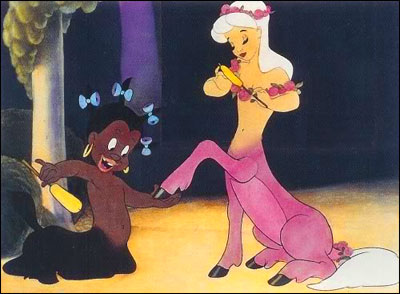
The above review of Pastoral Symphony was pretty complete… except, HELLO, WHAT’S THIS:
That’s right. Disney originally included a character named Sunflower – a half-donkey, half black girl servant figure who polished hoofs, brushed/decorated tails, and carried garlands for the centaurettes. It’s not surprising that Nectarade didn’t catch them; the scenes haven’t appeared on any release of Fantasia since the 1960s, and are hard to come by in high quality. Most versions on YouTube look like they were taped off a television. Here is the best-quality collection of all censored scenes. Sister Suffragette adds, “there’s also the possibility that there are more Sunflowers; the movie shows Sunflower with a couple different hair styles which could mean that they actually represent several servant/slave half-asses. It’s hard to tell, though, because the difference in hair style is the only distinguishing feature … of course she was happily shining the hoofs and fixing the tails of the non-black centaurs and there’s not even any thought or explanation given as to why she’s the only one that doesn’t meet a mate by the end of the segment. The others females are chosen by the males who picked them out of the lot after the females paraded and posed in front of the males.”
The real kicker is that, according to severalsources, Disney adamantly denied that Sunflower even existed up until somebody finally dug up the footage and put it on the internet (despite the fact that you can find her chowin’ down on watermelon, in stereotypical fashion, in the Fantasia cut-out book. Perhaps Disney was counting on the fact that it’s solidly out of print).
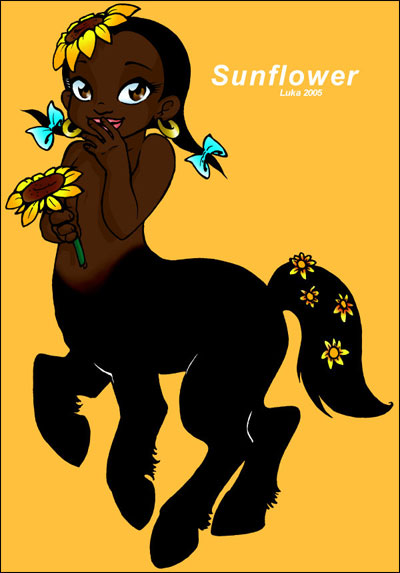
Recently, artists have been reclaiming and re-imagining Sunflower, so perhaps there’s a silver lining to all of this (as an aside, people are also reimagining some of the other Fantasia nubile centaurettes in a very – how shall I put this – non-heteronormative, non-monogamous way. Thanks, Rule 34. Thanks, Internet). People are imagining Sunflower (or Sunflowers) as a strong, confident young girl. Or a self-aware, independent woman. Or even painting her as a servant, but with much more emotion and character. If Disney won’t make this right, the people will. More remixes of Sunflower, after the jump.
Sunflower by AtomicFireball: “This is not a fanart. It’s a little wishful thinking of my own. This is my Sunflower, who never served a mistress.”