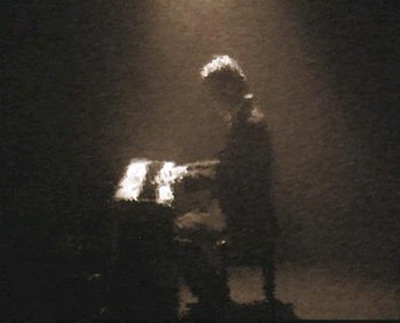
Virtuosity is one of those terms so overused as to have lost much of its meaning. The word is all too often misapplied to mere technical prowess, impressive though that may be. Derek Paravicini is a pianist for whom the word could have been coined, playing with a firecracker passion that speaks to something primal in the human spirit, right in the heart of where music itself originates. When Paravicini plays, the listener gains a sense of a person driven by the core of his nature; born to it, as it were.
Paravicini was born on 26th July 1979, fifteen weeks premature and weighing less than half a kilo. His twin sister died at birth. As a result of the relative crudity of medical knowledge at the time, the oxygen levels in Derek’s incubator were too high, which left him blind and with severe autism. Derek Paravicini cannot tell left from right, yet he can play Rimsky-Korsakov’s Flight of the Bumblebee note perfect from memory. In fact he remembers every one of the thousands of pieces he has heard in his lifetime, but struggles to count to ten.
Part 1 of the occasionally excellent Five TV Extraordinary People episode about Derek after the jump.
Ahh, do you smell that, citizen? Scientology’s in the air! The Citizens Commission on Human Rights is a Scientology-funded organization and I’d been meaning to investigate their ominous Psychiatry Kills exhibit for years. A sunny Friday morning one day past L. Ron Hubbard‘s birthday seemed as good a day as any for this mission. My roommate, who happens to be 2 quarters away from an M.A. in Clinical Psychology came along.
The lobby felt like a movie set – huge CCHR emblem above a reception desk, lots of white, another CCHR crest inlaid into the floor. We were greeted by an unblinking curly-mopped cherub, signed in with fake names and explained we brought no purses when asked if we minded a bag inspection. The entrance to the exhibit itself was special-effects-rusty with random metal chunks protruding and overall very Silent Hill. The “Abandon all hope…” quote from Dante’s Inferno above completed the look, which the cherub politely asked us to read while thinking about entering the final level of hell. Charming.
Through the doors, a padded room and introductory video featuring doctors and professors, edited in the same sensationalist Fox network style as other Scientology media, statistics and numbers flashing in a rusty and blood-stained font, culminating in the words “Psychiatry – an industry of DEATH”. A wave of blood washed over the screen and it went black. The mood was set.
The museum past the padded room has several sections, each with LCD screens showing 15 minute videos, which I will describe in an almost entirely opinion-free virtual mini-tour beyond the jump.
Esteemed reader Tanya Vrodova says, “I love cabbage. I will do anything to spread the word about how awesome cabbage is.” To that end, she just introduced me to Chinese multidisciplinary artist Han Bing and his mischievous Walking the Cabbage (2000-2007) series.
Born in 1974 in an poverty-stricken village, Han Bing spent his childhood helping his parents farm the land and was the only student in his class afforded the chance to attend university. There he studied oil painting before moving on to less conventional mediums. His post-university work has focused on creating spontaneous, open-ended discourse that includes members of society who are often excluded or dismissed. He, like many other young Chinese artist, seems compelled to confront the dubious side effects of his nation’s obsession with urbanizing and modernizing at whatever cost.
From Bing’s website:
Walking the Cabbage (2000-2007) series of social intervention performance, video and photography works, Han Bing walks a Chinese cabbage on a leash in public places, inverting an ordinary practice to provoke debate and critical thinking. Walking the Cabbage is a playful twist on a serious subject—the way our everyday practices serve to constitute “normalcy” and our identities are often constituted by the act of claiming objects as our possessions. A quintessentially Chinese symbol of sustenance and comfort for poor Chinese turned upside down, Han Bing’s cabbage on a leash offers a visual interrogation of contemporary social values.
No doubt I’m a jaded soul for questioning the sincerity of Fred Spencer and his lovely wife Sharon. Then again, I was raised on the deadpan weirdness of David Lynch. In a hyper-ironic meme world brimming with Tims, Erics,Liams, and Saschas, it’s impossible for this charismatic couple from Kelowna, BC to remain above suspicion. But… I want to believe!
What do you think? Friends, or faux? Either way, what’s not to love?
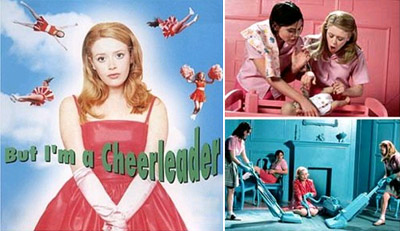
Brothers and sisters, I have a terrible confession; I was once A GAY. Lord have mercy! Lucikly, my parents had the good sense to ship me off to Love in Action, an ex-gay recovery camp for teens in Memphis, Tennesse. I learned many things at this camp; that homosexuality doesn’t exist, that men with bios like this and this make great mentors for kids, and that a 4-week course called WIVES’ TRACK can change your life forever. The reason I’m telling you all this is because I recently re-watched the 2000 film But I’m a Cheerleader and I was outraged. Outraged! How dare they ridicule something as holy as conversion therapy?
The entire cast is going straight to Hell: RuPaul (as camp counselor, completely out of drag), Clea Duvall (thou shall not tempt me!), Mink Stole, Natasha Lyone (damned since ’86 for appearing in Pee-Wee’s Playhouse), Bud Cort (Harold from Harold and Maude – here in a dad role, and I can’t believe how much he’s aged), and all the rest of them. Inspired by that filthy pervert John Waters, the film’s mockery of gender identity and the sacred institution of marriage is unforgivable.
The team that created this film has a new film out called Itty Bitty Titty Comittee. Lord Jesus, it hurt to even type that! As soon as I get the chance to see this one, expect an angry write-up. In the meantime, I urge you all to focus your anger at Singapore for frowning upon cosmetic products that promote Our Lord. For shame!
I’m more than halfway through The Bad Popes by Eric Russell Chamberlin. Oh, it’s a knee-slapper, to say the least. Plenty of illicit sex, violence, greed, avarice, conspiracy, etc. Chamberlin denudes the nasty personal habits and dirty professional deeds of various popes throughout history. Short of The Name of the Rose and Memoirs of A Gnostic Dwarf*, it’s the most earthy and entertaining book I’ve read relating to the papacy.
Ever heard of The Cadaver Synod? Pope Stephen VI, consecrated in 896, ordered the rotting corpse of his predecessor, Pope Formosus, be exhumed and put on trial for various crimes against the church. Poor bastard was nine-months dead when they dug him up. Stephen dressed the ripe stiff in papal robes, propped it up in a chair, and proceeded to scream unintelligibly at it for several hours in front of a rapt audience. Afterwards, Formosus was declared guilty and his body was dragged through the streets of Rome, then thrown into the river Tiber. Not suprisingly, the morbid spectacle turned public opinion against Stephen. Rumors spread that the dead pontiff had washed up on the banks of the Tiber and was performing miracles. Stephen VI was eventually deposed and strangled to death in prison.
Left: Early tarot card depiction of Pope Joan. Right: La Papesse as Antichrist, wearing a jaunty tiara.
Chamberlin also addresses the origins of good old “Pope Joan“, that legendary, likely imaginary Papesse who supposedly reigned from 855 to 858 (Protestants used to loooove bringing her up as proof of their moral superiority to Catholics). As the story goes, she was an Englishwoman who fell in love with a Benedictine monk, disguised herself as a dude and joined his order. Eventually she moved to Rome where she impressed everyone with her vast knowledge, becoming a cardinal, and then pope. (In earlier, juicy versions of this fable, Joan was already knocked up at the time of her election, and actually squeezed one out during the procession to the Lateran!) Chamberlin hypothesizes that these tall tales stem from accounts of The Rule of Harlots: a period of the papacy where various popes were either the progeny of dastardly, influential aristocratic women, or boinking them. In doing so, he has introduced me to my favorite new word… Pornocracy.
Chamberlin eschews a bland professorial style in favor of fairly plainspoken writing, and his dry sense of humor about the subject matter reminds me of Alice K. Turner’s approach to The History of Hell, yet another well-researched, highly entertaining read that deals with some of the sillier and more political aspects of Christian dogma. Highly recommended.
*Incidentally, Memoirs of a Gnostic Dwarf gets my vote for Most Jaw-Droppingly Disgusting Opening Paragraph Ever Written. Even better than the ejaculatory beginning of The Dirt. Must read.
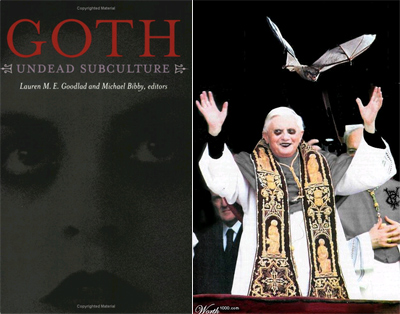
Pope Benedict releases the bats, via Worth1000’s If Goths Ruled.
Catwalk Ghost writes, “I came across the book named GOTH: Undead Subculture, which is a rather nice collection of essays about goth style and subcultural practices. But, one essay by Anna Powell, called “God’s own Medicine” about religion and beliefs in UK Goth scene made me laugh my ass off! So here are some quotes. I won’t quote the whole essay, ’cause each sentence of it is an instant comedy classic:
“As a sacred pararelegious space, the goth nightclub resembles conventionally religious practices in various ways. Like certain religious ceremonies, the goth club may feature the consumption of alcohol and psychotropic drugs and include forms of dancing that may become ecstatic, as in trance dance. The goth DJ … has a psychically separate “pulpit” from which to deliver musical “sermon”. Goth clubbers in the United Kingdom often travel long distances on “pilgrimages” to see their favorite Djs play venues” (pp 259-360)
Here comes more:
“As in some religious practices, the space of the nightclub is forbidden to some; only those deemed worthy are allowed entrance.” (p 360)
“The fact that admission is selective also suggests that the space within is sacred and needs protection from the profane defilement of nongoths.” (p 360)
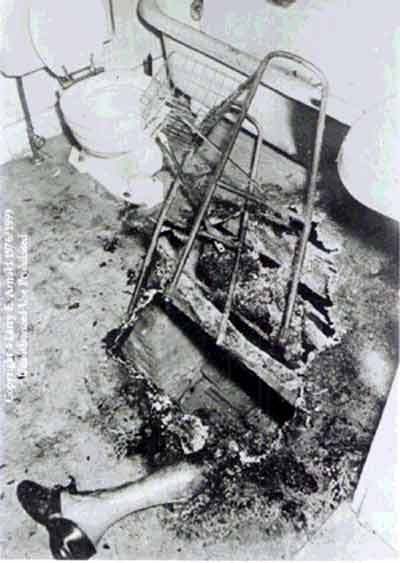
a befuddling coroner’s photo of retired doctor John Bentley, 1966
Dear diary, today my heart leapt when Agent Scully suggested spontaneous human combustion…
-Agent Fox Mulder
Ho hum, the good old days. Pluto was still a planet, Nessie, Big Foot and leprechauns frolicked unfettered among us and the theoretical possibility of true Spontaneous Human Combustion seemed feasible. Well, to me, at any rate. I’m not really sure what’s to blame for that. (Repo Man? Krook from Bleak House? My unhealthy childhood obsession with Brad Dourif?) In any case, Ablaze! was required bathroom reading in my apartment for many years. Until quite recently, I clung to my hope that there was a chance, albeit remote, of my asshole ex being inexplicably reduced to a pile of ashes with feet.
Alas, thanks to a series of informative scientific articles and National Geographic specials, believers must face facts: SHC is a most likely myth.
When they’re not busy getting butthurt by cartoons or teddy bears, radical Muslim-types rather like spending their time suing employers into compliance with their totally voluntary dress-code. Case in point:
Left: Bushra Noah. Right: Sarah Des Rosiers and Wedge staff.
Sarah Des Rosiers, owner of alternative hair salon Wedge, has been ambushed with a frivolous lawsuit by one Bushra Noah on grounds of religious discrimination, after dismissing Noah from a trial position at her hair salon. You see, Noah, a self-described ‘devout’ Muslim, didn’t think it was important to mention in her telephone interview that she wore a headscarf, even though she admits that this is the reason she believes she had been turned down for hair-styling jobs in the past. Needless to say, when she rocked up to work she was requested to uncover her hair while at the salon, but she refused on grounds that it was ‘immodest’.
That’s right. A hairdresser who finds uncovered hair immoral.
Having been turned down by no less than twenty-five other salons, presumably for the same reason, Noah decided she’s had enough and set about destroying the business that Des Rosiers had poured her soul into.
Comrade Lev has left on a special Coilhouse mission for about a week. While obligations prevent me from saying more, site rest assured it is a task of high caliber!
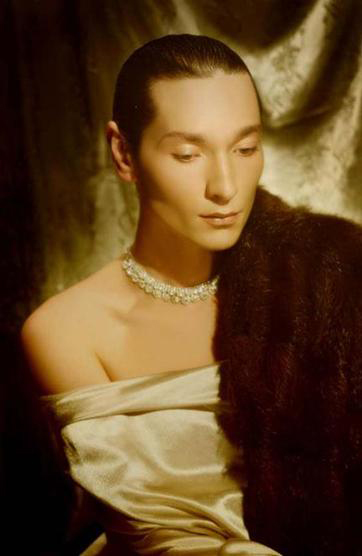
Now, in conjunction with this post, let us dwell for a moment on Polish artist Maciej Osika. Osika has dedicated several years of his photographic career to portraying himself as a beautiful feminine creature. These stirring images are a combination of digital and film work, intended to display beauty that is other, beyond standard queues of male or female. Exposed shoulders and silk combined with closely cropped hair in the image below are a good example of this, devoid of dramatic makeup and hair typically associated with cross-dressing. Maciej says of these portraits: “This does not mean that I want to be a woman at all costs: all I really want is to show that by photographs I can be beautiful for at least a moment. But the beauty contained in my portraits is merely a play of light and shadow…and I decide whether in the given situation I will be beautiful or ugly.”