Alt Culture Antibodies


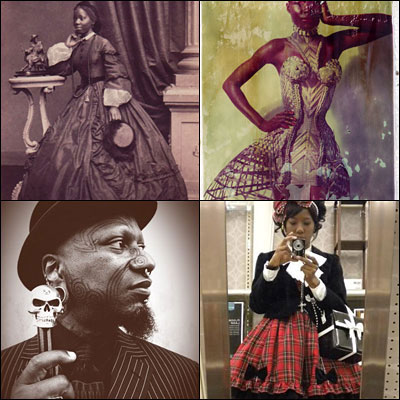
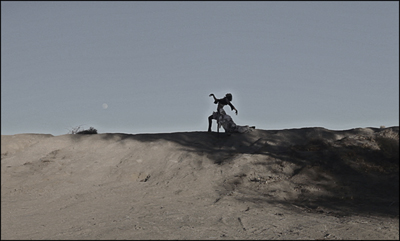
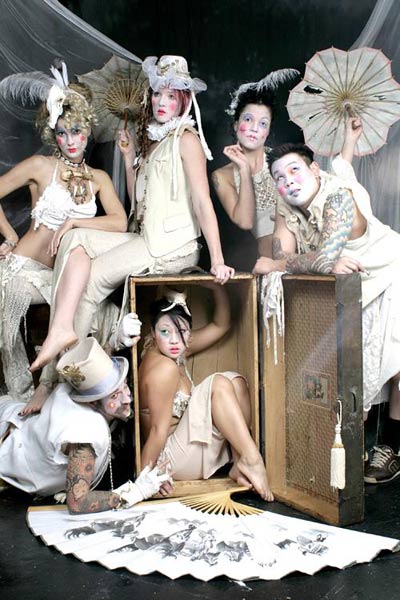
Photo by Hunter Freeman.

I’ll try to keep this short; it’s late and there’s not much time left. Please forgive me if you’ve heard parts of this story before.

For me, it started with an old box of science fiction. I tore through Samuel R. Delany, Joanna Russ, Gene Wolfe, and others, reliving stories old by the time I cracked the pages. I didn’t care.

To my mind, the New Wave had it: the future was something to play in. This status quo was the most transient of things, its passing viewed with a sense of infinite possibility. If there were other cultures out in space, forward in time, why not here? Why not now?


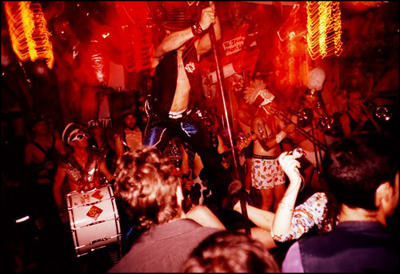
Photo by Mike Brodie.

I lived in one of those amazing, barely-clinging corners of the country too many ignore when they talk about culture of any variety. No metropoli there, just a scattering of people trying their desperate best. By the time I busted open the box full of old books, I had already faced a fair amount of poverty, hardship, and even death.


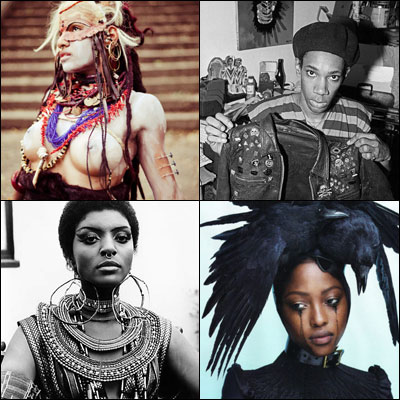
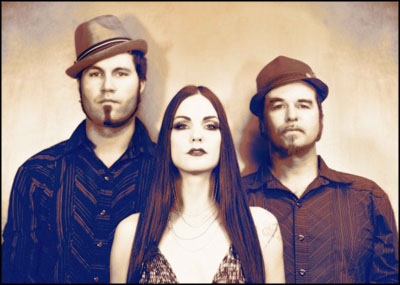
90s Cyberpunk portraiture by Steve Pyke.

But here, as the years wore on and I read my way through an uneasy adolescence, was something else: here was hope, in the most dangerous fashion. Somewhere out there, people changed their personalities, moved in unison, turned boundaries into blurs transitory as old blood on a highway.

By that point I did not care about ridicule, and laughed when someone threatened me, but this I was terrified of, sure that the half-described scenes — goths, ravers, activists, and more —  faced possibility with a courage I felt I’d never know.

Supersonic: Third Wave Feminism and the Importance of the “Hard Femme”-Cee (via Geekquality)

A final, fantastic Geekquality cross-posting written by Moxie Munroe. Thanks again to everyone over at our cherished sister blog for their thoughtful contributions and ongoing inspiration. We love you! Keep up the empowering, nourishing work. ~Mer

It’s a widely accepted idea that music, like fashion, social movements, and menstruation, runs in cycles. Sometimes this theory runs less true than others, but right now I think it’s pretty applicable. Because right now, in the year of our Lord 2012, three things are making a huge media comeback: feminism, babydoll dresses, and female [presenting] emcees. This is important on several different levels, one being that the rise of the female emcee in 2012, and the performance styles they’ve adopted, gives us the chance to have some real conversations about race, class, and presentation in the role of third wave feminism.

You might say, “But Moxie, this is a blog for geeks by geeks! What does this have to do with my geek culture?” And I might answer, “Well, you beautiful newborn baby, geek culture is fringe culture, just like this is fringe culture. Music geeks are geeks too, and music geeks encompass a wider berth than just Flaming Lips fans, so get over it – hip-hop geeks need some shine too, and the issues we’re dealing with here are the same issues we deal with when we talk about representation of women of color in media in general, including comics, so double get over it, zip your lips and listen up, sporty.” And you might say, “Moxie, that’s mean!” And I might say “I don’t care!” So let’s continue.

Third wave feminism, is Now feminism; it’s pop feminism; some people might identify it as “girl power” Spice Girls feminism. It’s important, because this particular wave allows us to focus on things like sexual progressiveness and agency as it exists within the feminist sphere. A lot of the criticisms surrounding third wave feminism (and feminism in general) focus on the perceived and actual exclusion of race, class, and gender presentation in discourse. Several of the up and coming femcees in 2012 serve to challenge many of the practical aspects of both the standard patriarchy and the perceived paradigm of the feminist ideal. I’d say a lot of this is because most femcees exist in a racial/sexual no-man’s land, where subversiveness is almost necessary to survival.


Azealia Banks in GQ Magazine.

The first wave of femcees seems to have come around sometime in the 80s and early 90s with folks like Queen Latifah, MC Lyte, Salt N Pepa, and TLC; with tracks like “Ladies First” and “None Of Your Business” lending a particularly feminist voice to the hip-hop game. As hot as these songs (and artists) were, none of them became banner anthems of the feminist movement, falling behind artists like Bikini Kill and other darlings of the Riot Grrl movement. Recently though, vintage fem-penned hip-hop has been getting more play in feminist circles, due in large part to this generation’s penchant for nostalgia, and also the rise of social media’s role in social movements, allowing more voices of color to come to the forefront of the conversation. Social media has aided in the diversity of the music scene as well, allowing more underground artists to be heard by a wide range of demographics.

But let’s get back to the future. Today’s crop of female emcees seems to be as influenced by the socially conscious hip-hop of the 80s and 90s as it is the more raw sexually charged female hip-hop of the early 00s, when artists like Lil’ Kim and Foxy Brown ruled the school. The explicit lyrics of that form of the genre tended to turn off a lot of feminists who dismissed it as both heteronormative and degrading.

Mykki Blanco & Crew Get “Wavvy”

Wren Britton of PUREVILE just posted this (and several more scorching hot, queer-as-fuck music videos) on his website, saying: “Just some pretty amazing gay positive hip hop…FINALLY…I mean with so many in this genre still on the DL its really amazing to see some new kids standing up and saying ‘YES HUNTY’…..Keep that shit up !!!!!”

Oh, hells yass.

The video for Mykki Blanco‘s “Wavvy” is particularly off the hook. Really, what’s not to love about a juicy, no-holds-barred, 19th Century salon style orgy? Some of our east coast readers may recognize some familiar faces and names from the downtown NYC bohemian gallery scene: Susan Surface, No Bra, Christelle de Castro, Jeanette Hayes, Ruth Gruca…

“What the fuck I gotta prove to a room full of dudes who ain’t listenin to my words cause they starin at my shoes?”

Indeed. Mykki Blanco, babies. GIT IT.

Dancing with O’death

It is All Soul’s Day, when the veil between the living and the dead is said to be at its most diaphanous. And so we present a feature on the eligaically named, NYC-based band O’death, written Katelan Foisy. A multimedia artist, writer, model, and tarologist, Katelan is known as “La Gitana” and the “Mistress of Magic”. She can be found on the internet almost everywhere. ~Mer


Portrait by Katelan Foisy.

O’death is one of those bands you remember falling in love with.  I first heard them back in 2007 in the former apartment of William S. Burroughs. I was making cowboy coffee and my boyfriend at the time was queuing up music for our Darwin’s Nightmare Party, a party to “celebrate” the naturalist’s birthday.  “You’ve got to listen to this band,” he said as I poured loose coffee grounds into boiling water. He hit play and I stopped, mid-pour, to turn around. “Who is this?” I demanded. He told me it was O’death, a Brooklyn-based band he had seen a few weeks back. I left the coffee as we danced on cigarette strewn, whiskey stained wooden floors. The song was “Down to Rest” and I was entranced. It had the feeling of a small town forgotten and decayed, remembered only by the myth passed down by word of mouth by elders at camp fires.

Spring, 2008.  I walked into a coffee shop to deliver a human skull to an artist when a poster caught my eye. It was for an O’death show. I remembered that night again like it was the first time. I immediately went home and tried to befriend the band. They were about to come out with a new album Broken Hymns Limbs and Skin and commissioned me to do a portrait as part of the press packet. I listened to the album.  It was more refined than the first but still pulled the listener into a world between waking and dreaming. I remember thinking there was something incredibly special about this band; it wasn’t just that they had taken parts of old time Appalachia and made it contemporary, it was that they could make you feel you were part of the story. This could be explained in the way they’ve recorded each album.  Head Home and  Broken Hymns, Limbs, and Skins were recorded live.  As you listen, you see them on stage. What you hear on the album is as passionate as a live performance.


Photo by Glukkake.

Outside, their most recent album, was recorded in fragments. David Rogers-Berry, the band’s drummer, had recently battled Osteosarcoma (a form of bone cancer), undergoing chemotherapy and a shoulder replacement. Where many would have given up, O’death embraced this as an opportunity to experiment with sound. The album’s lineup of Gabe Darling- banjo/ukulele, Jesse Newman- bass, Greg Jamie-singer/lyricist, and violinist Bob Pycior lead the music towards a slower, more melodic turn.

Each O’death album has a distinct feel while retaining the band’s singular magic. They transport listeners to new places. Hearing an O’death song is like falling into a small book of short stories told in a cave by a fire, on a ship during a storm, in a pub on the streets of England, or while hidden away in a swampland cabin. Their music transcends time. Upon first listen, a characteristic track might be mistaken for a classic folk song. However, their words are striking in the contemporary dialogue with time and humanity they invoke.

Despite an old time feel to their music, the only song actually based upon a historical event is “Fire on Peshtigo” from Broken Hymns, Limbs, and Skin.  It was inspired by the 1871 Peshtigo, Wisconsin firestorm that killed 1,500 and which occurred the same day as the Chicago, Holland and Manistee, Michigan fires.

The Knife’s New Album Will Feature Vocals By Shannon Funchess of Light Asylum!


Photo of Shannon Funchess by Grant Thomas for Bullett Magazine.

IT’S ALL RIIIIIGHT. IT’S OKAAAAAAY. THERE’S SOMETHIN’ TO LIVE FOOOOORRR. PITCHFORK TOOOOOOOLD ME SOOOOOOO

It doesn’t appear that the Knife‘s long-awaited new record will come in 2012, as initially rumored. But here’s a nice little album factoid to tide you over, perhaps: According to aninterview she did with Dazed Digital, Shannon Funchess of goth-leaning electronic act Light Asylum will contribute vocals, which seems like a natural fit.

“I recorded with them after we left here last time, and in a couple of days I’m going to Berlin to record some more… They’re totally sweet people!,” she said about a month ago.

Funchess also told No Conclusion that the track features lyrics written by visual artist Emily Roysdon. “Karin [Dreijer Andersson] and I sang the lyrics and created the melodies along with Emily as well, and Olof [Dreijer] and Karin produced the music.”


The Knife. Photo by Stian Andersen.

HOHMAIGAAHHD. So much squeeee, you guys. SOOOO! MUCH! SQUEEEEEEEEE! (Maybe even a little peeeeee.)

Previously on Coilhouse:

Syncretize, Decolonize: First Nations Find a Voice Through Urban Music and Dance

It was a Thursday night in Albuquerque, NM, and on the floor of a small club on the outskirts of town a member of the Foundations of Freedom dance crew drew applause from onlookers. With his synthesis of moves culled from breakdance and traditions far older, the dancer transitioned from handspins to a kneeling archer’s position in one fluid motion. When the song – itself a hybrid of house and powwow music – finishes, the dancer straightened his shirt emblazoned with the image of a Playboy bunny sporting eagle feathers in place of ears.


A Tribe Called Red comprised some of the music at the event. The group, which emerged out of Canada in 2008, synthesizes powwow music and electronica into a genre known as “Powwow Step.”

The club was packed with people predominately from New Mexico’s 19 Pueblos and from the Navajo (Diné) nation. Those who turned out were clad in intricately beaded jewelry, hand-painted Chucks and witty T-shirts which nodded to pop culture or made parody and political statement out of the stereotypes that so many non-indigenous Americans ascribe to when it comes to native peoples.

The party was one among dozens of music, art and fashion events surrounding the Gathering of Nations powwow held every April in Albuquerque, NM, where more than 50,000 individuals from more than 500 nations come to dance, sell their wares and mingle. But for most of those in the club that night, the powwow itself wasn’t the main event.


Patrick CloudFace Burnham (foreground) and Randy Barton create live paintings at a Gathering of Nations after party.

In fact, for many it represented just another means for non-natives to exploit native people. And while some would go to support friends and family, others declared the event fodder for the colonized and instead chose to attend native-organized counter powwows and Sacred Cyphers where musicians, painters and dancers could express themselves in their own spaces through a fusion of native song, hip hop and electronic dance.

Better than Coffee: Nakotah LaRance

Columbus Day has been rebranded as many things – from Indigenous People’s Day to Imperialist Day to Exploration Day. To celebrate this holiday, we’ll be publishing a three-part series of blog posts by guest writer and Coilhouse Issue 01 contributor Rachel Waters, a.k.a. Io, about modern native art and culture.

Io writes, “I’ve gotten pretty weary of the Diane Sawyer/Lisa Ling poverty porn about natives and I felt it was time someone focused on the massive renaissance of native art/music/dance as it relates to decolonization and forging a 21st century native identity which pays homage to the traditional whilst being thoroughly cutting edge. I mean, these guys are creating genres of music like Powwow-Step, creating really strong public art, mixing breakdance and grass dance and holding Sacred Cypher competitions with all native hip-hop and dance troupes.”

The first piece in the series is going up imminently. For now, enjoy this video of hoop dancer Nakotah LaRance dancing to a song by New York-based electronic duo The Knocks. LaRance, 23, is a six-time world hoop dancing championship winner who was just 19 years old when Cirque du Soleil discovered a video of one of his performances, and invited him to go on tour. In this video, Nakotah takes to the desert to perform a stunning dance routine. [via Io]

Gundam Style.

Paging Ross Rosenberg. Ross Rosenberg, please report for doody.


(Via Ariana, of course.)

Related tidbit, courtesy of Kittydoom:

ヘ( ̄ー ̄ヘ) Op

(ノ ̄ー ̄)ノ Op

(〜 ̄▽ ̄)〜 Op

〜( ̄△ ̄〜) Op

(☞゚∀゚)☞ Oppan Gangnam Style

ヽ(゜∇゜)ノ Eeeeyyyy sexy laaaaaadyyyy

Fitness Ace Power, Gangnam Style

Yesterday, GreatDismal tweeted a link to this stupefying Fitness Ace Power infomercial from South Korea. And Ross blogged about the music video for PSY’s mega-viral Kpop song, ”Gangnam Style“. (A short time later, Ross experienced some sort of drug-induced psychotic break, and has since been in self-imposed latex bubble isolation in an undisclosed subterranean cell block several miles below the earth’s crust. But that’s not particularly relevant to this post.)

Today, courtesy of Sarah Deaton (because Ariana asked for it), here are two great tastes of Daehanminguk that taste great together. Enjoy!

Meanwhile, In South Korea

M.E.R.,

Are we no longer pretending you’re human in inter-office memos? Must have been in the newest handbook, the pages of which I have been using to line the area where I sleep.

As for your reply, well, what can I say? While the subject was, indeed, amusing, I found it repetitive for reasons I can’t quite put my finger on. It’s a mystery, really. As for my response, I submit “Gangnam Style” by Psy, perhaps one of the best things to ever come out of the Republic of Korea.

Yours in captivity,
Ross Rosenberg
(Sub-Level 23, Writer Pod 14B)

P.S. I was not attempting to dismantle the monitor, I was simply warming my hands on it. It is the only source of warmth in here.