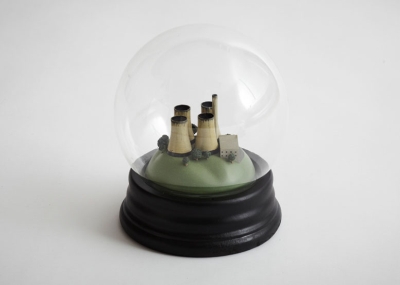
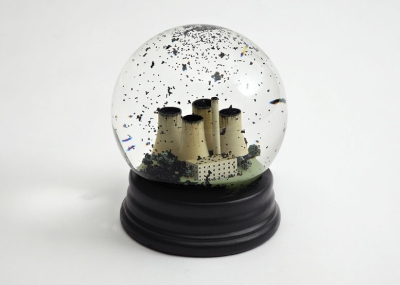
From art collective Dorothy (previously featured on Coilhouse) comes No Globes, sale the anti snow globe. This is actually fairly old, clinic designed in 2009 for “Ctrl.Alt.Shift in anticipation of the United Nations Climate Change Conference in Copenhagen.” Still, I love this one. A simple idea, perfectly executed.
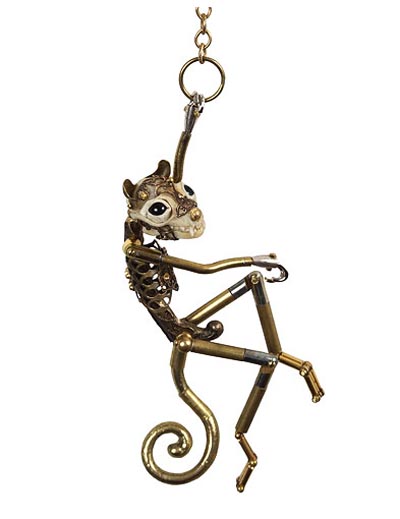
Jessica Joslin is in Scottsdale, Arizona right now, installing and celebrating a big solo show at the wonderful Lisa Sette Gallery: “Birds chirping, cacti and magnolia trees all around… sipping coffee and feeling excited about my opening tonight, and about the many other shows soon to come!” By all means, if you’re in the neighborhood, go say hi! Jessica’s creatures are even more enchanting in person.
On a related note: many of our LA readers will be excited to know that there’s another Twin Peaks art show happening (including this lovely new creature, named Waldo, by Jessica) later in the month; this year it’s Fire Walk With Me-themed. The opening is April 21st.
Posted by Meredith Yayanos on April 5th, 2012
Filed under Sculpture | Comments Off on Jessica Joslin: Gilded Beasts (Lisa Sette Gallery, April 5-28)
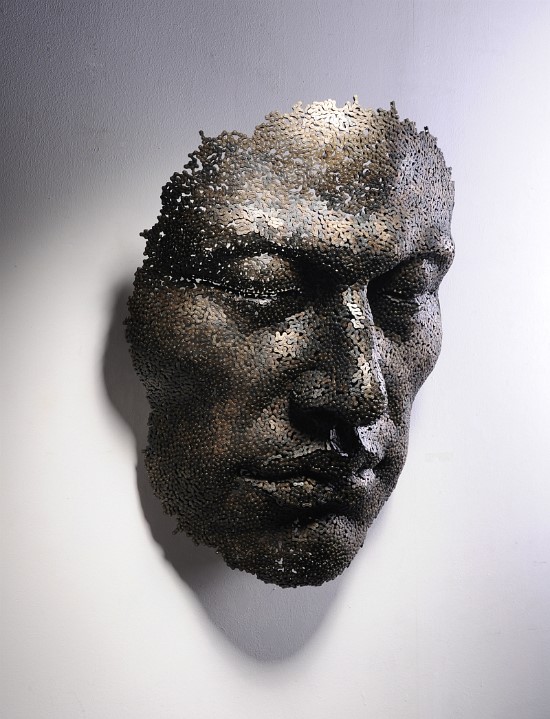
Seo Young Deok’s work utilizes chains of various sorts (though, most commonly, bicycle chains) welded together with painstaking precision. His figures are superb, they have a fluidity that shows a deep understanding of the human form. They also scream volumes about weight. Many of them are bent underneath it, seem to be in danger of being crushed by a heaviness equal to that of the materials they are comprised of, their faces — if they have one — seem to hint at some great inner turmoil. It’s a stark, often grim collection of work, but beautiful nevertheless.
Many of us remember Andrew Huang‘s DIY sci-fi short, “Doll Face“, which went viral on YouTube in 2007, boosting the USC graduate’s professional career. Huang’s most recent work, this short film called “SOLIPSIST“, is nothing short of a vibrant, sensual revelation. It earned him and his team the Special Jury Prize for Experimental Short at Slamdance 2012.
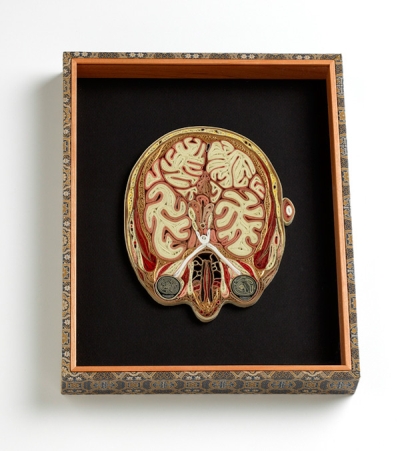
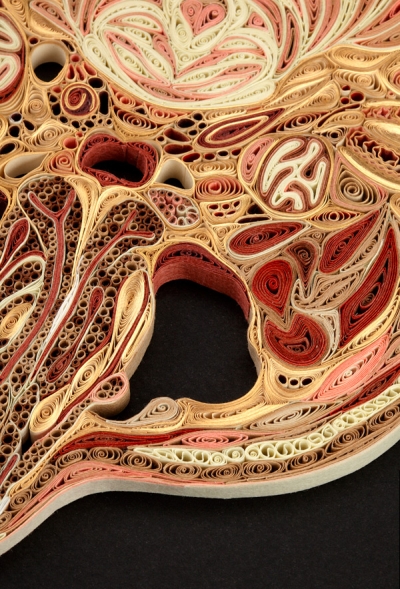
A stunning series of anatomical cross sections by artist Lisa Nilsson, made using paper filigree, coiled strips of paper (in this case, Japanese mulberry paper). Using photographic references, Nilsson’s pieces are beautiful to look at, the rolled paper adding another level of detail to images already brimming with them. You can read about how she made them here and here.
Wayne White is an American artist, puppeteer, sculptor, set designer, cartoonist, art director, animator, and illustrator whose influence on popular culture has been quietly vast. As Mark Mothersbaugh puts it: “Kids [in the ’80s] mainlined it. He was imprinting their brains, and they don’t even know it.” Filmmaker Neil Berkeley’s new documentary about White’s roller coaster career and personal life looks like it’s packed-to-bursting with inspiration and warm-fuzzies and whimsy and pathos:
“Raised in the mountains of Tennessee, Wayne White started his career as a cartoonist in New York City. He quickly found success as one of the creators of the TV show, Pee-wee’s Playhouse, which led to more work designing some of the most arresting and iconic images in pop culture. Most recently, his word paintings, which feature pithy and often sarcastic text statements crafted onto vintage landscape paintings, have made him a darling of the fine art world.”
“Beauty Is Embarrassing chronicles the vaulted highs and the crushing lows of a commercial artist struggling to find peace and balance between his work and his art. Acting as his own narrator, Wayne guides us through his life using moments from his latest creation: a hilarious, biographical one-man show.”
The world premiere of Beauty Is Embarrassing will take place on March 10th at SXSW. Click through below to see more examples of Wayne White’s multifaceted work.
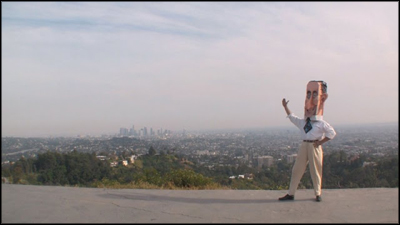
Beauty is Embarrassing film still, featuring White wearing his LBJ paper mache puppet head.
This is “Pony”, a motion-sensitive kinetic sculpture by Tim Lewis. Unsettling and beautiful:
“Tim Lewis combines mechanical devices and sculpture to investigate, test and experiment with his own doubts and perception of the world.” (via)
Lewis, recently interviewed about his work by Dazed Digital, makes a compelling statement about the power inherent in tangibility:
I think that when you first approach a piece of art, and you imagine it and draw it, there’s a sense that it will always remain somewhat in your imagination. Its only when you take the 2D object and re-work it into the physical 3D world that it becomes somewhat more real. It no longer just exists in your eyes and mind, but instead has to react with the floors and walls around it in the physical world. For me, kinetic art highlights the importance of bringing both inventions and imagination into a physical existence.
Lewis’ work is regularly exhibited and promoted by the folks who run the Kinetica Museum and related events in Spitalfields, London. Their annual Kinetica Art Fair is coming up in February. As it has for the past several years, the Fair will bring together “galleries, art organisations and curatorial groups from around the world who focus on universal concepts and evolutionary processes though the convergence of kinetic, electronic, robotic, sound, light, time-based and multi-disciplinary new media art, science and technology.”
Are any of our UK readers going? Please do report back! It sounds amazing.
It would seem that Coilhouse’s favorite power couple, the Joslins, are going for complete and total art world domination in late 2011! These two lovelies have been consistently inspiring, supporting, and contributing to us since the very beginning. Jessica was our biggest feature in Issue 01 of the print magazine, and we just published a lavish interview with Jared in Issue 06. (Which, btw, is still available in our shop… but not for long! Get it while you can.)
We love these two! Here’s a quick rundown of Jessica and Jared’s various exploits in recent months:
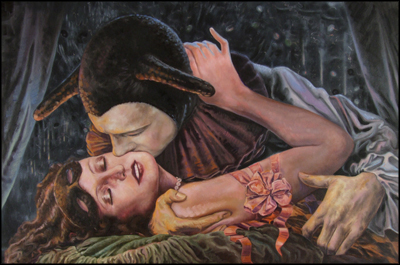
“Devil’s Kiss” by Jared Joslin. Oil on canvas, 24 x 36 inches, price upon request.
Jared’s newest oil painting “Devil’s Kiss” is the first in a new series of paintings exploring the high life and thrill of masquerade balls of the 1920’s. Says Jared:
“In this dream-like whirl of frenzied delight, set in a snow globe atmosphere of streamers, confetti and balloons, I intend to explore and depict stolen moments, passionate persuits and secret longings. Moments marked by intense pleasure in a state of high celebration.”
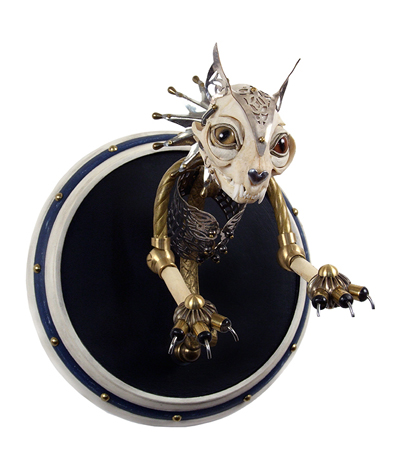
Meanwhile, Jessica’s gorgeous creatures are scampering all over the place! Comet (pictured below) is going to London for the “Wild Life” group show at Stolen Space Gallery, opening tomorrow, Dec 2:
Comet, by Jessica Joslin.
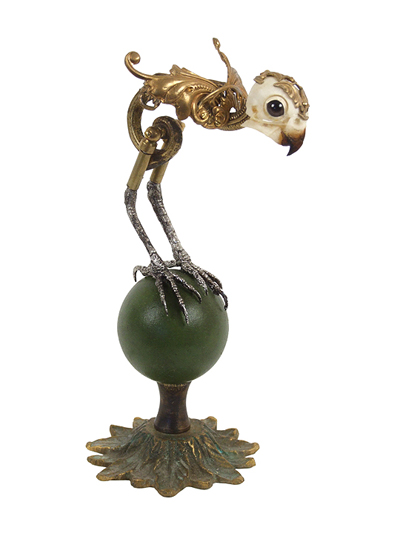
Agate (pictured below), as well as Almond and Silver (shown after the jump) are all headed to Roq La Rue in Seattle. Opening Dec 9, 6-9pm:
Hans Reichel—the criminally under-appreciated German experimental guitarist—passed away in his hometown of Wuppertal yesterday at the age of 62, according to a West German newspaper. Virtually unknown on this side of the Atlantic, Reichel was a self-taught guitarist who may be best remembered for his radical homemade guitars and his invented instrument, the Daxophone.
Picking up music at an early age by teaching himself violin, Reichel (like just about everybody else) became enamored with rock music in the ‘60s, picked up a guitar and played in various blues-based groups before all but abandoning music to study graphic design (Reichel would go on to be a fairly well known typesetter). Reichel returned to music in the early ‘70s with his folky and unpretentious improvisational approach to the guitar differentiating him from the field of European improvisers at the time. His idiosyncratic take on the guitar drew the attention of legendary German avant-garde label, FMP, who would go on to release the majority of his work—much of which has never seen proper North American distribution. Reichel collaborated with a wide range of like-minded players, including cellist Tom Cora and guitarist Fred Frith.
Though he will never be a household name, Reichel’s contributions to the avant-garde are considerable and will be sorely missed by fans of forward-thinking music. Fare thee well, Hans.
It’s a huge and unexpected loss.
Thank you, Hans Reichel, for bringing so much joy, beauty and oddness into the world.
Click here to read previous Coilhouse coverage on Reichel’s wonderfully strange creation, the Daxophone.
Please give a warm welcome to our newest guest blogger, Caroline E. Willis! Caroline describes herself as “a writer and occasionally an archaeologist.” She also has a highly entertaining blog “about dressing up and hitting people with latex.” Needless to say, we like Caroline a lot. -Mer
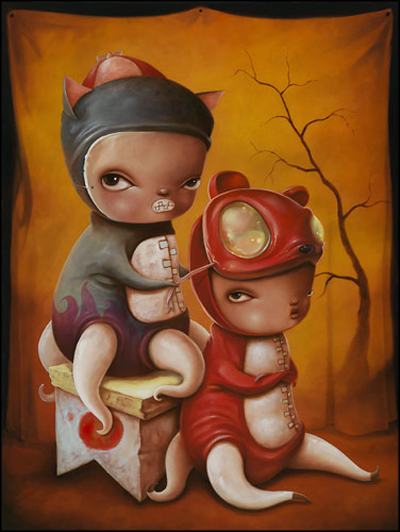
“Sentimental” by Kathie Olivas, 2009, oil on canvas, 30”x40”. (Via)
“Most of us can agree on the artistic value of a Monet or Titian, but this work is for a daring audience, an audience open to exploring the strange beauty and the ecstasy inherent in our culture’s aversions.”
~Carrie Ann Baade
Guest Curator of the Cute & Creepy exhibition, FSU Museum of Fine Arts.
Drive past enough hazy bayous and bent oaks, sacrifice enough November butterflies on the altar of your windshield, and you’ll find something creepy in the heart of Florida. Carrie Ann Baade has collected the works of 25 fellow artists- works of beautiful, grotesque, adorable art- for the Cute & Creepy exhibition that’s currently taking Tallahassee by storm.
Over two-thousand people attended the opening- four times more than any other opening at the museum thus far, and some strange lure continues to draw unprecedented numbers to this show- a lure as hard to define as the subject of the show itself. Cute & Creepy is an exploration of boundaries, but the artworks on display do not so much “cross the line” as seem unaware that any boundaries exist. Each object is wholly itself; it is the viewers for whom categorization fails.
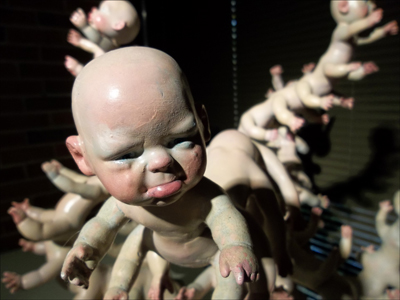
Toddlerpede 2.0” by Jon Beinart. 2011, mixed media sculpture, approximately 36”x36”x36”. Photo by Caroline E. Willis.