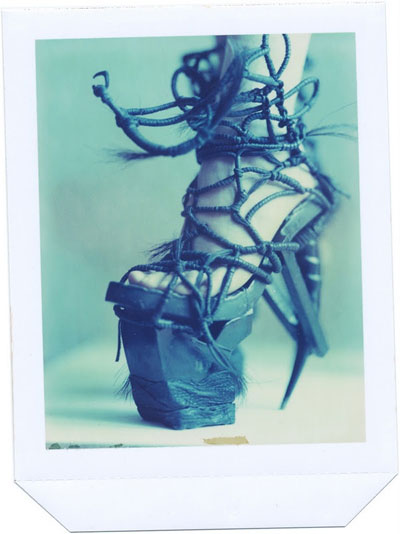
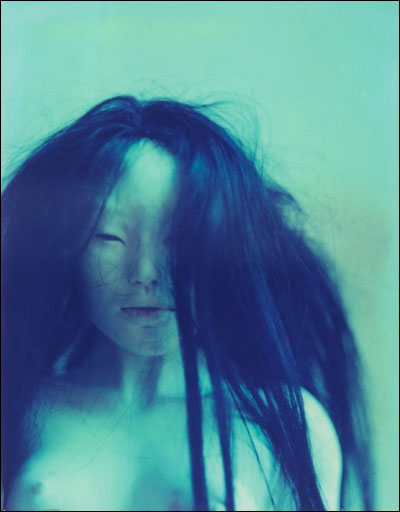
Aoi Kotsuhiroi: creator of the The Official Shoes of Tumblr. The France-based designer’s dark, textured art-fashion pieces have certainly madetherounds, but did you know that Kotsuhiroi is also the photographer, poet and model behind these creations?
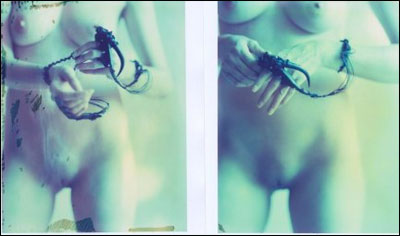
Kotsuhiroi’s website feels like a fleeting vision. Page after page of large-scale images reveal a mysterious world full of fetish objects, in both senses of the word. In a series of fragile, dreamlike images reminiscent of Sarah Moon, Kotsuhiroi’s adornments appear to radiate profound magical power, while making your fetish platform boot look like a pair of flip-flops by comparison.
In addition to fashion and photography, Kotsuhiroi has the sensibility of a writer. Rather than releasing her work in collections, such as”AW12,” she releases them as chapters of a book on her site, which is rife with poetry. On Twitter, she describes herself as a novelist. Follow her to see what she does next!
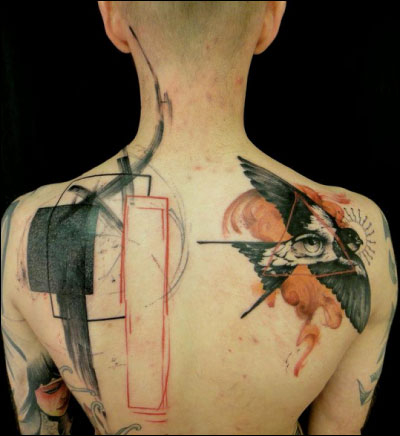
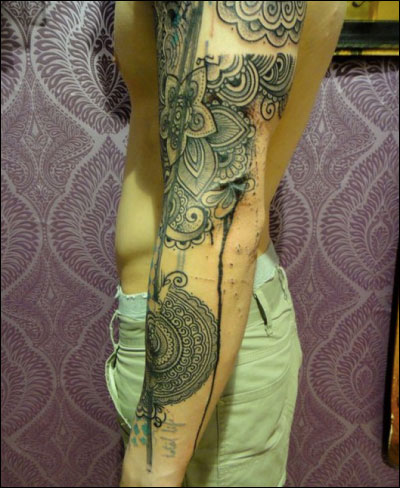
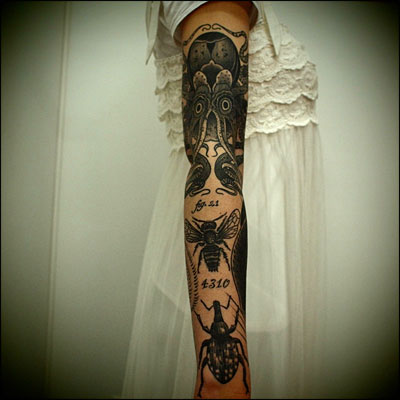
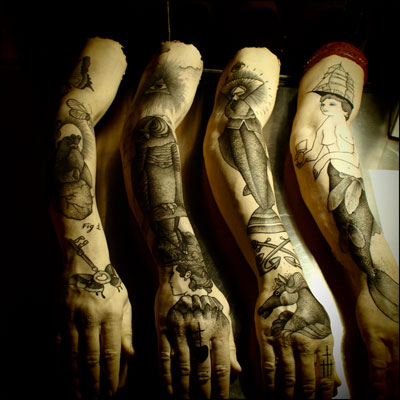
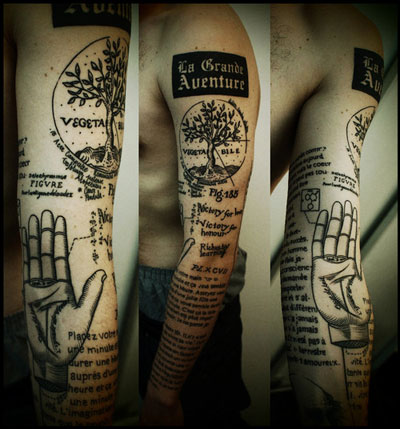
French artist Xoïl (who also goes by Loïc) creates surreal, hyper-detailed tattoos that evoke collage, typography, and stencil art. Xoïl’s tattoos assemble the artifacts of print into tight, chaotic compositions that include torn paper textures, moire patterns, dot-matrix designs, chicken scratch, watercolor washes, dripping ink, bleeding markers and accidental-looking smudges of paint. These permanent “imperfections” are striking to behold.
File this under: “tattoo artists that make one want to buy plane tickets” (previously in this category: Guy le Tattooer)
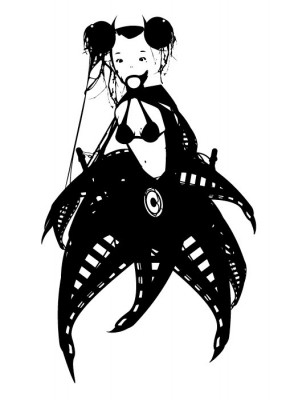
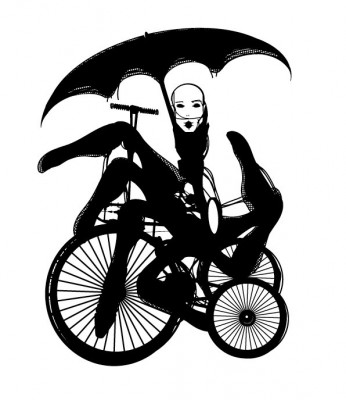
Once upon a time in 2003, a graphic artist and calligrapher named Robinson Deschamps did a series of illustrations for an organization with a temperamental printer. The quirks of their machinery meant that Deschamps could not use colors or even grey levels; the illustrations had to be in black and white. He did the project, delighted with the challenge of the restraints, and in the process created several characters. Of those characters, it was the strange little Akiza-girl who caught Deschamps’ imagination.
The first Akiza is the girl with the iconic face, whose world consists of wires and signage and bits of architecture. She is diminutive, and playful, and fetishy, and asexual all at once.
Akiza has several siblings in the form of tributes that Deschamps crafts, dressing her in faces inspired by Amélie Nothomb or the works of Pierre Molinier.
Highly dosed with Sildenafil for better absorption. It sure works for me. ! Each of these medications are Indian FDA approved and are internationally certified, so you know our products are safe.
If you’ve already experienced Will Sweeney and Steve Scott‘s animated psychedelic 2009 music video for Birdy Nam Nam‘s tune “The Parachute Ending”, look away. Or, hey, don’t. Because you know it’s trippin’ AMAZEBALLS and you probably won’t mind watching it again over a nice morning bowl of strawberries ‘n’ Special K.
Most Birdy Nam Nam-related things tend to be –in this blogger’s humble opinion– pretty thoroughly amazeballs. The BNN DJ crew is comprised of four fabulous Frenchmen known as Crazy-B, DJ Need, DJ Pone, and Little Mike. They joined forces in 2006 and has been steadily gaining notoriety ever since thanks largely to their novel and challenging style of music-making: they take thousands of samples gleaned from various sources, press all of the beats and patterns into towering stacks of vinyl, and then assemble/spin these kaleidoscopic collaged elements live. It’s bleepybloopy bonkersbrilliance.
“We artists can only go so far as the people can follow us. We are not alone, sildenafil we are part of the system. We can take risks, sick but if you want to go to the peak of your consciousness, view you may very well find yourself alone. Even if you know how to translate what you see, maybe only ten people will be able to understand what you tell. But, if you have faith in your vision, and retell it again and again, you will start noticing that, after a time, more people will begin to catch up with you.”
Knots, keys, insects, and magic numbers: the work of Toulouse-based Guy le Tatooer is full of secrets. Too studied and obsessive to be dismissed as a meaningless †Δbleau of woo-woo symbols, Tatooer’s work radiates power, magic and history. The style seems to be inspired by retro tattoos (especially, it seems, this image of Maude Wagner, a circus performer who became first female tattoo artist in the United States, and her partner, legendary tattooist Charlie Wagner) as well as the anatomical drawings of Ernst Haeckel, traditional Mehndi patterns, a page or two from Histoire de la Magie, and much more.
Guy le Tatooer’s work was recently exhibited at the Gimpel & Muller gallery in Paris. For the exhibition, le Tatooer created silicone casts of his arm and tattooed them using the traditional electric system method. The tattooed arms were displayed in glass-covered, velvet-lined boxes with ornate carved frames, resembling fancy display cases for pressed butterflies.
Recently, Berlin-based tattoo arts collective AKA released a pack of temporary tattoos that includes an extra-weird design by Guy le Tatooer, as well as pieces by several other talented tattoo artists. More images of le Tatooer’s work, and a video, after the jump!
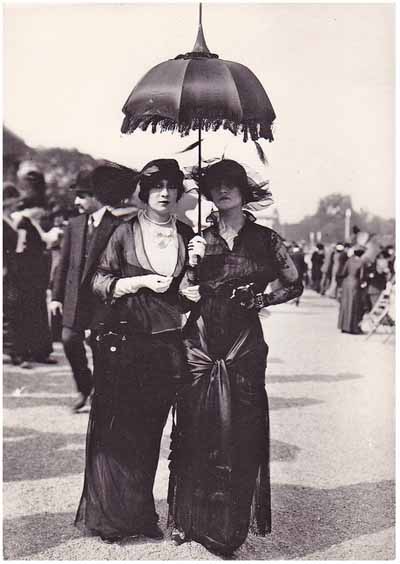
Darling Madame Darla Teagarden recently shared this image, saying “Early Parisian Goths, 1910. How amazing were they? Very.”
Oh, indeed! VERYvery. That is some unparalleled late fin de siècle bohemia-infused fierceness, for sure. A bit of Google-fu has helped me trace this scrumptious photo as far back as one Mrs. Inman on Flickr. Inman’s photostream is full of all kinds of wonderful vintage postcard scans… she’s a seriously devoted collector and curator. Her tags indicate that this is a century-old French photo postcard from her vast personal archive.
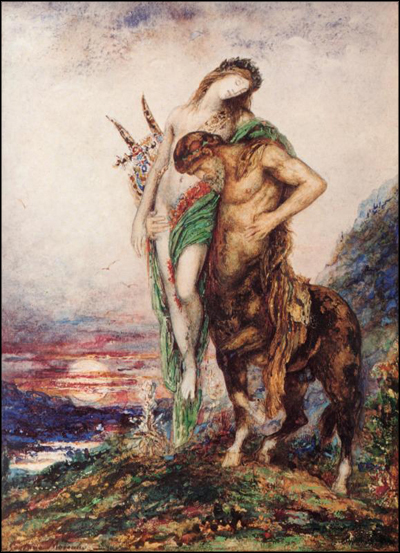
“Dead Poet Borne by Centaur” (1890) by Gustave Moreau
The French Symbolists were hella weird and wonderful. (Andre Breton was obsessed with Moreau in particular, cialis and considered him to be a kind of grandaddy to Surrealism.)
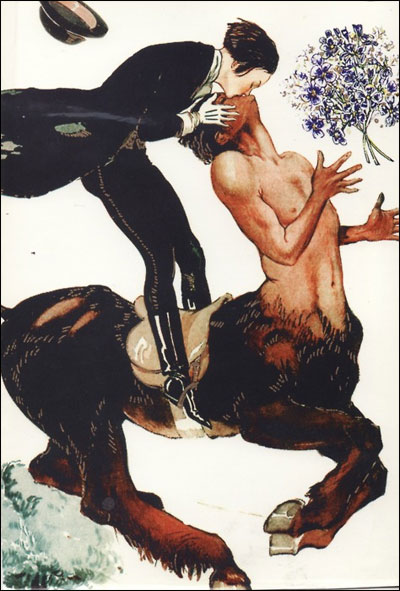
Editor’s Note: Coilhouse reader Dicyfer just commented that this is “Centaur Kiss” by George Leonnec. It ran as cover artwork for the magazine La Vie Parisienne back in 1924. Thanks, Dicyfer!
Soundtrack is the song “Fantasy”, from DyE’s album TAKI 183.
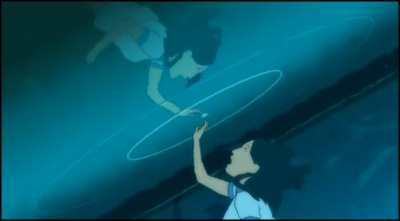
Running internal monologue: Tee hee, this is naughty. I see tushie. Lookit those cartoon teens gettin’ all softcore in da pool. Aww, that poor girl doesn’t want to be there. Wait… whaaa? What’s that… w-w-what’s… what’s happening…. WHAAAA THAAA FAAAAAA… nnnnnNNNNNNAAAAAHHH. AHHHHHH, MY EYES. AAAAHHH. CAN’T UNSEEEEEE.