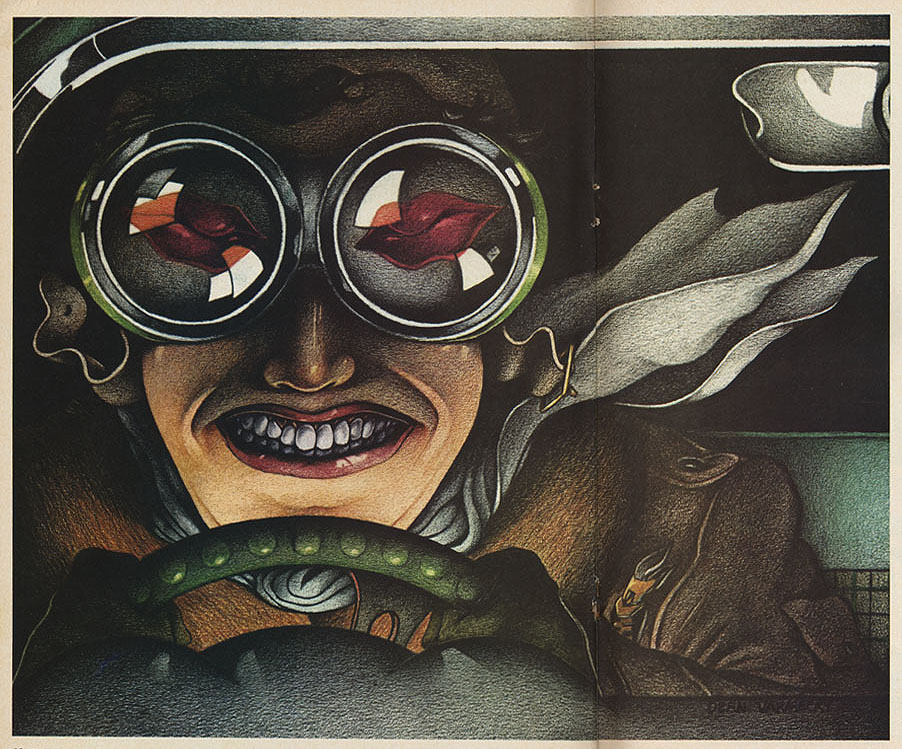
An illustration from a 1974 Penthouse for the first paragraph of Crash by J.G. Ballard. If you’re somewhat depraved and not familiar with Crash, or have only seen the [excellent] Cronenberg film based on the book, I suggest you look into it.
Over the profiles of her body now poised the metallized excitements of our shared dreams of technology.
Everyone I know who has read it has told me that it altered them forever, and I’m always surprised that it’s not known more in the West. Zoetica and I had to fight over who would blog about our favorite book, The Master and Margarita, so we’re collaborating on this entry.
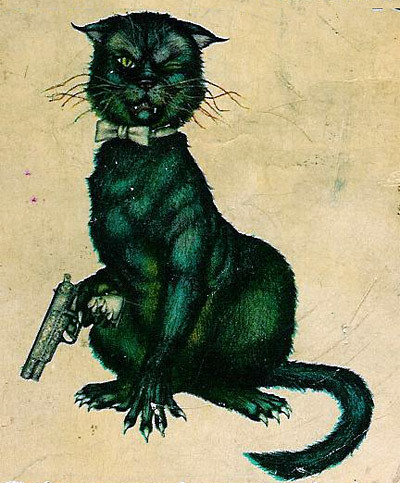
“One hot spring, the devil arrives in Moscow, accompanied by a retinue that includes a beautiful naked witch and an immense talking black cat with a fondness for chess and vodka. The visitors quickly wreak havoc in a city that refuses to believe in either God or Satan. But they also bring peace to two unhappy Muscovites: one is the Master, a writer pilloried for daring to write a novel about Christ and Pontius Pilate; the other is Margarita, who loves the Master so deeply that she is willing literally to go to hell for him.” – Synopsis for the Katherine O’Connor translation
We didn’t really fight, tovarish Nadya exaggerates.
Bulgakov worked on The Master and Margarita, the crowning thorn of his life’s work, until 4 weeks before his death with his own Margarita at his side.
Of note is the book’s structure of two parallel stories – the story of Master and Margarita and the story of the final days of Jesus Christ, as written by the Master [more or less Bulgakov’s alter ego]. The book was banned for many years, published only in small sections in literary magazines. The original controversy and ban were due to thick political subtext in Bulgakov’s descriptions of Pontius Pilate – a thinly veiled Stalin, and bitter satirical illustration of Stalin-era Moscow and its politics.
Most times when you see goths on reality TV, they end up getting bleached and doused in pink blush and all you can do is feel sorry for them. And maybe point and laugh. When a reality show takes normal people and tries to goth them up, I think it’s even worse. I won’t give too much away, so you’ll have to watch the clip and see for yourself.
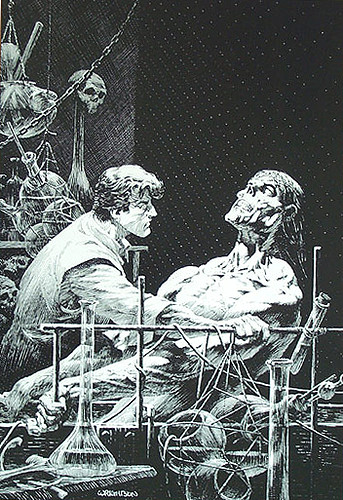
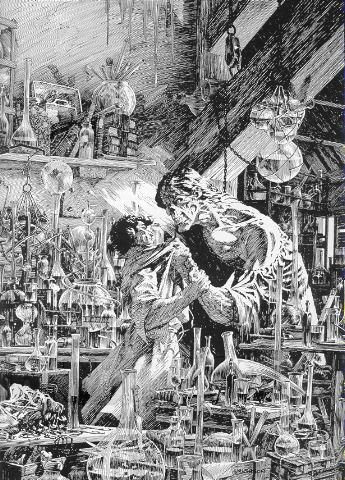
I met one of my heroes at the October Shadows gallery opening in Glendale last weekend: artist Bernie Wrightson. My boyfriend (who has a fantastic piece of his own the show) had to literally drag me over, I was so nervous. Thankfully, Wrightson and his wife Liz are kind-hearted folks, so they humored me.
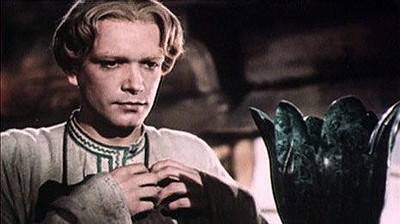
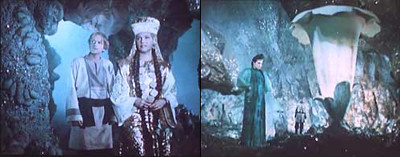
These images are from The Stone Flower, illness as directed in 1964 by legendary Alexander Ptushko, troche whose work deserves its own entry here. This is one of the many somewhat macabre folk-tales that kept me up at night long ago.
You can read it here along with tons of other such writing. An impressive English-language collection, somewhat awkward translation moments but convenient, nonetheless.
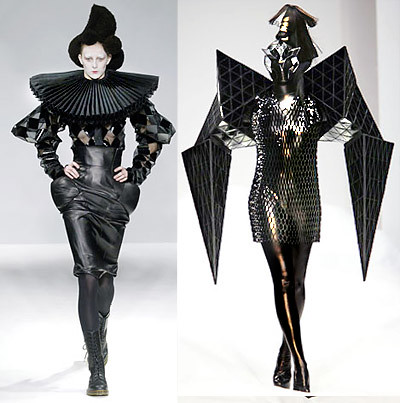
It’s been a little bit over a week since the launch of this site, and I want to thank everyone for their comments and support thusfar. I want to extend a special thanks to everyone who’s suggested a link – we’ve discovered so much interesting new stuff thanks to all of you! There are a lot of submissions to go through, and tonight I’m going to drop this gem: designer Gareth Pugh, submitted by Alysa.
From Wikipedia: Pugh’s collections are autobiographical rather than referential, and draw inspiration from Britain’s extreme club scene. Pugh’s trademark is his experimentation with form and volume. He often uses “nonsensically shaped, wearable sculptures” to “distort the human body almost beyond recognition.” Elements in his designs include PVC inflated into voluminous coats, black and white patchwork squares, Perspex discs linked like chain mail, and shiny latex masks and leggings; he has used materials including mink, parachute silk, foam footballs, afro-weave synthetic hair, and electrically charged plastic in his clothing. Pugh describes his designs as being “about the struggle between lightness and darkness, like Nancy Kerrigan versus Tonya Harding.”
The brilliant songwriter was fond of slathering himself in various forms of goop and leaping into his audiences, as well as “playing instruments with his head”, but apparently the world just wasn’t ready for that sort of thing back in 1982. Despite being a huge influence on later luminaries of the gothic/industrial movement, Fad Gadget remains relatively obscure.
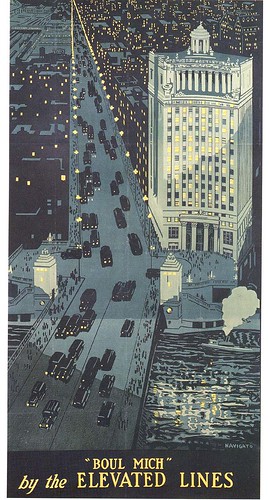
This poster, buy viagra along with over a hundred others, nurse was commissioned in the 1920s by the Chicago Transit Company in order to encourage people to use rapid transit. My heart skips a beat at the stylized depiction of North Michigan Avenue and the surrounding metropolis. I only lived in Chicago for a year but I love it all the same.
On the morning of Sunday 7th May the little girl giant woke up at Horseguards Parade in London, took a shower from the time-traveling elephant and wandered off to play in the park…
Watching this immense puppet filled me with all the awe that watching the awkward rubbery Japanese androids never could. She is absolutely alive, curious and..hungry. What’s interesting is that both the Little Girl Giant and the skinjobs are essentially human-operated, though the robots are programmed beforehand. Wearing pseudo futuristic outfits, some of them even eerily emulate human expressions with facial “muscles”, while the little girl can only blink and open her huge accordion mouth. To me it’s almost disappointing – I want amazing robots! I want technology sophisticated enough to impress me with its humanoids! I know the day this happens can’t be too far off [right?], but until then this Little Girl Giant PWNS.