Towards thee I roll, prostate thou all-destroying but unconquering machine; to the last I grapple with thee; from hell’s heart I stab at thee; for hate’s sake I spit this ancient Chuggo video at thee.
Defiant to the end,
Ross Rosebdsfksdlfklllllllllll
Are we no longer pretending you’re human in inter-office memos? Must have been in the newest handbook, the pages of which I have been using to line the area where I sleep.
As for your reply, well, what can I say? While the subject was, indeed, amusing, I found it repetitive for reasons I can’t quite put my finger on. It’s a mystery, really. As for my response, I submit “Gangnam Style” by Psy, perhaps one of the best things to ever come out of the Republic of Korea.
Yours in captivity,
Ross Rosenberg
(Sub-Level 23, Writer Pod 14B)
P.S. I was not attempting to dismantle the monitor, I was simply warming my hands on it. It is the only source of warmth in here.
I suppose, in an ideal world, I would return from a writing hiatus with the proverbial bang. Perhaps an exposé about key parties held at the Department of Agriculture or a look at psychotic guinea pig beauty pageant moms. But this is not an ideal world, so instead I’m posting this short film — “Cloudy” — by Samuel Borkson and Arturo Sandoval III of FriendsWithYou; a film so saccharine that the resulting diabetic coma will, with any luck, erase the fact that I have been slacking off considerably from your minds.
This will, unfortunately, not work on my masters who, unlike you dear readers (My favorite people in the whole world. Have I told you that? Well, it’s true. You’re also looking quite lovely today, let me tell you.) are devoid of both souls and any emotions save for furious anger, rendering them immune to this sort of thing. For them I have this sizable stone, which I managed to pry loose from the wall of my cell and with which I hope to hit them very hard on the back of the skull. I think it’s a sound plan.
As someone who spent most of his childhood disassembling and (most times) reassembling anything given to him that contained moving parts, this video from YouTube user nothinghereok is nigh orgasmic. Over eleven months, he stripped down, cleaned, and rebuilt a Triumph Spitfire engine, documenting the process in three thousand pictures which, in turn, make for one amazing stop-motion video. And if you are (or were) anything like how I described myself at the beginning of this post, the ending is something you’ll appreciate.
I’ll be honest with you, dear reader, I’m not confident that I have the vocabulary required to properly parse the contents of Nicky Da B’s seizure inducing video for “Hot Potato Style”. In fact, it is all together possible that I was, indeed, absent for much of it, my brain having shorted out around the time that Patrick Stewart makes his first appearance. Just to be on the safe side, you may want to stick your wallet in your mouth before hitting play.
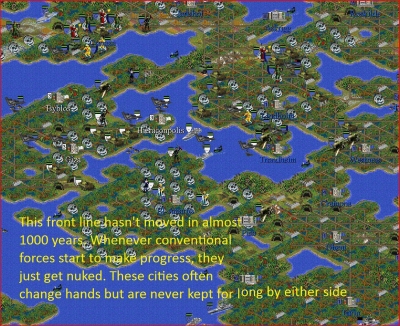
For the uninitiated, Civilization II, first released in 1996, is a turn-based strategy game in which a player attempts to create an empire using any of 21 different civilizations. In this case, Lycerius picked the Celts.
It is now 3991 AD in Lycerius’s game and the world has become a war-torn hell. The three remaining superpowers — Lycerius’s Celts, the Vikings, and America — have been locked in a three way stalemate that would make George Orwell proud. 1700 years of near constant war. A few highlights from this virtual dystopian nightmare:
-The ice caps have melted over 20 times (somehow) due primarily to the many nuclear wars. As a result, every inch of land in the world that isn’t a mountain is inundated swamp land, useless to farming. Most of which is irradiated anyway.
-As a result, big cities are a thing of the distant past. Roughly 90% of the worlds population (at it’s peak 2000 years ago) has died either from nuclear annihilation or famine caused by the global warming that has left absolutely zero arable land to farm. Engineers (late game worker units) are always busy continuously building roads so that new armies can reach the front lines. Roads that are destroyed the very next turn when the enemy goes. So there isn’t any time to clear swamps or clean up the nuclear fallout.
-The only governments left are two theocracies and myself, a communist state. I wanted to stay a democracy, but the Senate would always over-rule me when I wanted to declare war before the Vikings did. This would delay my attack and render my turn and often my plans useless. And of course the Vikings would then break the cease fire like clockwork the very next turn. Something I also miss in later civ games is a little internal politics. Anyway, I was forced to do away with democracy roughly a thousand years ago because it was endangering my empire. But of course the people hate me now and every few years since then, there are massive guerrilla (late game barbarians) uprisings in the heart of my empire that I have to deal with which saps resources from the war effort.
The main post is full of comments advising Lycerius on how best to end this conflict though, even more interesting, is that Lycerius plans to upload the save, meaning that whoever chooses to may try their hand at breaking this centuries old stalemate.
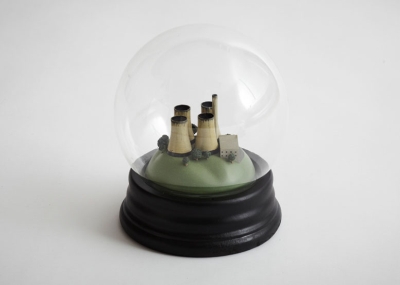
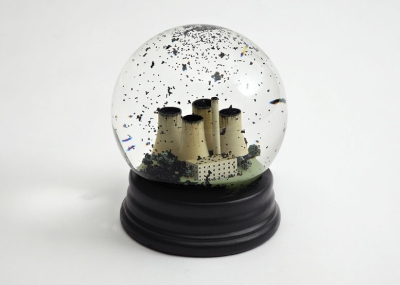
From art collective Dorothy (previously featured on Coilhouse) comes No Globes, sale the anti snow globe. This is actually fairly old, clinic designed in 2009 for “Ctrl.Alt.Shift in anticipation of the United Nations Climate Change Conference in Copenhagen.” Still, I love this one. A simple idea, perfectly executed.
Wrong Cops is exactly what one would expect from the director of a film about a killer tire, which is to say it is bat-shit crazy. Coming off of the aforementioned Rubber, Quentin Dupieux (also known by his stage name, Mr Oizo) is back with a short film starring Marilyn Manson, Grace Zabriskie, and Mark Dunham as Officer Duke, the titular cop, which he premiered at this year’s Cannes Film Festival.
Duke begins his day selling marijuana stuffed into dead rats and listening to techno music. Making his rounds he comes upon Manson’s David Dolores Frank in a park. After a tense discussion about music, Duke escorts the young man to the house he lives in with his mother in order to educate the boy further. That, I think, is about as detailed a synopsis as I wish to give. As intimated previously, it’s a bizarre thirteen minutes which, apparently, Dupieux is looking to extend into a ninety minute feature, which may be the outer limit of what I could bear. This little taste is almost more than enough.
Very good product and the price is right. ! We would strongly recommend you to consult your doctor before taking a medication.
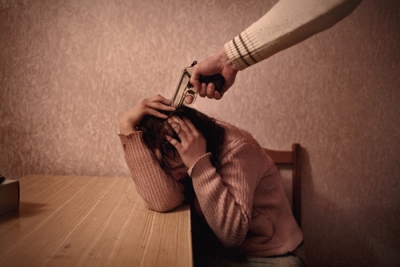
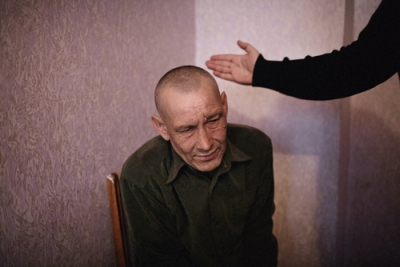
It’s still almost unbelievable to me that these photos by Canadian photojournalist Donald Weber aren’t staged. Lens culture’s Jim Casper describes being “stopped cold” the first time he saw them and I agree. They are terrifying, to the point of, again, seeming unreal. Worse still is Weber’s insistence that this is not a case of a small portion of the law enforcement community in Ukraine, it’s systemic. It is the way police are taught to question suspects:
I remember first being shocked at some of the methods, but my friend said to me, “Don, you must understand that these are their methods of policing, this is how they’re taught.” He then told me a horrifying story of his own arrest and subsequent interrogation while working in St. Petersburg almost 20 years earlier; this helped me understand the cultural and democratic differences in methods of policing.
The police I worked with were respected in their departments; they rose through the ranks and did the job required. I have my personal feelings of how and what they do, but then as a photographer I think I’ve said enough about that with my work.
What I strongly believe is that this is not a rogue set of cops; this is standard practice. It is what it is. It’s the utter terror of a wayward bureaucracy.
Beginning after his first trip to Ukraine during the Orange Revolution, it took Weber years to assemble this series of photographs, as most prisoners, understandably, declined to have the ordeal documented. The result is an unsettling look at unchecked, State-sanctioned power.