(Big thanks to our longtime friend, the Posthuman Romantic/tech gonzo/all-around dashing gent M1K3Y, for this delightful rave review! Be sure to visit him over at Grinding.be. ~Mer)
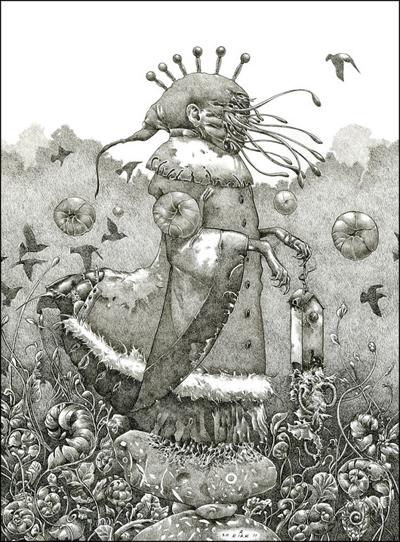
Little is widely known about Canada’s speculative super soldier program. Much was rumoured, little actually validated. Ryan Oakley was whispered to be the bastard mind-child of Anthony Burgess and Philip K. Dick, but this was only confirmed with the release of his debut novel TECHNICOLOR ULTRA MALL into the wild. Torn pages clutched by catatonic mall rats left to rot in the back rows of electronic superstores. Curious graffiti in bathroom stalls announcing “The Coming Revelation of the Great Chosen One, Teevee”. Russian squats full of lively debate driven by dot-matrix printed excerpts, mistranslated from German. Ultraviolent science fiction makes its heroic return; travelling through time, back to kill the future.
TECHNICOLOR ULTRA MALL (#TCUM) is a busted neon literary warning sign. Where cyberpunk failed, this must succeed in alerting us to hyper-capitalism’s end state: the mega-mall as polis. Born to shop, in death do we become commerce itself (“you could usually get more for a dead person than you could pull from their pockets”). Hyper-mediated, people are alienated from their own body, unable to feel anything without the right chemical compound. Corporate colonisation of emotion and sensation.
This is what comes of the “old people afraid of the sky” future, as Bruce Sterling has described it, written before he even uttered the words. Outside may as well be the surface of the Moon (or better yet, Mars); there is only the Mall. The adult version of Nausicaä Valley of the Wind, but with gigantic, hermetically sealed machinery instead of mutant bugs. The malls feed on the garbage of the past, as the book itself mines the midden heaps of the collective refuse of the decadent 20th century (that still lingers on like a dying fire-breathing dragon stumbling into a village, unaware it’s killing us all.) This is Demolition Man mutated and buried underground by the Umbrella Corporation. This is Plato’s three-souled corporate Republic with its Red (bronze-souled favella), Green (silver-souled bourgeoisie) and Blue (golden-souled ruling class) levels, and twice as sickening.
Who among ye has not read the spectacular sci-fi tome Vurtby Jeff Noon? Highly recommended. In 1994, the Manchester native’s debut novel earned him an Arthur C. Clarke award, as well as kindly comparisons to Anthony Burgess and William Gibson. Vurt is one of the most gorgeously and utterly bent, feather-suckin’ subcultural fables of the ’90s, or any other decade. (Noon’s entire bibliography from ’93 through 2002 is quite resonant, perhaps especially –though not exclusively– for those of us who found ourselves falling down various cyber/raver/club kid rabbit holes during that time!)
In more recent years, Noon has been challenging the boundaries of online social networking sites. In addition to regularly posting character fiction on his official Twitter, he previously spent a span of time updating an account called @temp_user9 with haunting lyrical shards. There’s also his Microspores Tumblr, where select units of his micro-fiction are offered up with visual and sonic accompaniment, all crowd-sourced from Noon’s readership.
Apparently, Noon’s been grokking a lot of reality television lately as well. Last month saw the self-published release of his first full-length novel in ten years,ChannelSK1N. It’s available in digital format only, which makes a certain poetic sense, given its darkly rasterized plot:
In the infotainment ‘n’ plastic-surgery-addicted near-future, a fading pre-fab pop star called Nola Blue discovers that her relevancy has rallied thanks to an unexpected mutuation: her skin has begun receiving and broadcasting television signals. Intimations of Frankenstein, nods to Cronenberg and (of course) Orwell abound as Noon reels out the trials and tribs his characters in brilliant, sometimes brutal parodies of current popular culture.
In the novel’s press release statement, Noon gamely states “I’m a celebrant of the future – Bring on the void.” And ChannelSK1N certainly is a leap through the dark; this is not staid fare by any stretch. Back in February, he spoke with Cult Den about his ongoing desire to push forward, and how that influenced his decision to self-publish:
I looked around for a publisher, almost went with one, but decided in the end to self-publish. The reasons for this are two-fold: firstly, they wanted to publish it in March 2013. That’s way too late for me. As I mentioned, I was in real need of connecting with an audience once again. And secondly, I really wanted to be free to put out what I wanted, when I wanted, including, alongside narrative based works, lots of more experimental stuff. Basically, I wanted to just write, and not have to wait. Just do it. See what happens. That’s my current attitude, and self-publishing gives me that freedom. I think you’ll see a whole bunch of works coming from me, over the next few years, each one placed somewhere along the avant-pulp borderline.
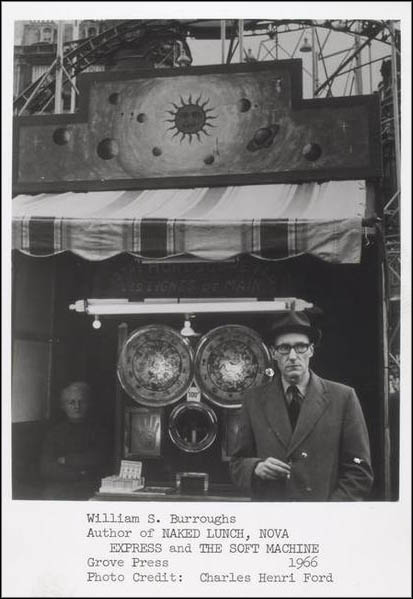
That freedom has worked in Noon’s favor with ChannelSK1N. This is Noon in high gear, showcasing his meticulous gifts as a wordsmith, his rebellious approach to storytelling, and his knack for multi-sensory invocation. Both brightly visual and highly sonic, the narrative is full of fine-tuned passages which, when read aloud, parse like complex music, syncopated by bursts of oddly catchy static. It’s restless Burroughsian cut-up ambiance– a bookish kind of scrying-via-late night satellite TV surfing. More adventurous readers in his audience are certain to tune in, and rejoice.
Our longtime contributor and multi-talented friend Tanya Virodova has been keeping even more busy than usual, thanks to her relatively new role as the Managing Editor of Geekquality, a lively collaborative blog venture she co-founded in late 2011 with several other bad-ass, beautiful people.
Tanya tells us that the idea for Geekquality emerged last year when several of the founding editors met for the first time at the first annual Geek Girl Con in Seattle, Washington. Since that time, they’ve been steadily building/ramping up their online presence. Nowadays, the Geekquality venture is a thriving example of diverse collaborative writing and online community-building.
With staff members hailing from both the West and East coasts of the United States –all geeks and vocal participants in online communities and united by a “love/hate relationship with geeky media”– Geekquality, in addition to celebrating examples of inclusivity and diversity in geek culture, addresses its writers’ mutual, ever-growing dissatisfaction with a frequent lack of intersectionality and diversity both in current geek media and in many fandom communities. This from a group statement emailed to Coilhouse by their editorial team:
“Being a nerd isn’t really so much a choice as it is a facet of your person. How you live, consume, and interpret your experience, however, most certainly is a matter of informed choice. All of us have been disappointed to find that often, analysis that challenges beloved content and creators is dismissed as unproductive and overly negative, when it’s actually critically important. The geek is indeed inheriting the earth, and it’s up to geeks to make sure our influence is not a negative and exclusive one.”
“Talking about video games, comic books, TV shows, movies, etc and pointing out flaws in writing or casting, accuracy in representation of unique perspectives, and general discussion of what could be done better sometimes are met with an arms crossed, head-shaking refusal to admit that some pop culture thing we love can also be flawed. While we are all united by our geekdom, there can still be more inclusion from lenses of feminism, sex and gender, race, ability, and various cultural perspectives.”
Sharp, exuberant, funny, passionate, and radically progressive, Laurie Penny (aka Penny Red) has a lot to say, and she isn’t afraid to say it… no matter what. In early 2011, at the age of twenty-three, this English writer skyrocketed into the press with her on-the-ground, heart-in-mouth coverage of the UK student protests. Later that same year, her shrewd reportage of the NYC-based Occupy protests garnered her an even larger readership around the blogosphere, on Twitter, and via various mainstream media outlets.
Since then, Penny’s been a columnist for The New Statesman and has written several articles for The Guardian and The Evening Standard. Her first two books, Meat Market: Female Flesh Under Capitalism, and Penny Red: Notes from the New Age of Dissent, were both published in 2011 by Zero Press. Currently, she and our good chum Molly Crabapple are collaborating on an ebook project called Discordia for Random House. Penny’s also spearheading a super secret video series that will “aim to challenge contemporary debate culture” by implementing a time-honored salon format. More information on that coming soon.
I’ve been keen to interview Laurie Penny for ages. Earlier this weekend, we finally got around to talking, and talking… AND TALKING, via Gchat (she at her mum’s house in the woods somewhere in England, me at my folks’ place in the chaparral somewhere in California). In fact, we didn’t shut up for several hours. What follows is the lion’s share of that conversation, minus our occasional indecipherable segues into bat country. (Well, most of them, anyway.)
Good readers, let it be known that this transcript is quite long, so we’ve broken it up into sub-headed sections in the hopes of keeping your eyeballs from bleeding. Laurie, thanks again! Always happy to put a kettle on for you here at Coilhouse. Can’t wait to see what you and your “savage red pen of justice” get up to next!
AD HOMINEM
Mer: You’re not afraid to lead with deeply personal experiences. It’s fair to say that your approach often triggers some very polarizing reactions, both positive/appreciative, and negative/dismissive. I’ve been wanting to ask you for a long time: how do you balance your openness and vulnerability with the inevitable need for thick skin and tough armor. How do you stay balanced? What’s your “safe space”, figuratively speaking?
Laurie: Well, I do get a lot of attacks – people tell me I get more and more frightening trolling even than the usual barrage of hate and intimidation and slut-shaming that any woman raising her voice above a whisper on the internet has come to expect. It’s hard, sometimes. I’ve had very dark moments with it, and I don’t know how I would have coped without my friends. I’ve always been a sensitive person. I’ve had to develop a thicker skin, but at the same time I don’t want a tough hide. I think that’s a dangerous thing for a writer, particularly now. You can get to the stage where all criticism, even the legitimate, useful kind, just bounces off you, and you ossify into a little cocoon of your own prejudices. I’ve been very close to kicking it all in several times, particularly last spring, when I had some personal threats against my family on top of the rest of it, and I was also burned out from overwork. I started wondering if the toll it was all taking was worth it, the stress and exhaustion and panic attacks. When I get very low, which happens sometimes, I often think that I’d give up and shut up like these scumbags want if I didn’t hate the idea of letting them win. But spite alone is no way to work or write if you believe in doing your own small bit to change the world.
Mer: No, it’s not.
Laurie: Part of all this is particular to the British press, too. The culture of political debate in this country is toxic right now. Has been for years. And geographically as well as figuratively, it’s a very small island. Also, it’s just that some people really hate it when young women talk about things that aren’t shoes. Not that shoes aren’t important, too! In their own way.
“…I was a Flower of the mountain yes when I put the rose in my hair like the Andalusian girls used or shall I wear a red yes and how he kissed me under the Moorish wall and I thought well as well him as another and then I asked him with my eyes to ask again yes and then he asked me would I yes to say yes my mountain flower and first I put my arms around him yes and drew him down to me so he could feel my breasts all perfume yes and his heart was going like mad and yes I said yes I will Yes. “
It is late in the week, and by now most of our readers know that Ray Bradbury, one of the last of the Golden Age of Sci-Fi’s grand old men, died Wednesday morning at the age of 91. The tributes have come from everyone from the White House to hiscolleagues. There is little one can say here that hasn’t already been said. The man was acclaimed for a reason. Pick up The Illustrated Man, The Golden Apples of the Sun, Fahrenheit 451, or any of his other classics, and you’ll see why.
The outpouring of tributes are a testament to Bradbury’s amazing imagination and reach. But few sum up the sheer humanity of his outlook more than the one above, released by the NASA Jet Propulsion Lab, of him reading “If only we had taller been” while Carl Sagan and Arthur C. Clarke look on. The future had scientists; Bradbury knew it needed poets.
In stories of implacable void and burning books, Bradbury pioneered bleak dread in our ideas of what the future could be, but despite his own temperamental times, his sense of wonder remained invincible.
It powered his work until the end. “Take Me Home“ came out just before his death, in the current issue of The New Yorker. In it, a young boy readies for the future, devouring stories and launching fire balloons, watching as they float “across the night among the stars,” far beyond the horizon.
Photo via AP
Farewell, Ray Bradbury. (August 22, 1920 – June 5, 2012.)
His latest endeavor focuses on superheroes. Specifically, superheroes from comics’ Golden Age, which lasted from 1935 to 1949. The project is calledThe Encyclopedia of Golden Age Superheroes, and Jess is currently raising funds on Kickstarter to produce a book and a website (which will include a free download of the book’s manuscript) to catalogue 2000+ superheroes: everything from “floating eyeballs and centaurs” to “robot brains and super rabbits.” Jess needs to travel to Michigan State University in East Lansing to study up on all of these wondrous things, and estimates that it will take two weeks to get the research done. The money raised by Kickstart will go towards subsidizing Jess’ travel and building the site. The project may have hit its modest funding goal, but believe us, the bare minimum is never really enough. Plus, Kickstarter projects that raise substantially more than the required amount often have a way of evolving and deepening into even bigger, more beautiful work (for instance, Molly Crabapple’s Week in Hellor R. Stevens’ Diesel Sweeties e-book).
In celebration of Jess’ ambitious new project, we are releasing a full, free PDF of his article from Issue 05, titled “Sherlock Holmes vs. The Fox Woman: A Brief Tour of Chinese Pulp”. Lushly-illustrated by Greg Broadmore and Paul Tobin, the article provides a sweeping overview of Chinese Pulp from, from moon colonies to pirate queens. Enjoy!
We can’t wait to read this book, Jess! Go git ‘em.
Author Harry Crews. The tattoo is an excerpt from E. E. Cummings’ poem “Buffalo Bill”. (“How do you like your blue-eyed boy, Mister Death?”)
A great and grizzled powerhouse of American fiction has left us. He was 76 years old. A wild Southern gent with a penchant for heavy drinkin’, Harry Crews wrote like he lived: hard, bloody, sharp, gritty. His ex-wife, Sally Ellis Crews –with whom he remained great friends after they divorced for a second time in 1964– informed the AP on Thursday that Crews had long suffered from neuropathy: ”He had been very ill. In a way it was kind of a blessing. He was in a lot of pain.”
Crews wrote beautifully about pain. Speaking about his own books: “The smell of blood is on them [...] the sense of mortality is a little too strong.” That may very well be true. But like blood, they are also as rich and vital as all get-out. If you haven’t experienced his world before, but appreciate the output of writers like Cormac McCarthy, Flannery O’Connor, Faulkner or Bukowski, you will likely find loads of gruff and stalwart reassurance in the work of Harry Crews.
A forthcoming memoir by Crews is slated to be published in the near future. Long before his passing, there’d been a lot of talk of reissuing his full bibliography in digital editions and beyond. Here’s hoping.
Visit HarryCrews.org, which features many essays, interviews and portraits. Some sagacious quotes from the hellion below.
Harry Crews. Photo by Oscar Sosa for The New York Times.
“I never wanted to be well-rounded. I do not admire well-rounded people nor their work. So far as I can see, nothing good in the world has ever been done by well-rounded people. The good work is done by people with jagged, broken edges, because those edges cut things and leave an imprint, a design.”
“If you’re gonna write, for God in heaven’s sake, try to get naked. Try to write the truth. Try to get underneath all the sham, all the excuses, all the lies that you’ve been told.”
“Writers spend all their time preoccupied with just the things that their fellow men and women spend their time trying to avoid thinking about. … It takes great courage to look where you have to look, which is in yourself, in your experience, in your relationship with fellow beings, your relationship to the earth, to the spirit or to the first cause—to look at them and make something of them.”
“There is something beautiful about scars of whatever nature. A scar means the hurt is over, the wound is closed and healed, done with.”
O frabjous day! (Callooh! Callay!) It is March 20th, 2012– the official US release date of UK-based author Nick Harkaway‘s second novel, Angelmaker.
Comrades, if you appreciate joyful and highly original storytelling, you need to pick up this book. Immediately. Trust me when I tell you that Angelmaker is easily one of the most endearing works of fiction that will be published this year… or next, for that matter.
Better yet, trust William Gibson: “You are in for a treat, sort of like Dickens meets Mervyn Peake in a modern Mother London. The very best sort of odd.” Or Tim Martin: “this is as far as it could be from the wearied tropes that dominate so much of fantasy and SF.” Or Glen Weldon: “A big, gleefully absurd, huggable bear of a novel.” Or Charles Yu: “Nick Harkaway’s novel is like a fractal: when examined at any scale, it reveals itself to be complex, fine-structured and ornately beautiful. And just like a fractal, all of this complexity and beauty derives from a powerful and elegant underlying idea.”
(Yes. YES! THIS. What they said. All of it, plus tax, and with great interest.)
Who among you has read Harkaway’s debut novel, The Gone-Away World? Those who have know what a big-hearted and ferociously intelligent storyteller he is– how he crafts narratives that defy categorization (and sometimes gravity), shunting his intricate, multi-pronged prose along at breakneck speeds. TGAW is a sprawling, surprisingly poignant hero’s epic that unfurls like a Lichtenberg figure against an unlikely backdrop of pirates, mimes, ninjas, horrific super-weapons and devastating post-apocalypse. It’s equal parts meticulous, silly, sincere, impassioned, hilarious.
The yarn of Angelmaker is made of similarly electric stuff, only spun even more finely, and woven so intricately that many passages play out like a kind of multi-layered literary sleight-of-hand: How did he do that? Within his wordplay, Harkaway ensconces acts of commensurately deft swordplay, espionage, gangbuster hijinks, and even higher fantasy. Intricate family bonds are explored and philosophical quagmires grappled with. There are trains, planes, automobiles, and submersibles. Sex! Monks! Murder! Mechanical bees! We are introduced to tragic elephants and a heroic pug. Harkaway dares us not to fall in hopelessly in love with each and every character and object and exotic locale he braids into the microcirculatory tapestry. (Bear in mind, there are thousands of distinct and lavishly described elements.)
At the golden hammering heart of the story we find Joe Spork, a lonely/adorable identity-crisis-having horologist, and Edie Banister, a ninety-year-old former superspy whose badassery transcends time and easy pigeonholing. Together –with the help of their magnificent friends/lovers/family, and thwarted by an assortment of deliciously loathsome villains– Joe and Edie must rescue the world from an antiquated doomsday device unlike anything anyone ever imagined… save for the tormented genius Frenchwoman who haplessly invented it.
It all sounds utterly absurd, doesn’t it? Well, it is. Ravishingly so.
Now. That being said, I’m delighted to present the following Coilhouse interview with Nick Harkaway, author of Angelmaker and The Gone-Away World. Huge thanks to Qais Fulton for supplying several of these questions, and downright humongous thanks to Mister Harkaway for taking the time to answer them all so thoughtfully.
Nick Harkaway. Photo by Rory Lindsay.
COILHOUSE: You were a professional screenwriter before becoming a novelist. Both The Gone Away World and Angelmaker –while infinitely more complex, dense, and multi-layered than the medium of film could ever allow for– have decidedly cinematic qualities: panoramic descriptions of places and scenes, well-paced bursts of action, crackling dialogue. Do you often find yourself pushing or pulling against that previous construct, or have you compartmentalized the two mediums? What (if any) are some of the most important tools you’ve brought with you from your screenwriting career? NICK HARKAWAY: Mostly for me the sense of the story leads the writing, so I know where I’m going and I come up with how to say it as I go. (I don’t mean that character doesn’t drive, rather than I have an overarching sense of what character and plot will do in combination, and I then have to write a line through that using the right scenes and the right language to express it. There’s a constant battle to find words and events which properly capture the concept in my head. And sometimes it turns out that the concept has conveniently ignored some logical realities and I have to bridge a gap…)
But screenwriting is a terrific base to work from. There are two gifts it gives which are obvious: if you’ve written a movie script, you know that you can finish a story. (I swear, more people get hung up on sheer terror of the long form than anything else.) And you know about concision. Every good writer I know has at one time or another worked in a field which required them to be able to express a lot in a short space, with minimal linguistic flourish. Whether that’s journalism, the civil service, the law, or something else, it’s a great discipline. I, obviously, have sort of abandoned that kind of sparse writing, at least for the moment, but that doesn’t mean I don’t benefit from it.
What pushed you to write your first novel? Was there a specific catalyst?
Yes. I was heartily sick of pitch meetings. I couldn’t stand taking another great story to someone who was fried on Starbucks’ coffee and not really paying attention and have them object to everything which was interesting about it and then complain that what was left wasn’t original enough. Or some variation on that theme. The final straw was a musketeer-ish story I wanted to write which was about a women who had, in her youth, dressed as a kind of D’Artagnan figure. She’s in middle age, her kid gets kidnapped, and she has to go back to being an adventurer – but she’s no longer a waif. She’s a farmer. She’s strong, heavy, and very obviously female. So she puts on a fake beard and decides essentially to be Porthos instead. There was all kinds of fun stuff in that story – just talking about it I want to get it out of the drawer again. Anyway, my panel of (female) execs sit through this, and at the end they say “well, it’s kinda hard to place stories with a middle-aged female lead”. And that is their entire critique apart from a nice extra kiss-off about transvestitism being hard to sell, too. And I just thought “screw this”.
In September of 2011, shortly after launching a highly successful Kickstarter campaign, our intrepid chum Molly Crabapple locked herself into a hotel room in New York City for a week, eventually filling 270 square feet of paper-covered wall with her art. Yesterday, IDW published The Art of Molly Crabapple, Vol #1: Molly Crabapple’s Week In Hell, a book chronicling the whirlwind project (with beautiful contributions from several more Coilhouse friends: photo documentation by Steve Prue, a cover shot by Clayton Cubitt, and a foreword by Warren Ellis).
Last week, Molly returned to Kickstarter to launch Shell Game, a crowd-funded art show about the massive ongoing international financial meltdown. For Shell Game, she plans to create “nine giant paintings about the collapses and upheavals of the last year, then rig out storefront like a gambling parlor and display them to the city and the internet for a week.” Shell Game is an experiment of sorts for Molly, who is keen to fund large scale, labor-intensive work without having to depend on wealthy collectors. This type of crowd-funding is, she hopes, “a way of finding Medici in the crowd.”
“The Great American Bubble Machine” by Molly Crabapple, the first of nine in her Shell Game series.
As they did with Week In Hell, $1 contributors get to peep at Molly’s progress through a backers-only blog with livestreamed painting sessions, and those who donate larger amounts receive incrementally impressive artistic rewards. With well over a week still left to go, the campaign has already raised well over 50K through backers small and large. DANG.
Today on Coilhouse, Molly Crabapple tells us more about the Shell Game campaign, and shares related thoughts about the nature of Occupy and the future of art… and vice versa.
Molly’s “Vampire Squid” stencil, as seen at various Occupy camps all over the world.
You’ve mentioned that, until 2011, you weren’t comfortable with making political art, that you were “afraid of being hypocritical, propagandistic or boring.” Can you tell us a bit about the specific thought process that changed your mind? Was there some particular catalyst, or was it a gradual shift in perspective?
I’m an essentially capitalist little hustler who likes Louboutins and who draws frivolous things, sometimes for very rich people. For a long time, I felt this if I made “activist art” it was straight up radical posturing. I didn’t want to win cool points on someone else’s movement. So I’d donate money or sell work for charity, but hide any subversive thoughts in a whole lots of illustrative metaphor. My thoughts started changing when I painted The Box in London. Suddenly I was drawing straight-up parodies of the British class system on the walls of what would be one of the world’s most depraved nightclubs, while being given a privileged view of the student occupations by the unspeakably brilliant journalist Laurie Penny. Suddenly avoiding politics in my art seemed like a cop-out. Wikileaks, Wisconson, and finally Occupy Wall Street meant that upheaval was hitting America. I had to engage.
Has there been any criticism thrown at you about your means of involvement? If so, how do you engage with that?
I’ve had a few people call me an evil latte liberal or whatever, but honestly, who cares. The idea that you have to be a vegan saint to care about having a vaguely just world is just a way of making sure no one does anything.