Two Amazing Final Donors to Our Silent Auction: Diamanda Galas + PUREVILE!

Comrades! Greetings from the bowels o’ Brooklyn. This missive comes to you directly from B&W&RAOB Headquarters, aka the Red Lotus Room in Crown Heights, where roughly two dozen devoted volunteers (we love you guys so much) have been working steadfastly for many, many hours to make sure everything is PERFECT tomorrow. The party is so close, we can taste it (mmm cinnamon and sleep dep with a touch of thunderstorm)! Everything is coming together. Everyone is delirious, and hopeful. We truly hope to see you here tomorrow from between 5pm and midnight, either in the flesh and dressed to transgress, or via one or more of our “internet party portals”: the Coilhouse room on Turntable.fm, the Ball’s livestreaming webcast (link to be announced tomorrow), or our auction site.

Speaking of that auction, we’re beside ourselves with delight to announce the three final, breathtaking listings that were just added into the Coilhouse International Fundraising Silent Auction (which you should really check out in full, if you haven’t already). First:

An astonishing Glow-in-the-Dark Fabric Painting – Donated by Diamanda Galás Yes. Really. THAT Diamanda Galás. The one, the only, the mighty. Featuring mysterious and ferocious organic shapes painted on a thick piece of black fabric and adorned with a bright prism, this textural, luminescent 11.5×24.5″ fabric painting was created by the incomparable and legendary avant-garde performer, composer, artist and activist. [See listing for more detailed photographs.] Ms. Galas express-FedExed it to us yesterday to make sure it arrived in time.  She was also kind enough to donate a second listing– The “Litanies” Lot, which consists of an autographed vinyl pressing of her masterful debut album, The Litanies of Satan album, as well as a size S tee shirt featuring her timeless and lovely face, autographed in gold permanent ink.

But wait! More exquisite feral beauty entreats you to stay, and marvel, and BID. Behold, our final, phenomenal entry into the Coilhouse Black & White & Red All Over Ball:


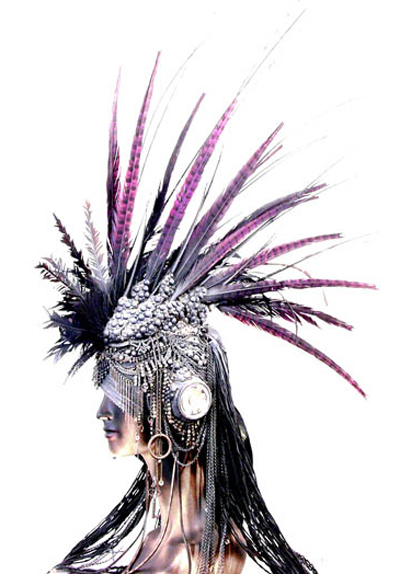
“She never sleeps but still dreams” PUREVILE! necklace – Donated by Wren Britton Wren made this exquisite piece expressly for our auction. You may recall that Coilhouse recently raved about Wren and his gorgeous, one-of-a-kind, “Post Apocalyptic Victorian accessories” and “clothing for Time-Traveling Dandies and Femme Fatales.”  Wren promptly returned the favor by blogging about us in a way that made everyone over here a little misty-eyed. It is an honor and a joy to enter “She never sleeps but still dreams” as our final listing.

Folks, you have until 11pm EST tomorrow, Aug 21st, to bid on these and all of our other breathtaking auction items. Best of luck, and as always, thank you for your kind support of Coilhouse Magazine + Blog: A Love Letter to Alternative Culture.

More last-minute party announcements tomorrow. Stay tuned!


New Fineries and Art Fund by Stephanie Inagaki

I know everyone’s waiting with bated breath for more news about Coilhouse’s Black & White & Red All Over Ball in New York. We’d been working on the announcement all weekend, but with more art and performers still being confirmed, and some other details to iron out, we’ve decided to wait just one more day to spill the beans. In the meantime, check out these lovely new creations from Miyu Decay, the jewelry and adornments company of artist Stephanie Inagaki (previously on Coilhouse). Shot beautifully by Allan Amato, the images feature models Lacy Soto, Alexandra Matthews, Jill Evyn, and Yellow Strange. All these items can be purchased at Miyu Decay’s Etsy store.

Later this month, Stephanie and the other artists involved in this shoot will be throwing a very special fundraising event in LA in honor of James Ribiat, Stephanie’s fiancee, who died of a heart attack nearly two years ago. We met Stephanie and James when they became impromptu bartenders at the Coilhouse launch party three years ago, and James’ passing was a shock for everyone on the staff. Stephanie writes:

James always encouraged me to be creative, to continuously do better and was my biggest critic.

Our family established an arts endowment in his honor, which will be used to give scholarships to local students who want to pursue the arts.  James was an ardent supporter, always donating to museums and the LA Philharmonic. We had received generous donations from friends to initially start up the endowment but it is necessary to raise more funds in order to give back to the community.  An endowment works similarily like a savings account, where you can only take off of what the interest makes.

I am organizing a memorial benefit show to raise more funds. It will be held on Friday, August 26th from 7pm-12am at Sancho Gallery in Echo Park. I am in the process of hopefully attaining an Alcoholic Beverage Control One Day License as well because everyone knows booze brings in the most cash! The entrance fee will include one raffle ticket, which I think will be about $10.  There will also be an option to buy more raffle tickets as well!

The event will feature performances by Daniel Ribiat of Cinema Strange and Colin Ambulance, as well as a raffle for artwork donations from Zoetica, Tas Limur, Yume Ninja, Paul Koudounaris, and many other artists. See the full details on at the event page here.

Fashioning the Sublime: Alexander McQueen at the Metropolitan Museum of Art

CONTRIBUTOR’S NOTE: This week marks the final chance to see Savage Beauty before it closes on Sunday, August 7th. Due to the exhibit’s overwhelming popularity, the Metropolitan Museum has scheduled special viewing times for the upcoming weekend. Do not miss the opportunity to witness this one-of-a-kind show honoring one of the most spectacular talents to ever grace the fashion world.


Alexander McQueen’s “The Horn of Plenty”,  autumn/winter 2009-10. Black duck feathers. (via)

“When I am dead and gone, people will know that the twenty-first century was started by Alexander McQueen.” -Alexander McQueen (1969-2010)

The death of the Scottish designer Lee Alexander McQueen in February of 2010 sent shockwaves throughout the fashion industry that rippled steadily outward, pervading the worlds of fine art, music, theatre and design. Suddenly, one of the bravest, boldest and incredibly imaginative forces in fashion was gone. McQueen’s suicide took place just a week after his beloved mother, Joyce, died from cancer, and with little more than a month to go before he was to debut a new collection in Paris. The international outpouring of grief was palpable, as everyone, from socialites, celebrities and fashion students from countless walks of life remembered the designer in extensive magazine features, blog posts, Twitter updates, and Tumblr tributes. McQueen’s strong features and piercing stare appeared on the cover of most major newspapers.


(via)

McQueen’s influence was undeniable; he had unleashed, with collection after collection, a romantic assault on the senses and invited his viewers to look with their minds, not merely their bodies, when deciding what to wear and how to wear it.

Never had a designer injected so much personal anguish and cerebral delight in his creations, and the materials he used, from pony skin, ostrich feathers, medical slides, hammered silver, balsa wood and tulle, became fashioning for the soul. For the past several months, devotees have streamed through the Metropolitan Museum of Art in New York City to personally experience many of his most iconic creations up close, presented in the Alexander McQueen: Savage Beauty retrospective. Curated by Andrew Bolton of The Costume Institute, the exhibit shows more than one hundred designs in tailor-made galleries befitting each of McQueen’s influences.

Wren Britton and PUREVILE Are Coming to San Francisco!

Designer Wren Britton revels in creating one-of-a-kind “Post Apocalyptic Victorian accessories” and “clothing for Time-Traveling Dandies and Femme Fatales of all ages {and genders!!!} and all those in-between.” Both the gentleman and his wares exude a winsome air of elegance, playfulness, and feral sensuality. Ooo la la!

Britton elliptically describes his aesthetic, and the PUREVILE line of accessories:

I have a background in fashion but I have always had a love for accessories…They really can make a simple outfit POP…or make an extreme outfit topple over with GLAMOUR….I think CoCo Chanel said something like “When you leave your house always turn around and look in the mirror and take off the first thing you see… {chuckle} …Me??? I turn around and the first SPACE I see I pin on something else!!!!!

All items are handmade…{With love}…All one of a kind…Made from antiques… Heirlooms… Bones… Doll parts… Keys… Lace… Oddities and Curiosities of all shapes and sizes….Things found in an attic…Things forgotten in a basement… Things behind glass in a museum… This is PUREVILE.

The New York-based bon-vivant will be holding a trunk sale of his gorgeously anachronistic finery at Five and Diamond in San Francisco this Thursday, the 28th of July, from 6-9pm. I’m definitely gonna be there, and a little bird told me Nadya might show up as well. If you’re in the neighborhood, please do drop in and say hello!

Also see:

Cargo Cult, Native Appropriations, and Voodoo Programming

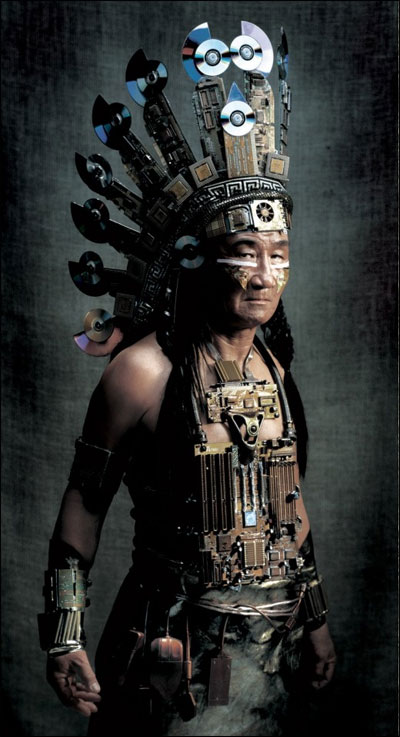
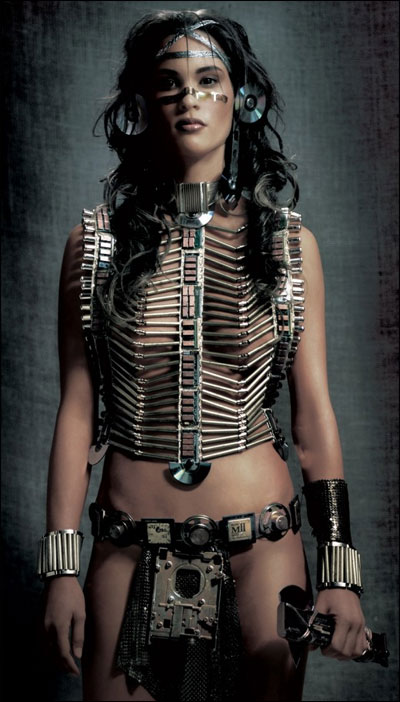
The campaign slogan was “Traditional Goes Digital,” and it included three images: Squaw, Brave and Chief. These were created for Australian printing company ColorChiefs in 2006, and recently resurfaced on the How to Be a Retronaut blog, to such wry comments as “Native American steampunk use ALL the parts of the 8088.” The images have also garnered some critique, both for their cultural appropriation and sexism. As blogger Ikwe recently wrote on Tumblr, “it’s not very creative to sexualize a native woman in this way but it’s packaged with a new futuristic sexy theme so it’s sooooo groundbreaking and chic. Oh yes, the ad also reminds us that we are moving forward from our primitive and savage ways. Meh.” Paging Dr. Adrienne!

Looking at this somewhat clueless ad campaign did lead me through an interesting Wikipedia tunnel. Come with me on a magical journey:

Cargo Cult on Wikipedia:

With the end of the war, the military abandoned the airbases and stopped dropping cargo. In response, charismatic individuals developed cults among remote Melanesian populations that promised to bestow on their followers deliveries of food, arms, Jeeps, etc. The cult leaders explained that the cargo would be gifts from their own ancestors, or other sources, as had occurred with the outsider armies. In attempts to get cargo to fall by parachute or land in planes or ships again, islanders imitated the same practices they had seen the soldierssailors, and airmen use. Cult behaviors usually involved mimicking the day to day activities and dress styles of US soldiers, such as performing parade ground drills with wooden or salvaged rifles.[5] The islanders carved headphones from wood and wore them while sitting in fabricated control towers. They waved the landing signals while standing on the runways. They lit signal fires and torches to light up runways and lighthouses.[citation needed] In a form of sympathetic magic, many built life-size replicas of airplanes out of straw and cut new military-style landing strips out of the jungle, hoping to attract more airplanes. The cult members thought that the foreigners had some special connection to the deities and ancestors of the natives, who were the only beings powerful enough to produce such riches.

Which led to Cargo Cult Programming on Wikipedia:

A style of computer programming that is characterized by the ritual inclusion of code or program structures that serve no real purpose. Cargo cult programming is typically symptomatic of a programmer not understanding either a bug he or she was attempting to solve or the apparent solution (compare shotgun debuggingvoodoo programming).[1] The term cargo cult programmer may also apply when an unskilled or novice computer programmer (or one not experienced with the problem at hand) copies some program code from one place and pastes it into another place, with little or no understanding of how the code works, or if it is required in its new position.

Voodoo Programming on Wikipedia:

In computer programmingdeep magic refers to techniques that are not widely known, and may be deliberately kept secret. The number of such techniques has arguably decreased in recent years, especially in the field of cryptography, many aspects of which are now open to public scrutiny. The Jargon File makes a distinction between deep magic, which refers to (code based on) esoteric theoretical knowledge; black magic, which refers to (code based on) techniques that appear to work but which lack a theoretical explanation; and heavy wizardry, which refers to (code based on) obscure or undocumented intricacies of particular hardware or software. All three terms can appear in source code comments of the form:

Deep magic begins here…

In fiction, the term comes from The Lion, the Witch and the Wardrobe, an early book from C. S. Lewis‘s The Chronicles of Narnia, which describes ancient laws and codes as “deep magic from the dawn of time.”

[via m1k3y]

“Why You’re Wearing Feathers Right Now” by Jenka Gurfinkel


Jocelyn Marsh wearing a headdress by Tiffa Novoa. Photo by Brion Topolski. 2005.

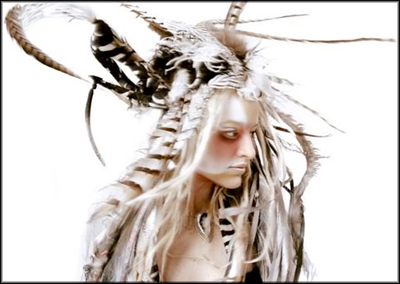
Recently, Jenka Gurfinkel –a longtime mover/shaker in the California indie cirque scene– wrote “Why You’re Wearing Feathers Right Now”, a fantastic personal essay that happens to dovetail nicely (pun intended) with the extensive Tiffa Novoa love fest we ran in Coilhouse Magazine last year. Gurfinkel’s unique take on the current exploding trend of plumage in both indie and mainstream fashion is a deft mix of memoir and cultural nodal point-mapping:

“In the summer of 2011, feathers have become a staple of every sartorial and tonsorial aspect imaginable. The other day I was asked my opinion as to where this current ubiquity of feathers has come from. But as it turns out, I happen to have something better than an opinion: I have an explanation.”


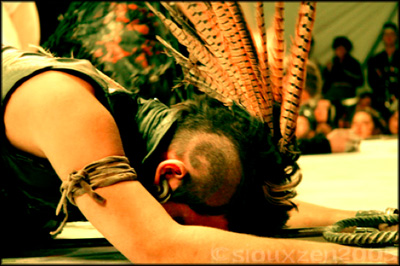
El Circo performer at Burning Man, 2005. Photo by Siouxzen Kang.

“Just two years out of college, I stumbled into the role of production manager for a newly-formed, L.A.-based vaudeville cirque troupe called, Lucent Dossier. Through that initial involvement with Lucent I would meet many other circus groups, including El Circo, who were by then based in San Francisco along with The Yard Dogs Road Show and Vau De Vire Society. There was also March Fourth Marching Band in Portland, Clan Destino in Santa Barbara, and Cirque Berzerk, and Mutaytor in L.A. As these acts grew, the I-5 Freeway became a central artery of culture, pumping a distinct combination of art, music, fashion, and performance up and down the west coast. A social scene evolved around these circus troupes the same way the punk subculture sprang up around the bands that defined it.”


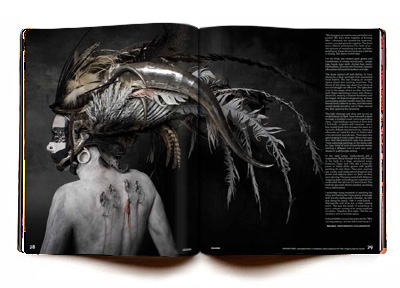
Full page Issue 05 Coilhouse spread of performer Joshua David wearing a Ernte feather headdress by Tiffa Novoa. Photo by Spencer Hansen.

“In the early to mid-aughts (when the photos above were taken) the feather was as de rigueur a cultural signifier within the circus scene as the safety pin was for punks in the late 1970s and early 80s. In fact, back before it was so commonplace as to lose meaning (or induce a national feather shortage), condescending terms for those sporting the look sprang up within the subculture: “Feather mafia,” was one I heard thrown around; ‘Trustafarian peacock‘ even made it into UrbanDictionary.com. And then, something else began to happen…”

View the full essay at Social Creature dot com.

As far as this ubiquitous trend of wearing feathers goes– if you adorn with birdie bits, please consider researching where they come from! Buying ethically and responsibly is beautiful. Here are some great resources:

Welcome the Coilhouse Issue 06 Advertisers!

Coilhouse Issue 06 is coming soon, but it’s not quite there yet. With more pages, more contributors, and more articles than any previous issue, it’s been quite a journey to put this one together. Thank you all – readers, friends, collaborators, and advertisers – for your patience. Because this issue is still deep in the production stage, we’d like to share our new Issue 06 advertisers here on the blog. Joining our existing family of small-business advertisers, these guys will appear on the pages of Issue 06. Check them out and support their wonderful creations. Here they are!
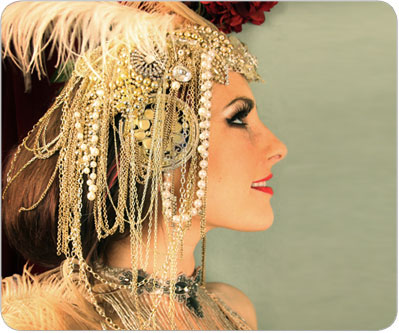
Medina Maitreya is a costume designer who crafts unique outfits and accessories by mixing new and vintage materials. Working a palette of vintage lace, beads, coins, feathers, silk, flowers and other “antique bling”,  Medina constructs bespoke items inspired by everything from belly dance to circus arts to Erté. You may have seen some of Medina’s extravagant costumes sported by the Lucent Dossier Vaudeville Cirque, March Fourth Marching Band, Kami Liddle of the Bellydance Superstars, and  Zoe Jakes of Beats Antique. You can see some of Medina’s creations on her blog, and many more on Facebook.
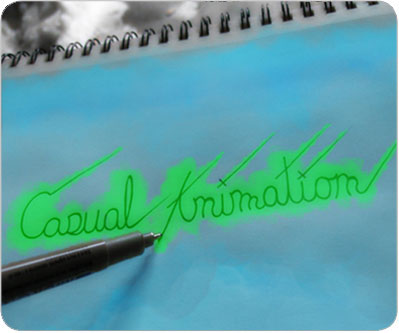
Casual Animation specializes in creating affordable custom animations based on your concepts. You supply the idea, pictures and audio: animator-for-hire Kenneth Sanders will create an original cartoon in your preferred file format (avi, mov, m3v, etc.) based on the assets that you provide. Collaborate on any concept your heart desires: experimental surreal shorts, character sketches, music videos. Plus, an optional DVD of your cartoon could be mailed to you. You also have the option of having your cartoon featured on the Casual Animation website.

Constance is a freelance artist, designer and photographer whose work and blog can be seen at i heart constance. Constance specializes in helping small business craft a unique identity. Recent clients include Blue Betta Media, Big Purple Tree, and Saucy Ladies. A full portfolio of Constance’s 2011 design work can be found here. Constance is available for any design task ranging from a complete brand/identity overhaul to custom type treatments, business cards, package development, logo design, information layout, posters, flyers and much more. She’s also available for photography assignments including commissions portraits, product shots (yum!), compositing and retouching. In her website manifesto, Constance writes, “I write to inspire you to push your creativity / I write to provoke your sense of adventure / I write to motivate you to dream big.”
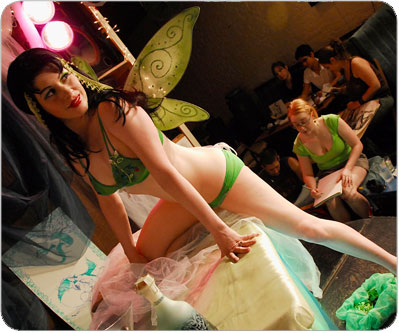
Dr. Sketchy’s Anti-Art School is a worldwide alternative drawing movement in which art, booze, and burlesque collide. Every month, over 3,500 artists gather in nearly a hundred cities to sketch glamorous alt-culture models and compete in drawing contests in an atmosphere of creative mayhem. Artist, model and oft-Coilhouse collaborator Molly Crabapple (who’s about to embark on a Week in Hell) kicked off the first Dr. Sketchy’s event at a dive bar in 2005 as an antidote to the stiff, sterile life drawing classes she had posed for in the past. Local Dr. Sketchy’s branches are known for outrageous themed nights. At a recent Dr. Sketchy’s event in New York, for example, an elaborately-costumed Stoya and Jiz Lee acted out the story of Jack the Ripper while raising funds for a local sex workers’ rights campaign.

Ember Nomad a clothing company created by fashion designer Danica, and specializes in flowy, fun clothing “for travellers, dancers, and anyone who wants to feel a little bit of magic in their life.” The image above is from Ember Nomad’s 2010 Aphrodisia fashion show; more images can be seen here. Check Ember Nomad’s Facebook Page and Etsy Store for new items. Stripey bloomers, ruffled boleros, leather harnesses, hooded tank tops, and more! The cleavage-enhancing circus vest is hot.
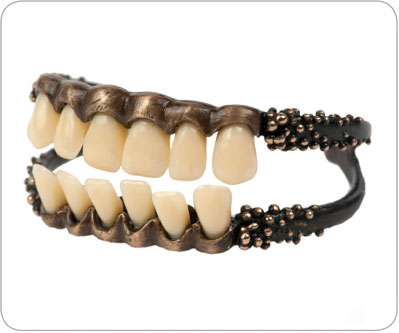
Previously featured on Coilhouse, the Gilding Primal Instinct jewelry line by artist Danielle Nicole Hills features large theatrical pieces intended to transform the wearer into characters inspired by archetypes of human behavior. The jewelry line is at once elegant, theatrical and violent. Dental cuffs, blood-filled medical sample necklaces (or gold-filled ones!), wearable metallic claw predator rings, a majestic antler headdresses, a tooth-adorned surgical mask, and other ferocious adornments can be found on the Gilding Primal Instinct site. The materials list for each item is fascinating: for example, the surgical apron is made out of “copper, bronze, latex resin, taxidermy chick fetuses, 22k gold leaf, and blood.”
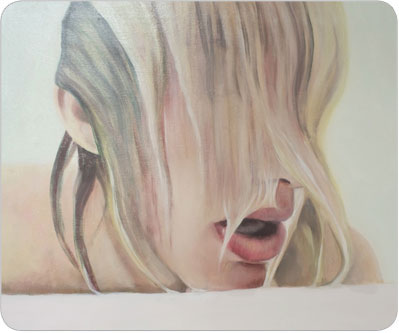
The Pornographic Portrait Project is a series of paintings by artist Molly Peck depicting the intimate orgasmic experience in a lush large-scale format. The current series includes several vibrant portraits of people in the throes of passion, and Molly needs your help to grow the project. “Shortly after embracing the idea of this project,” writes Molly, “I realized that it would be difficult for me to capture source images/photo references myself, which is where the collaborative or subject-submission angle came from. I am asking you to send me an image of the moment you ‘let go’, from which I will create a painting (if it inspires one).” The initial concept for the series focused on people’s faces, but has expanded to include “a more broad representation of release, as the individual sees it or defines it (but sticking in the sexual/erotic arena).” Molly welcomes submissions: check the FAQ for more info!
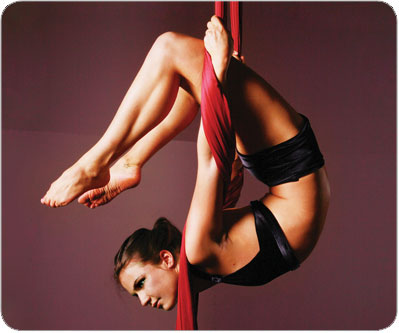
Night Flight is an aerial performance and training company based out of Portland, Orgeon. Founded by performers Gemma Adams and Stephanie Lopes, Night Flight performances combine breathtaking aerial artistry and playful storytelling. The Night Flight Aerial Art Studio offers 8-week intensive series classes, drop-ins, and private lessons focusing for aerial arts silks (tissu), static trapeze, hoop (lyra), rope (corde lisse), sling and straps, as well as strength and flexibility training. The next batch of classes starts up in July; check the class schedule for details. Those of you who don’t live in Portland should still check out this breathtakingly sensuous performance by Night Flight on silks and duo hoop, as well as this gorgeous Flickr photo set featuring Night Flight performers shot by Christopher Perez.

Opir is a politically-charged industrial music project by New York-based artists Spencer Thomas and Vivienne Gucwa. Opir’s first album - America: 25 Years in Review (1983-2008) – is a thoughtful reflection on America’s politics from the rise of Reagan to present day. Opir’s polished, caustic soundscapes, rhythmic textures, distorted samples, and dark ambient industrial beats recall Frontline Assembly, Hocico, Mentallo & the Fixer, and Muslimgauze. Beneath the visceral, corrosive auditory assault and dancefloor appeal of each track lies a richly-contextualized political message. Opir’s website provides a breakdown of song lyrics for the first three tracks, referencing economic theorists, social policies, historical events and legislations to help break down each song’s meaning. You can hear three song samples on Soundcloud, and you can get the album on iTunes or on Amazon.

The Idirlion Project is a fusing of chaos magick / sigilization with old school shamanism, all filtered through a future tech approach to altering reality. Readers who enjoyed our Grant Morrison interview in Issue 04 (as well as our articles on Jodorowsky, Larkin Grimm, Kenneth Grant, and other mystics throughout time) will appreciate the services that the Idirlion Project has to offer. Drawing on both Irish and Peruvial traditions, Idirlion will aid the client in the creation, casting and charging of a sigil. “The catchy tagline that we use on the site is ‘Shamanic Sigilzation For A Better Tomorrow.’ Kind of adds a nice silver age, Bradbury-esque touch to what can often be serious work.” Last month, the founders of the Idirlion Project helped launch the Starseed Institute For Shamanic Studies, an intensive four-weekend training program that explores the four aspects of the shamanic medicine wheel.
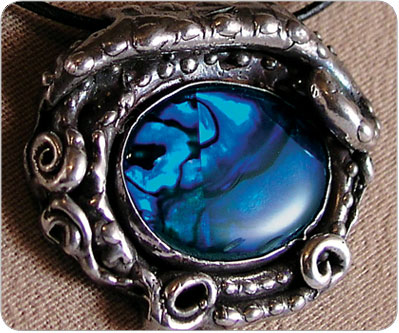
Jewels by Mouse, created by Valerie Fordham (Mouse) and Jon Boisseau, offers unique handmade jewelry and jewelry boxes. Mouse describes her jewelry as “sparkly, tactile, beautiful, and peculiar.” Tentacles, mixed metal and rivets, unusually shaped stones, spiraling organic forms, iridescent glass beads, cast bones, and “textures that want to be touched.” Mouse only uses sterling or fine silver, never plate, and the copper and brass in her jewelry are backed by sterling. Check out the onyx spiral earrings, Midsummer Vines necklace, copper keyhole bracelet, and spiral dragonfly pin.

Retro-a-Go-Go sells accessories, jewelry and home décoror inspired by the 50s and beyond: hot rods, rockabilly, Irving Klaw, kustom kulture, psychobilly, robots, zombies, monsters, tattoos and pop art. Exclusive lines include Bettie PageBuck RodgersHot Rod DeluxeKen the Flattop, and Mitch O’Connell. There are flasks, bill boxes, parasols, cigarette cases, belt buckles, and lots of retro tees for guys and dolls featuring everything from pin-up starlets to pulp horror novels.
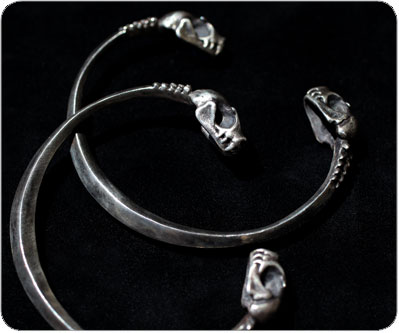
Previously featured on Coilhouse, Miyu Decay is the new jewelry venture by artist Stephanie Inagaki. Since we last covered Miyu Decay, the shop has grown significantly. Whereas previously, some of the jewelry was only available in sterling silver, there are now pewter versions for those of us on a budget. For example, this gorgeous bat skull necklace for $350 is now available in pewter for $50. Other new creations in the Miyu Decay shop include an asymmetrical feather and lace collar, the Scottish tribal queen headdress, and the black chain skull bracelet.

All these companies, along with many of the advertisers we’ve blogged about previously, will appear in our upcoming Issue 06. Stay tuned for more updates!
Jared Joslin: Stop, Look, and Glisten


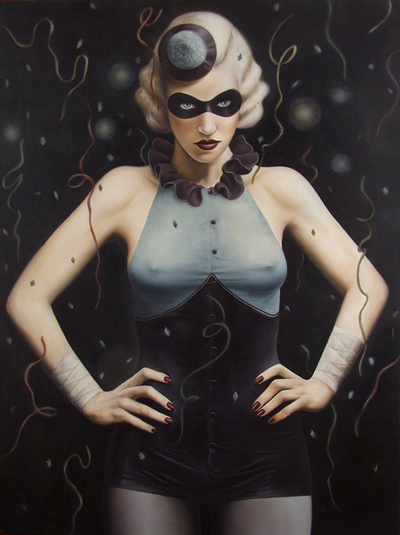
“Masquerade Ball” oil on canvas, by Jared Joslin

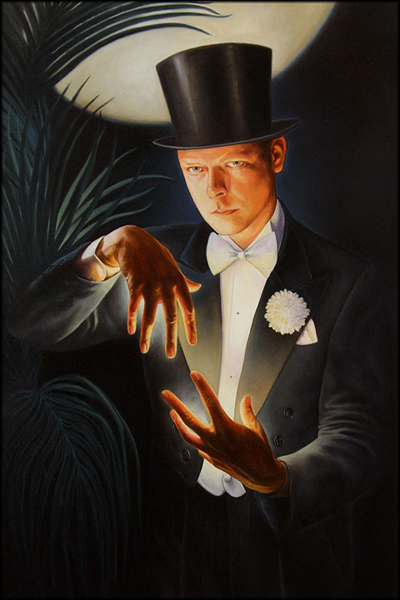
Jared Joslin’s paintings are gilded portals to the sensual past. Exploring his work, we encounter thriving pockets of nocturnal Weimar nightlife, Dust Bowl era carnivals, and glittering pre-code Hollywood nightclubs. Jared has said that what fuels his vision is “the feeling that you don’t necessarily fit within your own time. You’re drawn to the past in ways you can’t quite understand, but feel the pull of it and want to take on [its] dreams.” His creations truly do seem timeless, and they are dreamy indeed.

Just in time for Jared’s current solo show, “Stop, Look, and Glisten”, Coilhouse is proud to to present Part One of an in-depth interview with this remarkable painter and longtime friend. Part Two of our feature will be more lavishly presented in the impending sixth issue of Coilhouse Magazine. (Hooray, yes, it’s coming soon!)

Comrades, should you be in the Midwest between now and June 18th, be sure to stop by Firecat Projects in Chicago, Illinois. These pieces are a marvel to see in person.

The “Stop, Look, and Glisten” reception is tomorrow evening, (Friday the 27th). More info here.

Set the tone for us, good sir. What music are you listening to? Cocktails? Is your wife (fellow artist, oft-featured friend and correspondent of the ‘Haus) Jessica nearby? What art are you working on, currently? And she?
It’s an unusually beautiful evening for Chicago. The windows are open and a lovely breeze is circulating. Fad Gadget is playing in the studio and I can hear it a tiny bit from the kitchen where I’m working. Jessica is making a good amount of ruckus, drilling holes to inset small brass balls into the horns of a circus goat. She is in the final stages of completing work for her solo show at La Luz de Jesus Gallery next month. Cocktails…yes indeed! How did you know? A lovely Sazerac Rye Manhattan is keeping my blood thin and my gears well lubed. Lately I’ve been working in the studio on some new ideas and approaches, mainly experimenting with watercolors. Currently on the easel is a watercolor painting of myself in Pierrot attire nestling against a costumed lady at a masquerade ball…

Revisiting The House of Collection


Photo by Trevor Tondro for The New York Times

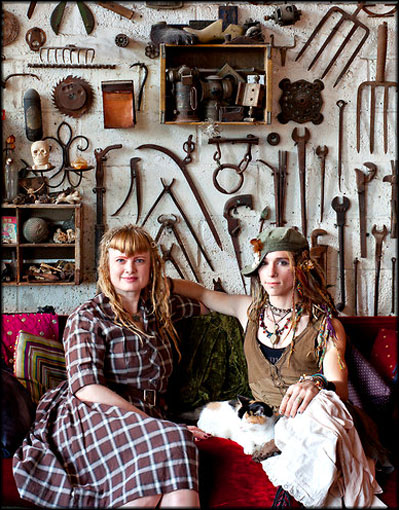
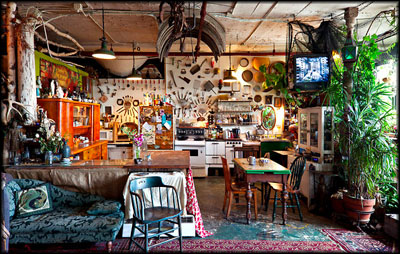
Two urban faery friends of ours in Williamsburg, ladies who have cultivated one of the most unique and enchanting domiciles you’ll ever see, are attracting a lot of attention, lately! Coilhouse first posted about Paige Stevenson and her Brooklyn loft, now called The House of Collection, in Feb of 2008. Since that time, the ever-inspiring Paige and her consummately luminous domestic partner, Ms. Ahnika Meyer-Delirium, have been working (and playing) toward making their wondrous 2000 square-foot loft more vibrant than ever.

Paige’s interview with All That We’ve Met last month is sure to inspire. Even more recently, the New York Times’ in-depth coverage of the House of Collection, –which features both Paige and Ahnika discussing their kindhearted philosophies of life and decor–  offers a gorgeous tour of their abode. An excerpt from that article, titled “In Williamsburg, a Live-In Cabinet of Curiosities“:

It’s the way objects are deployed — all over the place, in large quantities and with a sense of play — that makes for something unexpected. A mounted deer’s head is one thing. A deer’s head with a pink brocade eye patch, false eyelashes and a glittery nose is another.

Likewise, grouping all the plants in the living room, even when it’s a room as large as theirs, makes an impact. “People sort of melt open,” Ms. Meyer said. “They feel as though they’re in a magical fairyland. But they also feel at home.”

The House of Collection is rich in such contrasts, a place cozy and vast, one that is urban but, thanks to the greenery, the farm tools and animal forms, has a country feel. It’s fitting for a couple who are both very domestic and deeply unconventional.


Photo by Trevor Tondro for The New York Times

New York City can sometimes feel like an especially cold and aloof realm… yet the HoC is as warm, welcoming and accepting a place as you are ever likely to observe.

Ah, you beauties! Well done.

Diaghilev Gets His Due: The Golden Age of the Ballets Russes at the Victoria & Albert Museum

Editor’s Note: We are delighted to welcome writer and dancer Sarah Hassan into the Coilhouse family. Her premiere piece for us is a 3000 word feature about Sergei Diaghilev and the Ballet Russes. This is definitely one of the most informative, inspiring, infectious posts you’ll read here this month, so settle in, and enjoy!


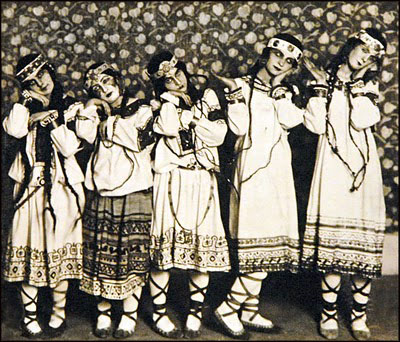
Dancers in the original Le sacre du printemps production.

The Théâtre des Champs-Élysées in Paris seems an unlikely venue for a riot. Yet almost one hundred years ago, on May 29th, 1913, fist-fights broke out in an audience made up of socialites, musicians, and artists. The institution in question was one that by today’s standards seems chaste and predictable: the ballet.

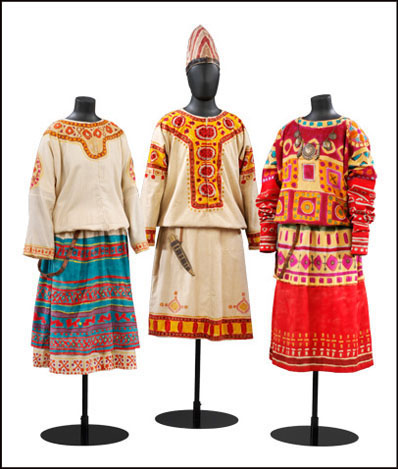
The premiere of Le sacre du printemps by Sergei Diaghilev’s Ballets Russes has become the stuff of legend. Against Nicholas Roerich’s backdrop of a primitive Russia, the radical score by Igor Stravinsky came alive to the choreography of Vaslav Nijinsky, the danseur noble darling – and object of Diaghilev’s affection – whose unsurpassed defiance of gravity on Europe’s great stages had been leaving balletomane’s breathless. Now, the dancer whose roles included a lovesick puppet, a sprightly rose, and a predatory golden slave presented a complicated tableau of sacred ritual. With balled-up fists and downward glances, his dancers jumped and stomped their pigeon-toed feet in time with the violins as if trying to conjure up the ghosts of pagan tribesmen. The heavy woolen dresses painted with folk patterns on the peasant girls were in place of the frothy tulle skirts of nighttime sylphs and bejeweled torsos of slinking odalisques expected from a program a’la Russes.


Nicholas Roerich’s Costumes for Le Sacre Du Printemps.

The production, presenting a ‘new type of savagery,’ caused a literal aesthetic outrage among the haute Parisian audience. Backstage, as the birth of modern dance unfolded, Nijinsky screamed the tempo counts in Russian to dancers who couldn’t hear over the booing, while Stravinsky held him by his coattails lest the crazed choreographer topple into the orchestra. Diaghilev attempted to placate the uproar by turning the house lights on and off. Yet despite its unsuccessful reception, Le sacre du printemps was performed six times, and Diaghilev declared the opening night scandal to be ‘exactly what he wanted.’ It was clear that the ballet was no longer safe.

Thirty-two years after Le sacre’s premiere, Nijinsky, having succumbed to insanity, leapt for a photographer’s camera in a Swiss asylum. The image captured the aging dancer smartly dressed in a suit suspended in the air, proof of his once otherworldly powers. Yet, one can only wonder if the height Nijinsky was attempting to recapture was not his own, but that of the sacrificial virgin he created, dying from her own mad dance in a flash of beastly glory.


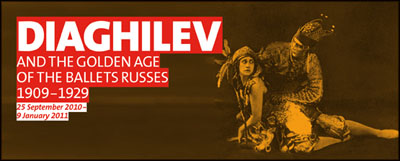
The banner at the Victoria & Albert Museum for Diaghilev and the Golden Age of the Ballets Russes.

All the hoopla generated by Darren Aronofsky’s psycho-sexual melodrama Black Swan made it easy to believe that ballet had been once again recovered from the ashes of its own antiquity. With Jennifer Homan’s attempt to condense 400 years of history with her book, Apollo’s Angels, the ballet’s ability to survive in an age where anything goes and everything changes came into question – the blood-stained tutu of Natalie Portman’s Nina Sawyer notwithstanding. Madness is, by Aronofsky’s account, the cost of greatness. This idea is artistic old-hat, retold through ballet by Moira Shearer’s exceptional Victoria Page in The Red Shoes – a movie loosely based on Diaghilev and his company – and all the gory details of Swan, from broken toes, bone-thin frames, and endless retching struck a resonant, less glamorous chord. The curtain was pulled back to reveal an art that demands perfection as you claw your way to the top while clawing yourself apart. Ballet, according to Black Swan, is more an arena for the cruel and calculated and less the foundation for beauty, innovation and fantasy.

Oh, how the days of Diaghilev would beg to differ.