Donald Weber takes a heart wrenching look at the city of Zholtye Vody in Ukraine. Located near two nuclear waste sites and an enrichment factory in the hub of the Soviet Union’s uranium mining and enrichment area, the homes were built using highly contaminated materials. With a higher radiation level than Chernobyl, over half the population of 60,000 people suffer from some sort of radiation sickness.
Upon first viewing this slide-show I was immediately struck with the strangest memory. Specifically, a memory of being a child, sitting in the ophthalmologist’s office and leafing through a copy of National Geographic which contained a large article on the Chernobyl disaster. The same hollow and broken faces are here in Weber’s essay. There is some joy here too, but it never seems to truly outshine the pain.
The image below was especially affecting and I had mixed feelings posting the set. It struck me that my vision of these post Soviet states is largely informed by images like this — a collection of gnarled women in babushkas, all furrowed brows and vacant stares, and emaciated youths, bald and hurting. It’s a world where lives are lived entirely within tiny, cramped apartments in stark, concrete tenements whose facades and walkways are slowly succumbing to an inexorable army of vegetation. I find myself thinking that there must be more to these people’s lives than this and fearing that there isn’t. I worry that I am passing on a misconception; proliferating a stereotype. I suppose that if the purpose of art is to make us question then, at least in my case, Daniel Weber has succeeded.
Summer’s in full swing on this side of the globe. And while some of us prefer to spend it muttering curses from our dark, igloo-cold habitats, others revel in everything the roasting season has to offer, from scant jumpers to synchronized gymnastics.
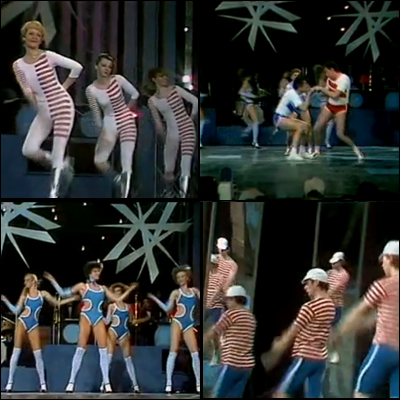
For fans of knee socks, stripes and side ponytails everywhere, here’s a gem I’ve been saving for this special time of year. Brought to you by the ever-dauntless Ballet Company of the Czechoslovak Television, this mighty dance number sets out to demonstrate a harmonious marriage of disco and sports. Watch, as these leggy athletes march, kick, and river-dance their way into your heart. Also, look out for inexplicable boxing pantomime around the middle. A choreographic triumph!
Back in the summer of 2006, DJ Fresh (drum n’ bass/dupsteppin’ badass from Britain) dropped a heavy, gritty, GAWjuss record called Escape From Planet Monday. This coming August, Fresh is back with his second full-length solo album, Kryptonite. Here’s the video for the first single, a revamped version of his ’08 release “Gold Dust”, featuring new vocals by the Jamaican dance hall diva Ce’Cile and astounding performances by American Double Dutch Champions, Jumpers In Command:
If dis don’t rev ya blood up, check dem vitals. (Directed by Ben Newman.)
Want to explore the rich history of Double Dutch? Start off with “Ready Your Ropes“, an in-depth three-part article over at Holy Roller Productions dot com. Fantastic primer.
The YouTube channel of Toby Turner (aka Tobuscus) has been a guilty pleasure ’round these parts ever since he first posted “FALCOR THE URINATOR” back in 2007. That’s a very long time in internet years– almost as long as the amount of time that someone here at the compound [not naming names] has been secretively compiling a vast personal stoke material archive of erotic clipsof amorousturtles. Imagine [REDACTED]’s joy when they discovered that Tobuscus made this remix:
Hot, steaming pantomime on order today for the FAM as we present The Triplets of Belleville (Les Triplettes de Belleville), the surreal animated adventure from 2003, written and directed by Sylvain Chomet.
Triplets tells the story of Madame Souza who is raising her son, Champion. Noticing his sadness one day, she purchases for him a dog named Bruno and though this does cheer him up, his joy is short-lived. It is only after she realizes his interest in bicycle racing and gives him a bicycle of his own that Champion finds real happiness. Fast forward and, years later, Champion has become a world-class cyclist, competing in the Tour de France. It is during this race that a mafia boss kidnaps Champion and two other cyclists, bringing them to the town of Belleville in North America and hooking them up to a virtual-reality cycling machine, allowing patrons to gamble on the races. Madame Souza and Bruno follow, of course, attempting to rescue him from the mafia’s nefarious clutches; meeting along the way the titular triplets, a trio of retired cabaret singers.
It’s a strange arc, then. Triplets starts off easily enough, slow and methodical, but upon the kidnapping of Champion things surge into overdrive, getting progressively weirder and the two don’t quite mesh as well as they perhaps should. It’s almost like they stitched together to different films. That said, this observation does little to detract from my enjoyment of the film. Chomet has created a beautifully realized world here with his characters barely uttering a single word. The version above features no English subtitles, an omission you will hardly notice. Every emotion and thought is spoken with subtle, expressive animation. In addition, the movie features an outstanding soundtrack inspired by the jazz of the 20s and 30s (the film even goes so far as to reference both Django Reinhardt and Josephine Baker in the first few minutes.)
In animation at least, I find myself drawn to pantomime. It strikes me as a testament to an animator’s talent, this ability to abandon the spoken word. In that way it’s interesting to note that Pixar, who’s Finding Nemo beat out The Triplets of Belleville for best picture has begun incorporating this aesthetic more in their recent films, most notably Wall-E (perhaps my favorite from them). Chomet’s new film, L’Illusionniste will see a release in the States in December and I find myself just as anxious as when I first saw a trailer for The Triplets of Belleville. I just can’t see his oeuvre losing its charm.
SoCal residents, we have some unfortunate news: due to some insurmountable logistical snags, we’ve had to cancel the party we scheduled at Meltdown Comics for this coming Saturday, July 17th. Boooo! Sad. We apologize for any complications this may cause to your weekend plans. Hopefully we can make it up to you by organizing something even more extravagant at a later date.
In addition to bringing Issue 05 for purchase, we’ll also have archival copies of 01, 02, 03 and 04 on display (meaning, everybody’s welcome to paw through them, but should one to attempt to filch anything, they’ll find themselves staring down the barrel of an Unnatural Selector). The exact time and booth number has yet to be determined, but our signing will take place at some point on either Friday or Saturday in the main convention hall. Check back here or join our mailing list for that update.
We’d like to thank Richard Taylor et al at Weta for their unflagging support of Coilhouse. They’ve been incredible friends to us over the years. Also, HYOOGE hugs to mister R. Stevens for creating these wonderful co-editor portraits for #05. We lubs ’em ever so. Click through to see higher res versions.
From Trevor Jimenez comes the story of a man’s deadly addiction to one sugary, citrus dessert. 2007’s Key Lime Pie features a heavy, film noir veneer, complete with a hardened narrator who sounds as though he’s smoked since birth or, perhaps, needs to eat more fiber. Also, consider this: Death in a trench-coat sporting a Thompson submachine gun scythe. How can you resist?
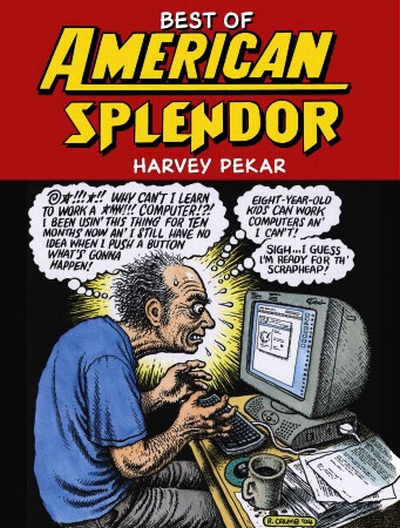
One of Cleveland’s great contributions to the world passed away yesterday. Harvey Pekar, curmudgeon and cartoonist, was found dead of unknown causes by his wife Joyce Brabner. He was 70 years old. Pekar was, of course, best known for his award-winning comic American Splendor, an autobiographical work that detailed both his daily life and the city he lived in.
Pekar’s start in comics came via Robert Crumb, the two having become friends in the ’60s after meeting at a swap-meet. Crumb encouraged Pekar’s interest in comics and his first story, “Crazy Ed”, appeared in Crumb’s The People’s Comics. Crumb would also go on to illustrate the early issues of American Splendor.
It’s an intriguing aspect of Pekar’s work. Most autobiographical comics are both written and illustrated by the same person, if for no other reason than than the personal nature of the subject matter. American Splendor, on the other hand, was illustrated by a rotating lineup of artists, including Spain Rodriguez, Joe Sacco, Chester Brown, Jim Woodring, Alison Bechdel, Gilbert Hernandez, Eddie Campbell, and a host of others, including many Cleveland-based cartoonists, his wife Joyce, and writer Alan Moore.
Despite all this contributing talent, American Splendor was Pekar’s in every way – and not only because he happened to star in it. Pekar was unflinching in its depiction of his life. Whether he was detailing his work as a file clerk at the VA hospital or the harrowing year of undergoing treatment for lymphoma, Pekar’s writing managed to be both plain and poetic. It also benefited from at least seeming to be completely unfiltered. It’s honesty sprang from the distinct impression that every neurotic thought, all those feelings of self-doubt, loathing, and anger, all the things most people filter out when relating their stories was there on the page.
Since Ross has been on a bit of a John Hurt kick lately, writing up both Jim Henson’s The Storyteller and Krapp’s Last Tape in recent editions of FAM, this week’s better-late-than-never Better Than Coffee follows up with Hurt’s more musical side: his turn as an experimental composer in Jerzy Skolimowski’s 1978 horror drama The Shout. The above is a scene from the movie with absolutely no spoilers; just a tactile landscape of metallic noise. [Via Wobbly]
And so, with a melange of yellow cards, red fury and vuvuzela farts, the World Cup has come to a close. In adjunctive honor of the ensuing global FIFA spaz-out, here’s the raddest Swedish synthpop football anthem ever made, courtesy of Tyskarna Från Lund. (Extra points of awesomeness for that Nina Hagen reference.)