Tom LaBrie is a man’s man and a ladies man. He’s a man with a form fitting, wide collared shirt and slim, flared pants. He’s a man with a moustache and an unfortunate haircut. Tom LaBrie is also a man on a mission, and that mission is to get you into the squishy embrace of a fabulous new waterbed. Tom LaBrie made his pitch as the host of “Night Comfort Theater” on Sacramento-based UHF station KTXL in the 1970s and ’80s. In soft, sultry tones he hypnotizes the viewer, his words washing over them like warm, honeyed laudanum, enveloping them in their easy chairs, beckoning them to taste the aqueous pleasures his waterbed warehouse has to offer. Like a polyester siren, his song is nigh irresistible to all but the most steadfast insomniac Odysseus.
Is it even necessary to discuss the utter insanity of Japanese media? I mean by this point I think it has been firmly established that, to the Western sensibility, their commercials are bat-shit crazy; 30 second recordings of spectacularly horrible acid trips. The Japanese version of Mad Men would require the talents of David Lynch and Takashi Miike working in concert. To stare into the mind of the ad man of the Far East is to stare into the face of God. We blink, for our feeble brains cannot process its wonder.
This ad for Dole bananas is no different. The Dole Banana Man struts down the street as people accost him; demanding satisfaction, which he obliges. A woman sitting on a bench despondent, it seems, from a lack of bananas. Not for long, however, as the Dole Banana Man comes upon her and, smiling at the camera, his bananastache atwitter, he bestows on her a bounty of fruit sprayed forth from one nostril; a potassium rich snot-rocket. In doing so he joins the ranks of other, food-bestowing characters like the Cheese Man who shills for Nissin, assaulting people in their homes in order to add cheese to their cups o’ curry. He even has a love interest now. No doubt Dole will do the same and give the Dole Banana Man a female counterpart; someone who he can grope with his sweet, fleshy digits.
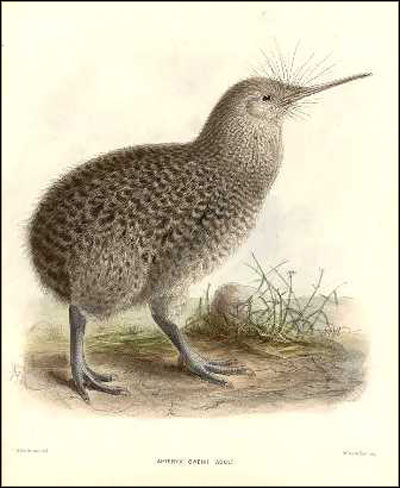
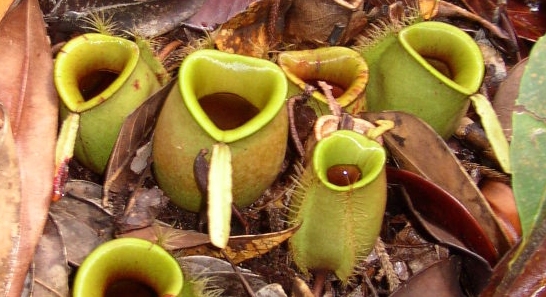
The Flora and Fauna tag on Coilhouse reveals many wonders. From actual, real-life creatures – such as the rare, flightless spotted kiwi that made an appearance in yesterday’s BTC, the furry and feathered stars of Larytta’s living kaleidoscope, some stylish camel- and Ninja Turtle-shaped poodles, the memorable, never-safe-for-work Pigbutt Worm, to the imaginary – demonic insects,furry fungi – it’s one exotic menagerie of creatures you either wish you had as pocket-sized talking sidekicks, or hope your enemy encounters in an empty locker room. But there’s one thing missing – weird, real-life plants. Of which there are plenty. The Corpse Plant, for instance, emits the scent of rotting meat to attract bugs. Black hollyhocks are “rock stars of the plant world,” according to Scottish gardener Diane Halligan, explaining that black flowers “seem to rebel against nature and draw us to their nonconformity.” The sleek appearance of Nepenthes ampullaria’s “scavenging cannibal leaves” rivals 1stAveMachine’s bio-electronic botanical fabrications in terms of futuristic style. To name just a few.
But the real star of today’s post is the Rose of Jericho – the “resurrection plant” that can be found in the deserts of Mexico and the Middle East, and possesses the seemingly magical ability to, when placed in a bowl of water, become green and lush in a matter of hours after appearing brown, brittle and lifeless for years. When the plant is removed from water, it shrivels up again, until the next time it’s placed in water. This can be done many times over. One romantic caption from the YouTube video above reads, “it travels blown by the wind, where there seems to be no life, its roots have no home and seem dead, but its heart is emerald green-blooded and it opens wide to the slightest presence of water, then it goes back to sleep… and so it goes, eternal.” The Rose of Jericho is said to have many magical properties; some believe that letting it bloom inside the home brings luck in money, while others believe that carrying bits of the plant on one’s person can keep away negative energy. Even if none of that is true, there’s something deeply hypnotic and perhaps even spiritual to watching this plant unfurl. Especially in the clip below, when set to Clint Mansell’s music for Requiem for a Dream. (By the way, these plants are available in most botanical/witchy stores for under $10.)
[Good morning, dear comrades. I’m chugging redbull and running to catch a ferry in a few minutes, so please forgive the sloppiness of this edition of BTC!]
Last night, I and ten other curious folks took a guided nocturnal hike through the Karori Sanctuary. A dense and verdant square mile of forest located mere minutes from downtown Wellington, the preserve is surrounded by a predator-proof fence (specially designed to keep out invasive species like hedgehogs, possums, cats and dogs), and has become “a safe haven for some of [New Zealand’s] most iconic and endangered native animals, including tuatara, little spotted kiwi, saddleback, hihi and giant weta.”
Our lovely tour guide, Tracy, told us that there are approximately 100 little spotted kiwis living in the sanctuary. They’re extremely shy and elusive critters, so there was no guarantee we’d get to see one. But we lucked out and encountered one foraging in the underbrush mere feet from the trail. He was one of most adorable, lovable creatures I have ever seen. I will cherish the memory of his fuzzy rump bounding off through the twilight for the rest of my life.
There are hundreds of different factoids I could share about his species. Perhaps when I return from my travels in a few days, I’ll add some of them in comments. Hopefully some of Coilhouse’s more knowledgable NZ and/or birding readership will chime in as well?
For now, here is the Maori legend of New Zealand’s beloved hairy little whiskered flightless bird, imparted by Ben, Hayden and Gavin, three young storytellers from Mangakahia Area School in Titoki, Northland:
The Maori Legend:
Why Kiwi Lives on the Forest Floor
One day the king of the forest, Tanemahuta, was walking through the forest. He looked at his trees and noticed that they looked sick. They were being eaten by the bugs that lived on the forest floor. Tanemahuta told his brother Tanehokahoka (King of the sky) what had happened to his children the trees.
Tanehokahoka wanted to help his brother so he called all the birds together for a meeting. Tanemahuta said to them all
“The ground bugs are eating the trees. I need one of you to give up your life in the sky and come and live on the forest floor so the trees will be saved. Who will come?
Tanemahuta and Tanehokahoka waited and listened – but everything was quiet, and not a single bird spoke. Tanehokahoka turned to Tui…
As longtime readers will have surmised by now, Coilhouse has an excruciating artcrush on the entireJoslin clan. Gah! Hurts so good!
Just a quick head up to our readers in California: Jared Joslin’s latest exhibition, The Illusionists, opened tonight at George Billis Gallery in Los Angeles. Channeling 1930s circus and carnival imagery, the ghostly allure of abandoned amusement parks, and the dusty stillness of velvet draped parlors, Jared’s series of new paintings conjure the conjurers.
Jared’s wife, Jessica, whose own work was our biggest feature in Coilhouse Issue #01 (and who has since joined our staff roster, YIPPEEEEE) has been raving about this series for a while now:
This man is a magician. I’ve watched as each of these images has emerged, piece by piece, out of a pure white canvas. Once the eyes appear, they seem to take on a breathing life of their own. When they are finished, I can almost smell the air. In Shooting Gallery, it’s candied apples, popcorn, sawdust and the sharp tang of gun powder. In Fortune Teller, it’s incense and fading flowers, with a whiff of hay from a distant circus on the wind. Each piece brings you to a world that is seemingly of the past, yet so vividly rendered that it is timeless in its emotional resonance.
Mmmrrr. I’d give anything to see these in person. The Illusionists show also includes Carol Golemboski’s dreamy black and white photographs, and the mysterious photo montages of Liz Huston’s. Catch it between November 7th and December 19th at George Billis Gallery. Congrats, Jared!
Another week comes to a close here at the catacombs. Once again on I am on 24 hour lock down as my lithe and mysterious superiors sequester themselves in the lower levels to commune with the Ogdru Jahad in preparation for the dissemination of horrible and blasphemous texts. This isn’t as much of an inconvenience as one might think, as my movements are usually kept to a mere three hours outside of my cell. The current situation just means that I have to call for a eunuch in order to send faxes or make copies. It’s really not that bad, though it does mean that I know longer have access to the aging and, admittedly understocked vending machines. This may be a good thing. It really depends on how you feel about consuming soda past it’s sell-by date I suppose.
Besides, I still have the internet to keep me company, entertain me when I’m bored, and distract me from the horrible chanting and voices from outside time and space emanating from caverns miles beneath me. To that end the Friday Afternoon Movie presents the BBC Channel 5 program David Icke: Was He Right?, detailing the history of the chief crusader against the alien lizard people who control the world, who previously had gone on television to declare he was the son of God, and looking at whether or not he may, in fact, be correct in his various, outlandish assertions about What Is Really Going On. Icke has made an appearance on the FAM before, but I think it’s well worth further exploring his theories, because they’re just so damn crazy. There’s almost a perfection to his insanity, as to ignore it is to let him carry on about alien lizard people controlling the world but to argue it is to acknowledge the idea of alien lizard people who control the world. Either way, David Icke has won. In that regard, the man is a genius. In every other, he is endlessly entertaining.
With Sesame Street celebrating its 40th birthday this week, many blogs are reflecting on the show’s greatest moments. While most of these lists celebrate the show’s charm and humor, Sesame Street should also be honored for its commitment to social issues. Last week, SocImages uncovered this touching clip from the 1970s:
Gwen puts the above segment with Jesse Jackson, titled “I Am Somebody,” in the following context:
In the early 1980s the Reagan Administration engaged in an active campaign to demonize welfare and welfare recipients. Those who received public assistance were depicted as lazy free-loaders who burdened good, hard-working taxpayers. Race and gender played major parts in this framing of public assistance: the image of the “welfare queen” depicted those on welfare as lazy, promiscuous women who used their reproductive ability to have more children and thus get more welfare. This woman was implicitly African American, such as the woman in an anecdote Reagan told during his 1976 campaign (and repeated frequently) of a “welfare queen” on the South Side of Chicago who supposedly drove to the welfare office to get her check in an expensive Cadillac (whether he had actually encountered any such woman, as he claimed, was of course irrelevant).
The campaign was incredibly successful: once welfare recipients were depicted as lazy, promiscuous Black women sponging off of (White) taxpayers, public support for welfare programs declined. Abby K. recently found an old Sesame Street segment called “I Am Somebody.” Jesse Jackson leads a group of children in an affirmation that they are “somebody,” and specifically includes the lines “I may be poor” and “I may be on welfare” … I realized just how effective the demonization of welfare has been when I was actually shocked to hear kids, in a show targeted at other kids, being led in a chant that said being poor or on welfare shouldn’t be shameful and did not reduce their worth as human beings. Can you imagine a TV show, even on PBS, putting something like this on the air today?
In response to Gwen’s post, SocImages reader Ben Spigel agues that Sesame Street would not shy away from doing something like this even today. He writes, “the Children’s Workshop, which produces all the Sesame Streets, has been very proactive in dealing with contemporary social issues. For example, they produce an Israeli-Palestinian version of Sesame Street, and their HIV-positive muppet for the South African version. In the American version, there was the very public change in Cookie Monster’s eating habits.”
The Palestinian version of Sesame Street, titled Shara’a Simsim, dates back to 1996 – an archived NYT article from that time chronicles the show’s tense beginnings. Since the show’s initial concepting phase, there existed a debate among the producers as to what kind of approach to take. Would it be unrealistic to show a world in which Israeli and Palestinian children played together? Yes, they decided – for the time being. In 2002, the show producers’ complex quandaries were revisited by the New York Times in the wake of 9/11. Now in its fourth season, Shara’a Simsim is a popular show for children that places an emphasis on giving children positive role models. On the Sesame Street Workshop site devoted to Shara’a Simsim, executive producer Daoud Kuttab (who you’ll remember from both the 1996 and 2002 NYT articles!) says, “giving children hope would be a major accomplishment.” And here’s a clip:
I am loving the work of Michelle Duckworth. Her pieces are beautiful in their simplicity, depicting strange worlds full of bizarre beasts equal parts human and animal. Her style is what really nails the whole thing together, featuring a clean, uniformity of line that calls to mind a woodblock print combined with a modern, cartoonish sensibility and a gorgeous, muted palette. She recently won a bookplate contest over at the always interesting A Journey Round My Skull and it’s easy to see why Will made the choice he did. Her style is almost tailor-made for the idea.
Watching these guys do their thing is like drinking a beaming cup of liquid joy! Many of you will recall their video, 1 WEEK(which went ultra-viral back in 2006), and subsequent video offerings. R.E.’s creative philosophy seems to be one of cheerful detachment and organic/anarchic teamwork. They favor process over result, flux over permanency:
Instead of focusing on the finished project, we believe the process of creation itself is where art comes to life and our videos and live art aim to engage our audience in that process. Many people ask us how we can stand to erase the artwork we have worked so hard to create, but our focus is on the process of making art, not the end result. The good news is that the videos we make become a permanent record of the spontaneous artworks created during the filming.
This emphasis on non-permanency is reminiscent of Andy Goldsworthy‘s “nature sculptures”, Julian Beever‘s sidewalk trompe-l’oeils, the SRL/Black Rocky City ethos of building epic artworks and destroying them upon completion, any number of public “temp installation” programs cropping up worldwide, and every perfect sandcastle ever built at the beach during low tide, only to be destroyed by the rising breakers.
Rinpa Eshidan now offers a full DVD of their various time-lapse performance pieces available at high res, just email them for purchase info. Several more video clips after the jump.
I was torn over this post. You see, I’ve been suffering a bit of a blogging identity crisis. More and more I feel like I’m becoming “That guy who finds stuff on YouTube” which is fine, I suppose, if you’re looking to make a career as a human search engine, but maybe not so much if you’re trying to become a well rounded writer. On the other hand, human search engine could be an unfilled niche; something I could get into on the ground floor. Something less disastrous than my forays into hardcore mollusc pornography and fish whispering.
But enough about my self-doubts. It would behoove you all to watch Patrick Duffy and the Crab starting with the episode above in which Patrick and the crab discuss their first forays into the sexual arena. It’s full of insights into the worlds of fame, sex and the cultural fascination with the sexually predatory older woman. There’s a good reason for it, and it has nothing to do with sex.