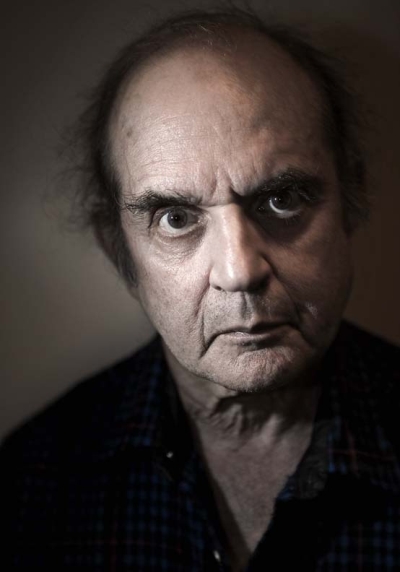
Harvey Pekar 1939-2010

One of Cleveland’s great contributions to the world passed away yesterday. Harvey Pekar, curmudgeon and cartoonist, was found dead of unknown causes by his wife Joyce Brabner. He was 70 years old. Pekar was, of course, best known for his award-winning comic American Splendor, an autobiographical work that detailed both his daily life and the city he lived in.

Pekar’s start in comics came via Robert Crumb, the two having become friends in the ’60s after meeting at a swap-meet. Crumb encouraged Pekar’s interest in comics and his first story, “Crazy Ed”, appeared in Crumb’s The People’s Comics. Crumb would also go on to illustrate the early issues of American Splendor.
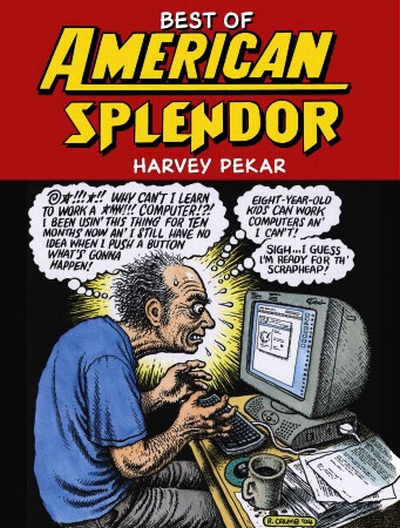
It’s an intriguing aspect of Pekar’s work. Most autobiographical comics are both written and illustrated by the same person, if for no other reason than than the personal nature of the subject matter. American Splendor, on the other hand, was illustrated by a rotating lineup of artists, including Spain Rodriguez, Joe Sacco, Chester Brown, Jim Woodring, Alison Bechdel, Gilbert Hernandez, Eddie Campbell, and a host of others, including many Cleveland-based cartoonists, his wife Joyce, and writer Alan Moore.

Despite all this contributing talent, American Splendor was Pekar’s in every way – and not only because he happened to star in it. Pekar was unflinching in its depiction of his life. Whether he was detailing his work as a file clerk at the VA hospital or the harrowing year of undergoing treatment for lymphoma, Pekar’s writing managed to be both plain and poetic. It also benefited from at least seeming to be completely unfiltered. It’s honesty sprang from the distinct impression that every neurotic thought, all those feelings of self-doubt, loathing, and anger, all the things most people filter out when relating their stories was there on the page.


BTC: John Hurt, Experimental Sound Artist

Since Ross has been on a bit of a John Hurt kick lately, writing up both Jim Henson’s The Storyteller and Krapp’s Last Tape in recent editions of FAM, this week’s better-late-than-never Better Than Coffee follows up with Hurt’s more musical side: his turn as an experimental composer in Jerzy Skolimowski’s 1978 horror drama The Shout. The above is a scene from the movie with absolutely no spoilers; just a tactile landscape of metallic noise. [Via Wobbly]

Tyskarna Från Lund – Global Fussball OK


via Melody, thanks!

And so, with a melange of yellow cards, red fury and vuvuzela farts, the World Cup has come to a close. In adjunctive honor of the ensuing global FIFA spaz-out, here’s the raddest Swedish synthpop football anthem ever made, courtesy of Tyskarna Från Lund. (Extra points of awesomeness for that Nina Hagen reference.)

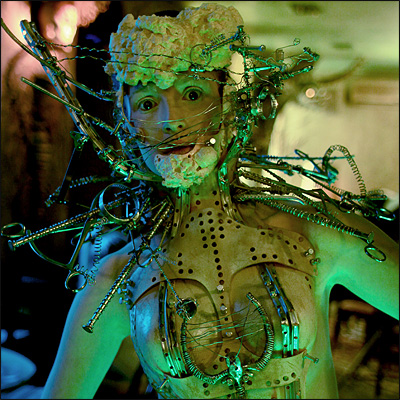
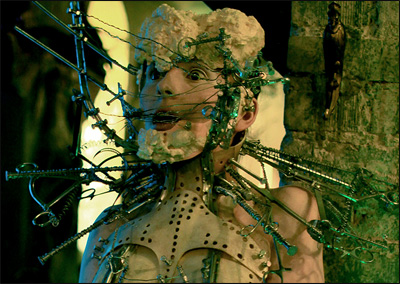
Orthodontic Medical Elephant Man-Inspired Fashion


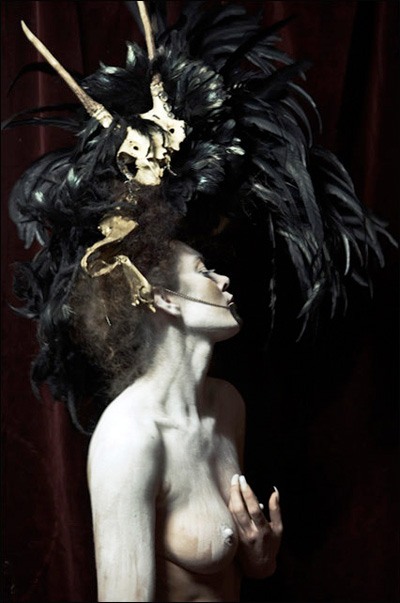
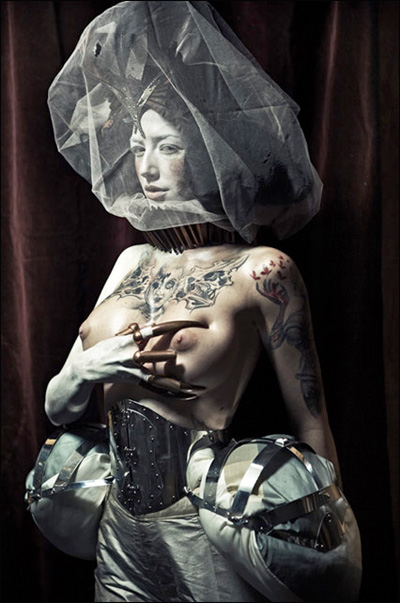
All images by Marcin Szpak

If Joseph Merrick had solved the Lament Configuration.

“Dear Coilhouse,

My name is Katarzyna Konieczka, I am an avant-garde fashion designer from Poland. I have been browsing through your website and while reading the blog I came across photos of Joseph Merrick’s head sculpture. I would like to take the opportunity of inviting  you to consider some of my work which took his inspiration from his life and condition. In particular, one of my models from the ‘Very Twisted Kingdom’ collection. The costume depicted in the attached illustration consists of a metal ruff and other elements resembling orthodontic medical equipment in reference to his illness which had not been diagnosed at the time.”

SOLD. Ten minutes later, I’m still picking my jaw up off the floor after perusing Konieczka’s site. Many more images, after the jump. In addition to the images on Konieczka’s page, many more images can be found in Marcin Szpak’s portfolio.

The Friday Afternoon Movie: Krapp’s Last Tape

Introspection and retrospection reign supreme on this day, the Ninth day of July in the year of our Lord Two Thousand and Ten. Today the FAM presents Krapp’s Last Tape starring John Hurt and directed by Atom Egoyan for the series Beckett On Film for Irish broadcaster RTÉ, British broadcaster Channel 4, and the Irish Film Board and which began showing in 2001. The project’s aim was to film 19 of Samuel Beckett’s 20 plays; the exception being the early play Eleutheria which at the time remained unperformed and, in fact, was only staged for the first time in 2005, 58 years after Beckett wrote it. Along with Hurt and Agoyan, Beckett On Film featured an impressive stable of acting and directorial talent. Seriously, look at that list.

We, however, are here to focus on one. Krapp’s Last Tape is the story of Krapp, who is celebrating his sixty-ninth birthday and, is his habit, has hauled out his reel-to-reel tape recorder in order to review the tapes he has made upon every instance of the “awful occasion”. Those are the words used by Krapp, but the Krapp of 30 years previous and from whom we learn the majority of what we know about the man. It is this man, pompous and sneering, who narrates most of Krapp’s life and Krapp sneers along with him, laughing along condescendingly with his 39 year-old self at the idealism and naivete at the 20 year-old man he used to be. We learn from this incarnation of his mother’s death and the women he has loved.

But even Krapp at 39 cannot escape the bitterness that he hurls at his youth. At 69, there is little else left in him but bile and regret; his last book has sold next nothing, his sex life revolves around the periodic visits of an old prostitute. He has no years left for idealism. The only future for Krapp is death; and now in full light of that realization he retreats to the dim memories on those tapes. As the tape ends he can only sit frozen, the only sound the hiss of the reel as it runs down.

The most famous production of Krapp’s Last Tape, no doubt, is 1972 for the BBC, starring the late, great Patrick Magee. In fact, Beckett wrote the play specifically for McGee, it’s original title being “Magee monologue”. I must admit that, much as I love Magee’s work, Hurt seems almost as if he was born for this role. Watching him is hypnotic, every movement seems to take incredible effort and it seems as if he’s willing he joints to creak. Hurt is also in possession of an incredibly expressive face and he uses it to great effect here, betraying the sadness and despair of character with a subtlety that keeps the whole affair from becoming maudlin. It also contains the only instance in which I have laughed at the slipping-on-a-banana peel gag.

It would be hard for most to rank this as Beckett’s greatest play, especially when compared to his most famous play, the incomparable Waiting For Godot, but there is a reality present in Krapp’s Last Tape that is absent from the tale of Vladimir and Estragon that I find deeply affecting. Much of Beckett’s life is reflected in Krapp’s Last Tape and at the time he wrote it his outlook was, one could maintain, quite grim. Perhaps therein lies crux of my position. It’s effectiveness may hinge on just how much of one’s self one sees reflected here.

Hiroshi Hirakawa’s Floating Worlds


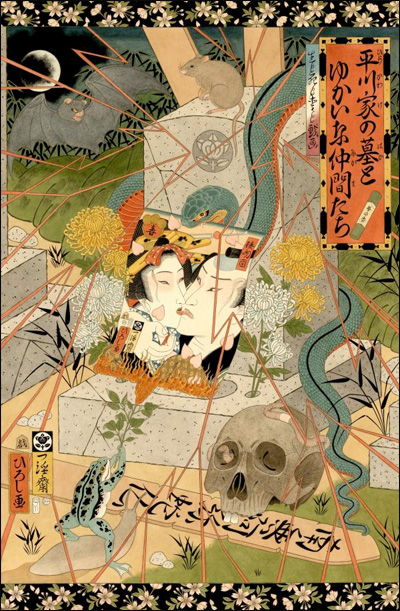
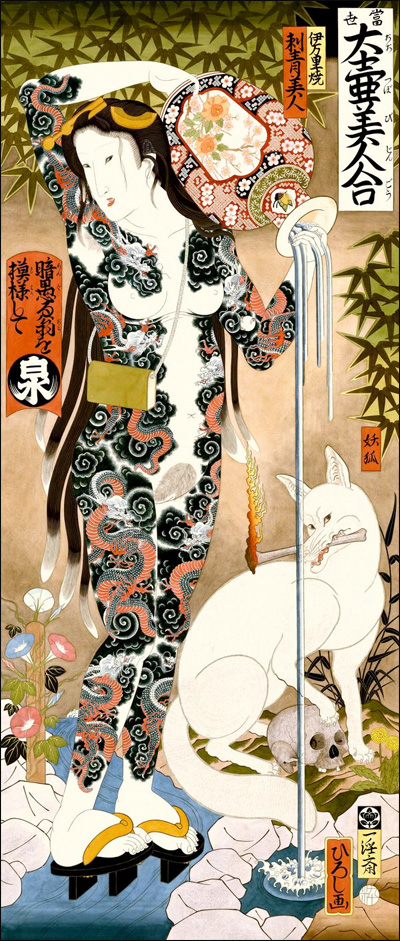
Hiroshi Hirakawa, 平川家の墓とゆかいな仲間たち 生と死と愛と戯画 (Shrine)

When an artist as prodigiously talented as Chris Conn Askew* tells me that I’ve got to check out an artist, I don’t hesitate … especially when he tells me, “he’s been on fire lately!” I couldn’t agree more. Hiroshi Hirakawa has that rare and delicious combination of ferocious talent, tempered by a deep appreciation of historical techniques and precedent. Ukiyo-e or “pictures of the floating world” is a traditional form of Japanese painting and printmaking whose subject matter reflects a deep appreciation of earthly beauty, coupled with an acknowledgment of it’s transience. Hirakawa’s paintings, with their frequent allusions to mortality seem to fit into this genre – or at least to represent a vividly contemporary re-imagining of it. In addition to his epic allegorical works, there is also enough cephalopod love, tattooed odalisques, oblique geishas, and dissolute rapture to enchant and mystify even the most discerning viewer. As far as I can tell, the man behind the images is utterly mysterious, although his website provides a tiny peephole into his world. Luckily for all of you, there is a new print edition by Tattoo Elite International of his ravishing piece, Shrine, now available.

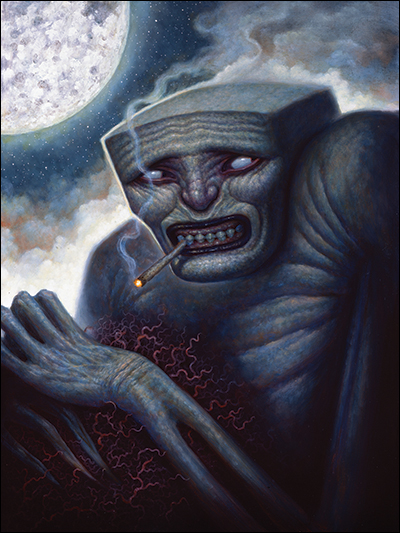
*Be sure to check out our upcoming feature on Chris Conn Askew in Coilhouse #5!


Hiroshi Hirakawa, Ingres

Issue 05: The Motion Picture. Also: Shipping, PARTAAY.

We proudly present a short video created by and co-starring Coilhouse creative director/graphic designer Courtney Riot and a minty-fresh copy of Coilhouse #05. Courtney writes, “The other day I purchased a new camera. This video is the first result. I have no experience in motion/film, but after seeing a featured clip from Tell No One, I decided to give it a go.” Rock on, Riot.


On to our next item of interest– since Issue 05 went on sale last week, we’ve sold 866 copies and counting. As of this moment, a mere 134 copies remain in the online shop. First of all: HOLY SHIT. Guys. Thank you. We are humbled and grateful. We hope that you enjoy this issue, and we can’t wait to hear your feedback. Secondly: HOLY SHIT. We did not anticipate this. We knew it would go fast, but not this fast. To put it in perspective, we had the same quantity of Issue 03’s in the online store as we do Issue 05’s, and that one took an entire year to sell out, while this one is almost 90% sold out in a little over a week.

Our circulation director, Gretta Sherwood, is working around the clock to ship the copies to everyone. But even with three assistants and two printers for shipping labels, it’s going to take her a while to get through these orders. We’d like to ask for your understanding if your copy takes a little longer than usual to arrive. Here’s how to estimate when your magazine’s getting shipped: as noted on the day Issue 05 went on sale, due to the special additions (signatures, limited-edition postcards) included with each issue, we’d only be able to begin shipping on Wednesday the 7th (yesterday). The bulk of the orders came through in the first few days, so orders from the 30th are still going out, with the last ones being shipped out tomorrow. On the 12th, we’ll ship out the majority of the orders from the 1st, on the 13th we’ll ship out the orders from the 2nd, and from that point on, we’ll probably be able to ship the orders from several days all at once. If it is a True Emergency and you need your issue sooner rather than later, please email Gretta, and we’ll see what we can do.

Finally, it’s PARTY TIME! Southern California readers, please save this date: Saturday, July 17th. That’s when we (as in, all three of us in the same place and at the same time, which happens about once in a blue moon) will be hosting an evening at Meltdown Comics with Issue 05 contributors in attendance. It’s our first official event since the launch party back in 2008! A limited supply of magazines will be available. We’re thrilled to have artist Chet Zar signing, and Chronic Anxiety –his original painting featured as the fold-out poster in #05– will be on display. We’ll also be announcing some surprise guests in the week to come. Stay tuned.

PS: Anyone planning to be at the San Diego Comic Con? Roll call. (We should have our signing schedule sussed out by next week.)

Manuel Albarran Redux

Most of you remember Manuel Albarran from photographer Gustavo Lopez Manas’ cover shoot for Issue 03, as well as multiple mentions on the blog. Recent updates to Albarran’s portfolio include the stunning shot below – a graceful companion to the portrait of Joshuadavid Reno by photographer Spencer Hansen featured in Issue 05’s article on the late Tiffa Novoa. After the jump, a couple of other shots from interesting recent Albarran collaborations, including a series called “Another World,” shot by Manas and featuring model/performer Johanna Constantine (you can find the extended set on Manas’ site), and a collaboration with an uncredited photographer featuring model Polly Fey. [via Aiko273]

Shatner And Nimoy: The Tale Of Nimoy’s Bike

Presented here without commentary is this clip of from 1991’s “25 Year Mission” tour, in which Leonard Nimoy relates the story of how the cruel and unscrupulous William Shatner stole his bike.

Via The Daily What : reddit

The Bizarro World Of Fuco Ueda

The women in Fuco Ueda’s work are, more often than not, in great peril. Sometimes they appear on the cusp of disaster; though many times they are square in the midst of one. Inhabiting the blank, surreal deserts of a Dali painting, we find them caught up in a great calamity. Alternatively we find them, as we do in her series “The School”, in familiar locales, though seemingly they are prisoners, of someone else or each other. “The School”, as evidenced by the images below, remains my favorite. It is a place so familiar (despite being decidedly Japanese, with it’s shoe cabinets) and yet it occupies a Purgatorial universe, something I can imagine floating in a sea of nothingness. The danger here is more personal. It is a violence between themselves; punishments meted out according to rules only understood by those involved. It may be that aspect of her oeuvre that so appeals to me. Every piece seems to send me into flights of fancy, trying to discern the events preceding and succeeding them.