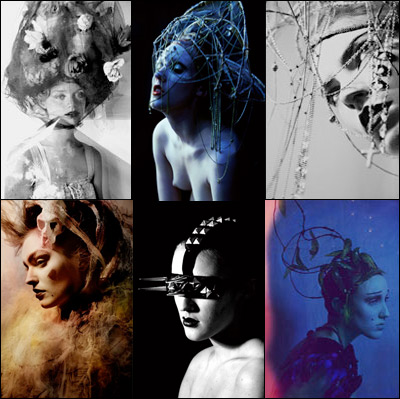
Japanese photography studio Neon O’Clockworks, previously mentioned on Coilhouse, recently released a short film titled Déjà Vu. The film features an assortment of complex, theatrical headgear crafted by London-based designer Tomihiro Kono. Influenced by 1920-30s, Dada, Surrealism and Assemblage, the hairpieces are constructed from found objects and vintage materials.
More images of Kono’s intricate hairpieces, wigs, masks and other “head props” can be found at Kono’s site and blog. At the latter, you can find full credits and behind-the-scenes stills from Déjà Vu. Full video, after the jump. [via TwistedLamb]
Mike Flores, a photographer and filmmaker from North County, San Diego, sets his state-of-the-art HD camera on a dolly that scoots it along at a snail’s pace, shooting time lapse imagery. The resulting footage –particularly that of natural desert landscapes and skies– is stunningly beautiful.
Soundtrack supplied by Hans Zimmer’s bombastic (and highly effective) Inception score. Visit Flores’ Vimeo account for more videos. Be sure to watch them all full screen.
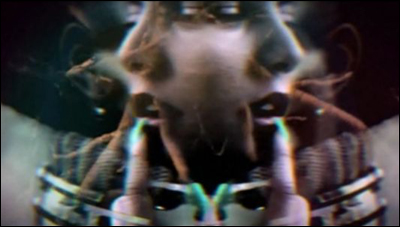
Didn’t get enough of the heebie jeebies after viewing Ross’s Gimme Pizza post? It’s OK, evil scrambled Fox News is here to help. The mysteriously-titled clip, “auspice,” presents a ghostly double-exposure view of slowed-down Fox personalities, set to an unholy-sounding chorus. The music is not credited, and any help identifying the artist would be appreciated. “I hear a little bit of Diamanda in there at the halfway point,” notes Wobbly, who sent this in.
It’s the perfect companion to this CNN piece, also submitted by Wobbly sometime ago. “Listen to me. I want to tell you something. Come closer. Don’t be upset and don’t get emotional.” Which is scarier, that CNN clip (embed-disabled high-res version posted here for your viewing displeasure), or this FOX clip?
Herzog’s rescue of the troublesome actor took place within days, maybe weeks of a freakish incident that occurred on Herzog’s balcony during the middle of an interview with film journalist Mark Kermode: “A sniper opened fire with an air rifle … Herzog, as if it was the most normal thing in the world, said, ‘Oh, someone is shooting at us. We must go.’ He had a bruise the size of a snooker ball, with a hole in. He just carried on with the interview while bleeding quietly in his boxer shorts.”
Responding to Kermode’s incredulity, Herzog stated, smiling, “It was not a significant bullet. I am not afraid.”
Sascha, if you’re reading, please consider making an animation of that.
A wee bit o’ cheer, courtesy of Marlon Riggs and the Institute of Snap!thology…
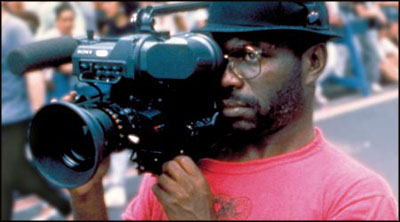
… that’s spurring me to write up an overview of something far deeper and more complex. This “Snap Diva” sequence is one of the more lighthearted scenes from Tongues Untied, a powerful independent film by activist/educator/filmmaker/author Marlon Riggs. The clip was sent to me earlier today by an old friend as an offhandedly affectionate “haaaay”, but it ended up triggering intense memories of watching Riggs’ films on PBS over a decade ago. I was bowled over by them at the time; I’m overjoyed to be reminded of them again.
Riggs died of AIDS in 1994 while still struggling to complete his final film, Black Is…Black Ain’t. An intensely personal, well-researched examination of the diversity of African-American identities, Black Is…Black Ain’t was completed by Riggs’ colleagues after his death, and released posthumously in the mid 90s. “His camera traverses the country, bringing us face to face with Black folks young and old, rich and poor, rural and urban, gay and straight, grappling with the paradox of numerous, often contested definitions of Blackness.” [via]
Riggs was a giant of public television during the late 80s and early 90s, and a truly inspiring force for positive change. Via glbtq:
Riggs’ experience of racism began in his segregated childhood schools but continued even at Harvard, where he studied American history, graduating with honors in 1978. He then earned an M. A. in 1981 at the University of California, Berkeley’s Graduate School of Journalism, where he later taught documentary film courses.
Riggs first gained recognition for writing, producing, and directing the Emmy-winning, hour-long documentary Ethnic Notions(1987), which explored black stereotypes and stereotyping. The film helped establish Riggs’ career as a contemporary historical documentary producer.
But most of his later films and writings probe the dichotomy Riggs perceived between the strong, “Afrocentric” black man and the black “sissy” gay man. As a “sissy” himself, Riggs felt deeply his status as a pariah within the black community.
Tongues Untied(1989), Riggs’ most famous film, is an extensively reviewed and critically acclaimed documentary that met with controversy in conservative circles when it was aired on public television. Funded by a National Endowment for the Arts grant, it figured in the cultural wars over control of the NEA and the Public Broadcasting System.
Rise and shine, comrades. Time to face another Monday morning. You know what might help? A hot shower. With Stephen Shellen. In a pair of tighty-whities:
“Oh gawd I’m getting all tingly.”
Gimme An ‘F’ was the slimy, raw Meatballs-textured afterbirth that slid out of the ass end of 1984 while Footloose and Flashdance were still showing at drive-ins. Kudos to Katrina Galore for toilet-plunging its most memorable scene up from the depths. (Katrina, delightful pervert that she is, just made it known that she’ll be co-editing an upcoming anthology of Dystopian Erotica. They’re currently calling for submissions. Go git ’em!)
Hot and steamy mini-documentary action on today’s FAM in the form of The Return of A Clockwork Orange, Film4’s look at the controversial film 30 years after director Stanley Kubrick banned the film’s showing in the UK. I’m going to assume that if you have any interest in this you are familiar with both the film and the book it was based on, so I’ll not go over them here.
Even with a working knowledge of Clockwork Orange it is difficult, I think, for modern audiences to understand why a film like this would cause such an uproar, saturated as we are with films that go way beyond Kubrick’s film in terms of graphic depictions of violence, both physical and sexual. The Return of A Clockwork Orange does an excellent job, then, of painting a picture of the political and social climate of England in the early 70s, giving a much clearer for the context for the furor over this film. Released in the same year that saw Ken Russell’s beautiful, bloody The Devils and Sam Peckinpah’s shocking Straw Dogs it was the crescendo in an increasingly heated debate on whether films should be allowed to portray such extreme behavior — a debate that continues today mostly concerning those video games the kids seem to love so much.
The end result is a short but well-informed look at a war between a nation and one of film’s greatest visionaries.
Addendum: Apologies for the inferior quality of this video. This version features much clearer visuals but the audio gets completely out of sync by the second part.
Guest blogger Olga Drenda writes about war crimes and home-made drugs for a living, but it’s fluffy rodents who are her true love. She hails from the land of pierogi, supermodels and death metal bands, and is an editor at seelebrennt.com.
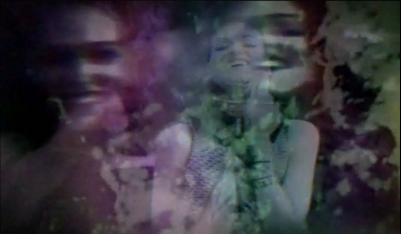
Veteran of experimental cinematography and the main injector of Thelemic mysticism into the realm of film, Kenneth Anger, goes fashion. The director of Lucifer Rising and Inauguration of the Pleasure Dome filmed a delightfully trippy promotional video for the renowned brand Missoni, starring members of the Missoni family who find themselves in the roles of shamans in rapturous visions.
Created in the signature Anger style, this multi-layered and otherworldly ad is a brave move in terms of fashion advertising as the Fall/Winter knitwear collection isn’t especially showcased, with the focus on visuals, instead.
The haunting soundtrack was recorded by French sonic artist Koudlam, who surprisingly fits here even better than classic occult troubadours, Current 93 or even Coil themselves might.
For those who miss a hint of ecstatic psychedelia in modern advertising, this is a must see. As a post scriptum, here’s another example of this re-emerging trend: in Chrissie Abbott’s ceramic design for Jaguar Shoes, you can find enlightened kitties of wisdom. Scroll down for cats! 93/93!
In memory of Satoshi Kon, The FAM presents Katsuhiro Otomo’s Memories (1995), specifically the first episode of three entitled Metallic Rose, directed by Koji Morimoto and written by the late Mr. Kon. Metallic Rose tells the story of a space-faring salvage team who respond to a distress signal (in the form of a recording of Puccinni’s opera Madame Butterfly) emanating from a giant space station in a particularly dangerous area of the galaxy known as Area RZ-3005 or Sargasso. The ship’s two engineers, Heintz and Miguel, are deployed to investigate. Inside they find an opulent, rococo interior and a woman claiming to be an opera singer named Eva Friedal.
The true nature of Eva is something I won’t spoil, but it is safe to say that she is not exactly who she appears to be. Magnetic Rose then, in sci-fi shorthand, is a mash-up of the used, dingy, space-trucker aesthetics of Alien and the psychological mindfuckery of Solaris; and it succeeds admirably. And while it was based on a story by Otomo, it contains many of the themes that would define Kon’s work: the interest in the protagonist’s mental state and subjective reality. Two years later he would go on to write and direct his first feature film, Perfect Blue, and a brilliant career; but the seeds were sown here in the span of 40 minutes. If only that career could have lasted a little longer.